

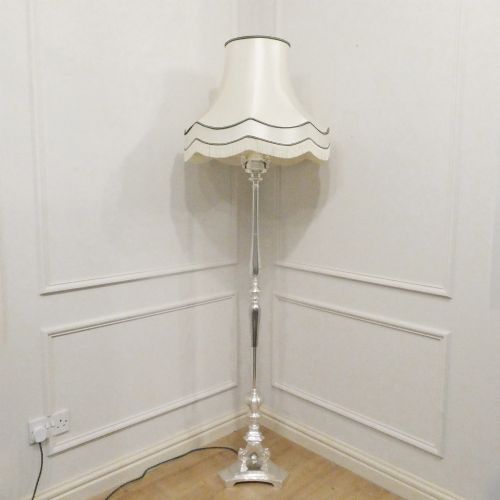
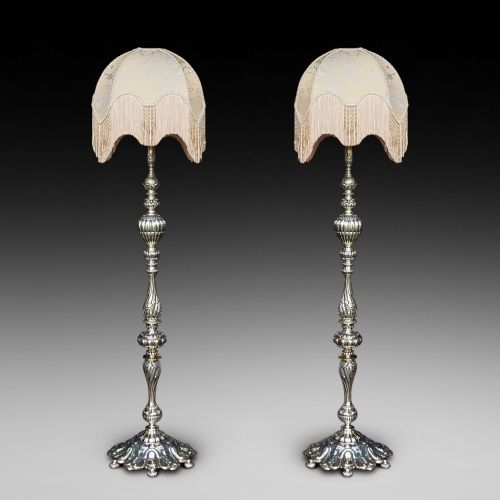


Standing Lamp Cream Shade
These standing lamp cream shade pieces offer reliable lighting and period character, bringing warmth and classic presence into a room.
Standing Lamp Cream Shade
A standing lamp cream shade brings together tall floor-standing illumination and neutral fabric softening. When searching for a standing lamp cream shade, buyers encounter traditional floor lamps and standard lamps dating from the Victorian and Edwardian eras through the early decades of the twentieth century.
The selection on this page includes standard lamps and floor lamps spanning the 1900s, 1910s, 1920s, and 1930s. Forms range from heavy brass and wrought iron designs to dainty cottage style floor lamps and vintage giltwood pieces.
How they were made
Construction relies heavily on brass, wrought iron, carved wood, and mahogany, often paired with silver plate or glass stems. Metalwork provides structural weight, while timber elements introduce traditional cabinet-making skills.
Fabric tops complete the construction, frequently accented with fringe details to diffuse the light downwards. Materials are chosen for both durability and decorative harmony within period interiors.
Standing Lamp Cream Shade Retail Price Guide 2026
Typical asking prices for standing lamp cream shade among the pieces listed under this phrase on Sellingantiques today, from the lower quarter to the upper quarter. They describe what is for sale here now, not the wider market.
Listings feature items spanning the Victorian, Edwardian, 1900, 1910, 1920, and 1930 periods.
What varies in quality
Quality shows in the weight and substance of the materials, separating solid brass and heavy wrought iron from lighter alternatives. Finishes on giltwood and carved wood reveal the care taken by the maker during initial production.
Design sophistication also marks the difference between standard production and finer examples, such as those featuring adjustable arms or combined Canterbury frameworks. Proportion and balance in the upright stem dictate how well the piece holds its presence in a room.
The Standing Lamp Cream Shade Glossary
- Standard lamp
- A tall floor-standing lamp designed to illuminate a room from standing height rather than a table. These pieces often serve as focal points in traditional seating areas.
- Canterbury/lamp standard
- A hybrid furniture piece combining a floor lamp with compartmentalised storage for sheet music or periodicals below. This form represents multifunctional interior design from the early twentieth century.
- Giltwood
- Timber treated with gold leaf or a gold-coloured metallic finish to simulate solid gold or rich ornamentation. This technique provides decorative brilliance in period reception rooms.
- Wrought iron
- Iron beaten or bent into shape by hand while hot, resulting in sturdy and expressive structural frames. It appears frequently in Victorian utility and decorative lighting.
- Tripod lamp
- A standard lamp supported by three distinct feet or legs for stability. This configuration offers a balanced stance on uneven period flooring.
Standing Lamp Cream Shade: Frequently Asked Questions
Where should I place a standard lamp?
These lamps suit corners of reception rooms or beside reading chairs where direct illumination is required.
Their height allows them to cast light over surrounding furniture without dominating the central floor space.
How do I date a floor lamp?
Dating relies on identifying materials like heavy brass, wrought iron, or giltwood alongside stylistic clues from Victorian, Edwardian, and 1930s design.
Construction joints and wiring conduits also provide helpful indicators of original manufacturing periods.
Are these lamps adjustable?
Certain examples feature mechanical adjustments, such as pivoting arms that allow the light source to be angled.
This functionality originated to direct illumination precisely where it was needed for reading or handwork.
How do I clean brass standard lamps?
Maintenance involves dusting with a soft cloth to protect the historic metal surface from abrasive wear.
Harsh chemical polishes should be avoided to preserve the natural patina accumulated over decades.