

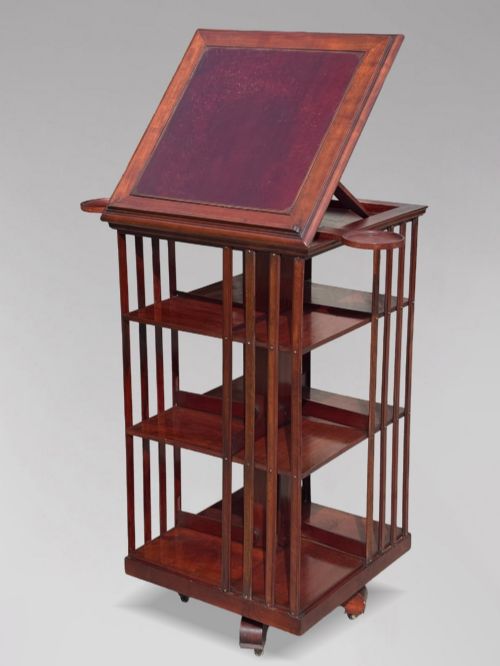
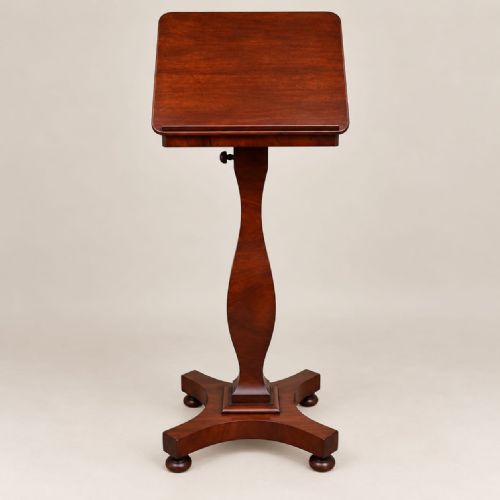
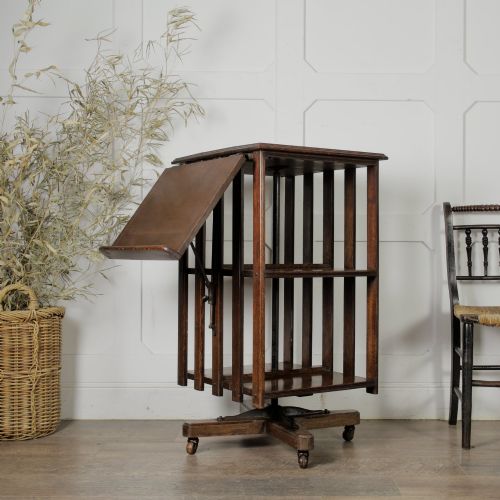
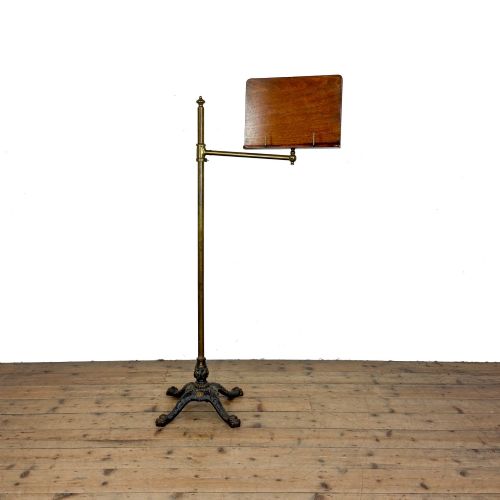
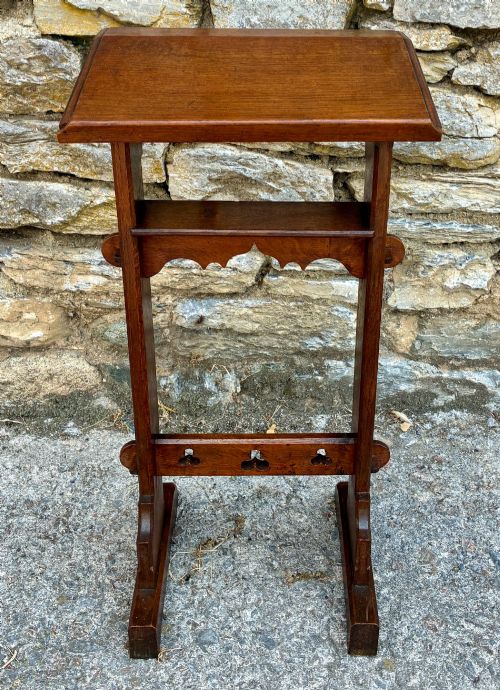

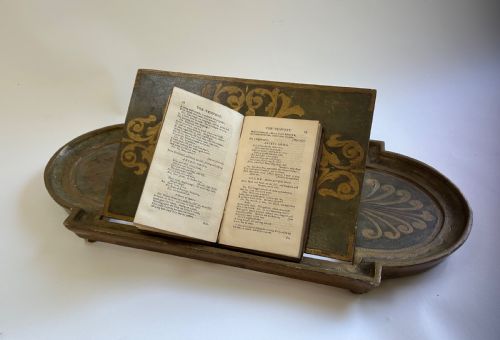
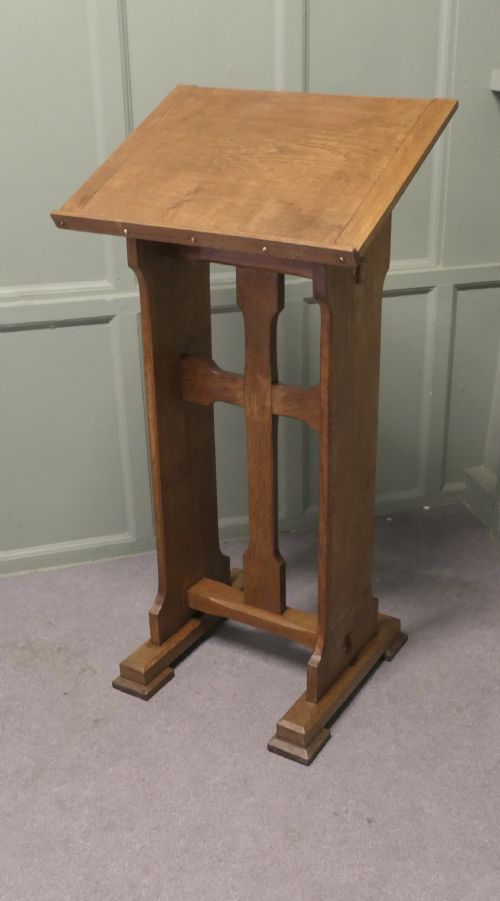
Standing Book Lectern
A standing book lectern holds volumes at a comfortable angle for reading or presentation, bringing practical function and period character to any study or room.
Standing Book Lectern
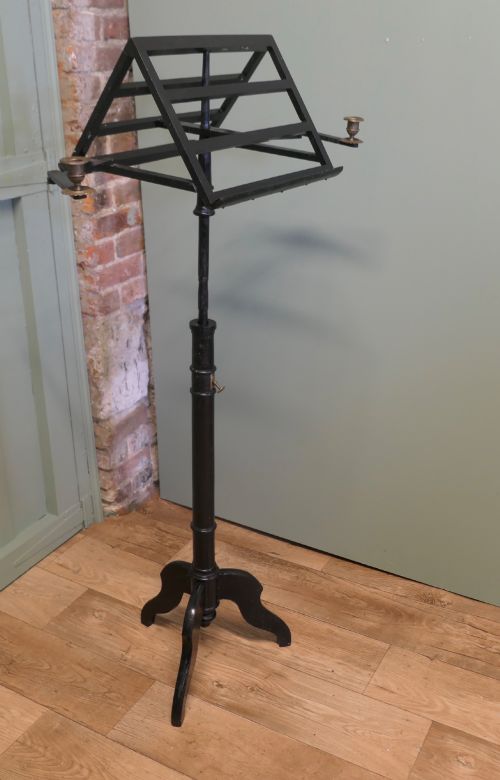
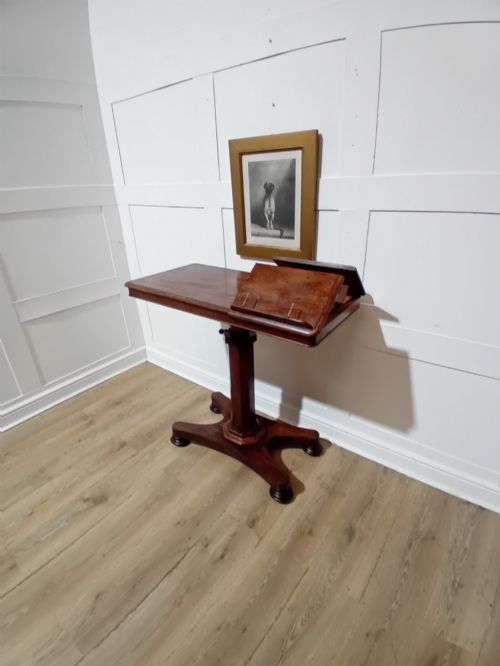
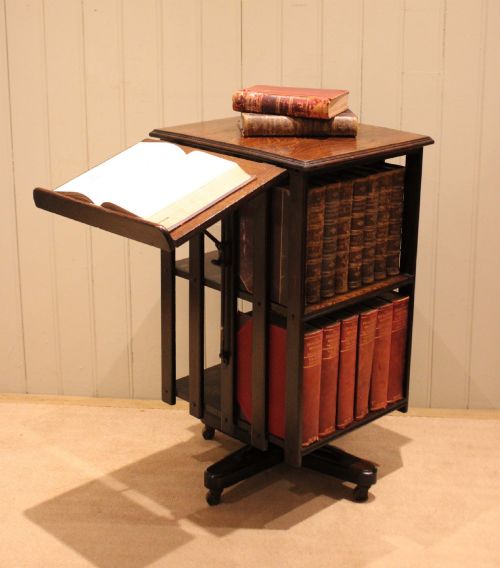
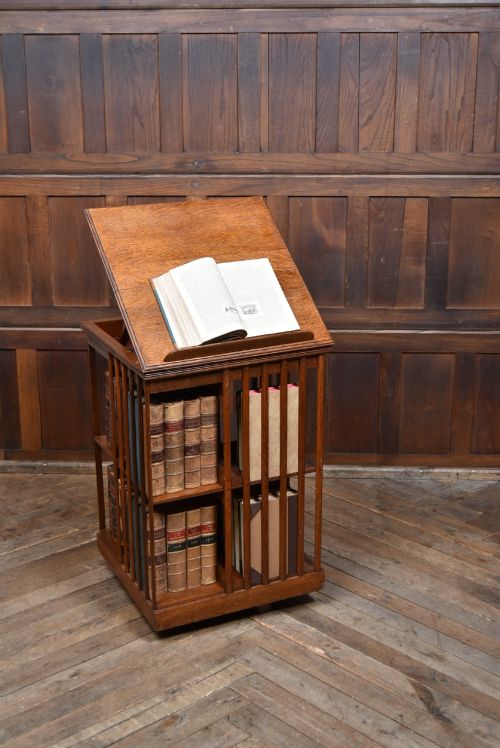
A standing book lectern provides a dedicated architectural support for holding open volumes, manuscripts, or music sheets at an ergonomic angle. When searching for a standing book lectern, buyers encounter forms that range from heavy ecclesiastical furniture to domestic reading tables and revolving bookcases.
The selections available include pieces originating from the nineteenth century, the Victorian and Edwardian eras, as well as Regency and Arts and Crafts periods. Oak and mahogany dominate the material record, frequently appearing alongside pine, rosewood, brass, and cast iron.
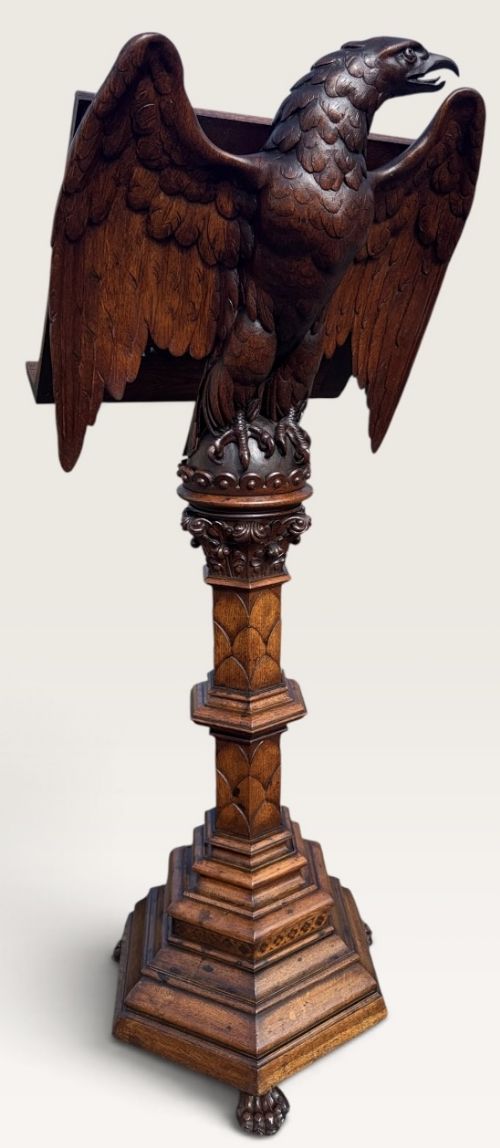
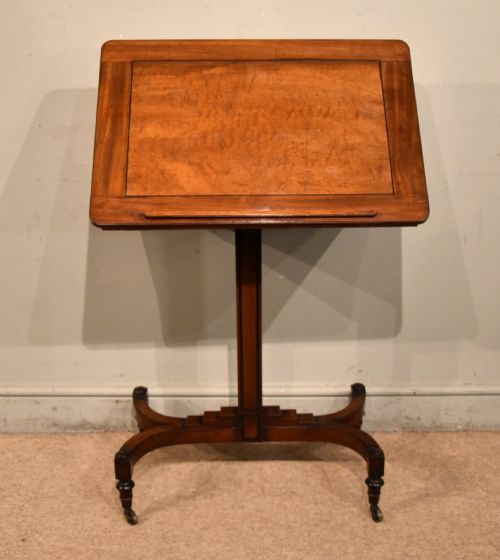
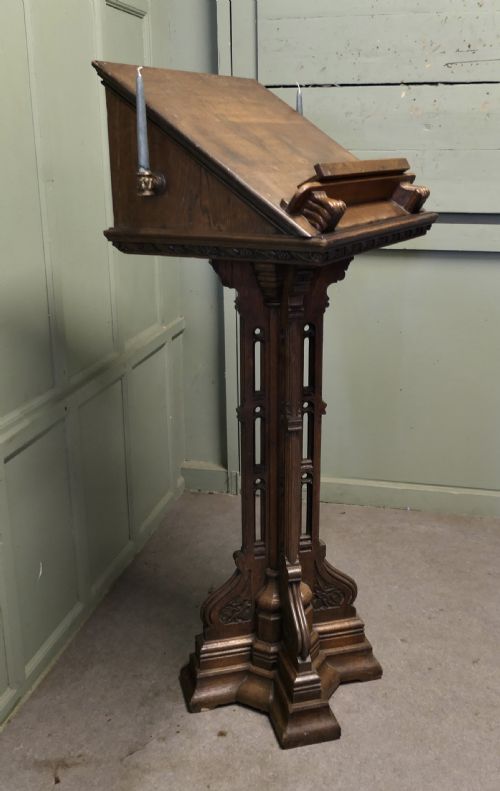
Domestic versions often function as reading tables or music stands, whilst ecclesiastical examples take the form of church lecterns, carved podiums, and missal stands. These objects serve libraries, studies, music rooms, and reception spaces with equal utility.
Materials and construction
Cabinet makers utilised dense hardwoods such as mahogany, oak, and rosewood for structural stability and fine carving potential, whilst secondary timbers like pine provided lighter utility for adjustable reading tables. Brass and cast iron supplied the mechanical ingenuity required for adjustable ratchets, hinges, and pivoting columns.
Construction methods combined traditional joinery with specialised metal hardware to enable movement, allowing reading surfaces to tilt, revolve, or adjust in height. Surface decoration encompassed carved Gothic Revival motifs, mother of pearl inlay, and polished timber grains.
Standing Book Lectern Retail Price Guide 2026
Typical asking prices for standing book lectern among the pieces listed under this phrase on Sellingantiques today, from the lower quarter to the upper quarter. They describe what is for sale here now, not the wider market.
Listings span the nineteenth century, Victorian, Edwardian, and Regency periods, employing mahogany, oak, brass, and cast iron.
Distinctions in quality
The standard of a standing book lectern rests upon the integrity of its mechanical adjustments and the execution of its carved or turned elements. Pieces featuring patent mechanisms or solid brass ratchets demonstrate superior workshop output compared to fixed alternatives.
Material selection and timber figure dictate visual distinction, with richly grained mahogany, rosewood, and quarter-sawn golden oak holding greater presence than utilitarian pine or cast iron. Original surfaces and robust structural joinery elevate the standing of the piece within its period.
Osborne Garrett And Co·Carters Of London·Gillows
The Standing Book Lectern Glossary
- Lectern
- A tall stand with a slanted top designed to hold a book or notes for a speaker or reader. These pieces often feature adjustable angles to suit various reading positions.
- Revolving Bookcase
- A rotating shelf unit designed to provide easy access to a collection of volumes from a stationary position. They frequently appear in Edwardian libraries and studies.
- Missal Stand
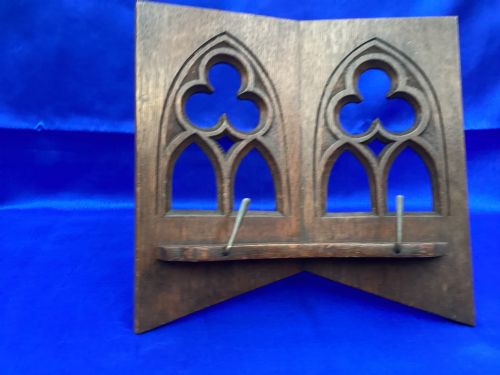
- A small, portable or folding book rest used to hold service books on an altar or table. Examples often originate from religious settings and ecclesiastical workshops.
- Gothic Revival
- An architectural and decorative style drawing inspiration from medieval forms, characterised by pointed arches, tracery, and heavy carved oak. This aesthetic is common on church lecterns.
- Gonçalo Alves
- A dense, exotic tropical timber featuring striking dark brown and blonde figuring, utilised by cabinet makers for high-status nineteenth-century furniture.
Standing Book Lectern: Frequently Asked Questions
How do I adjust the height?
Many nineteenth-century and Edwardian reading stands incorporate mechanical ratchets, screw columns, or sliding brass fittings designed to alter the height and angle of the reading surface.
Operating these mechanisms requires releasing any locking thumbscrews or pins carefully to avoid stressing the internal wooden threads or metal tracks.
Were these used in churches?
A significant portion of heavier oak, brass, and cast-iron lecterns originated in ecclesiastical environments for holding heavy bibles and service books.
These church examples often feature eagle motifs, sloping desk surfaces, or dedicated book rests designed to support large volumes during sermons.
Can I use one as a music stand?
Period reading tables, music stands, and duet stands are well-suited for holding sheet music or scores alongside traditional books.
The adjustable platforms and sturdy timber or iron bases provide reliable support for daily musical practice or performance.
How do I care for the timber?
Maintaining mahogany, oak, and rosewood surfaces involves dusting with a soft cloth and applying appropriate wax polish sparingly to preserve the grain.
Keeping the timber away from direct heat sources and dramatic humidity shifts protects the joints and mechanical components from warping.