

Standing Book Display
Standing book display pieces hold volumes openly in domestic interiors, uniting timber craft with daily utility.
Standing Book Display
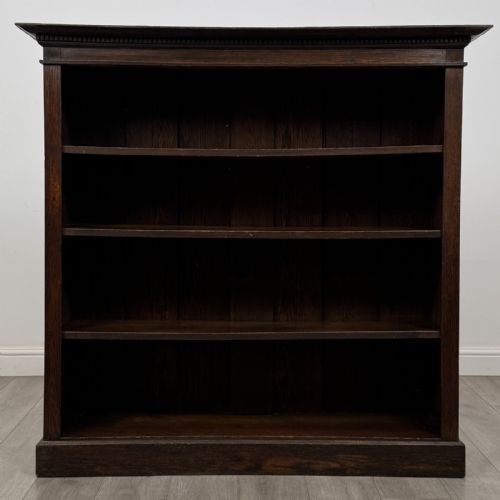
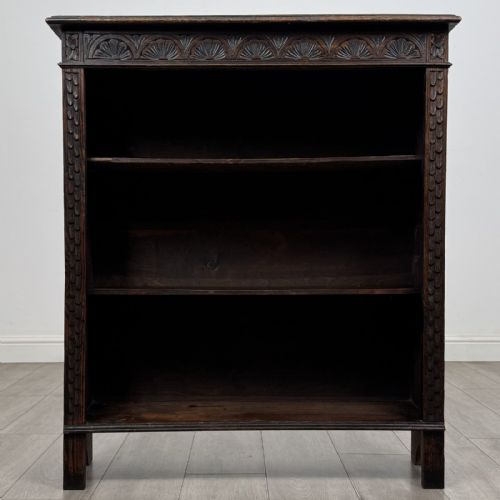
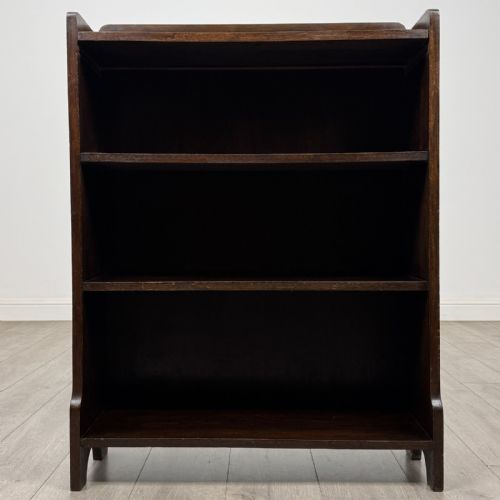
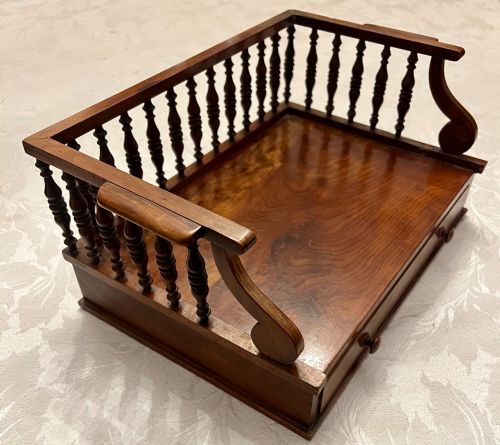
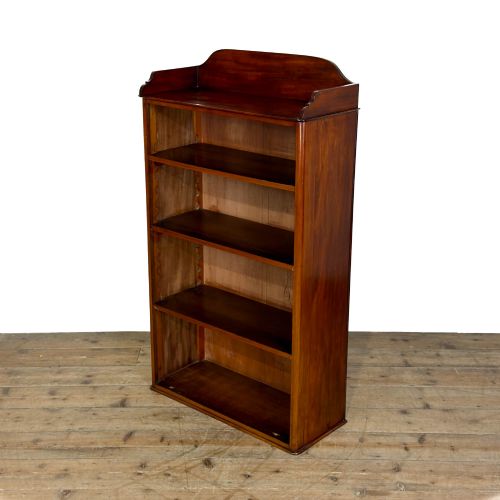
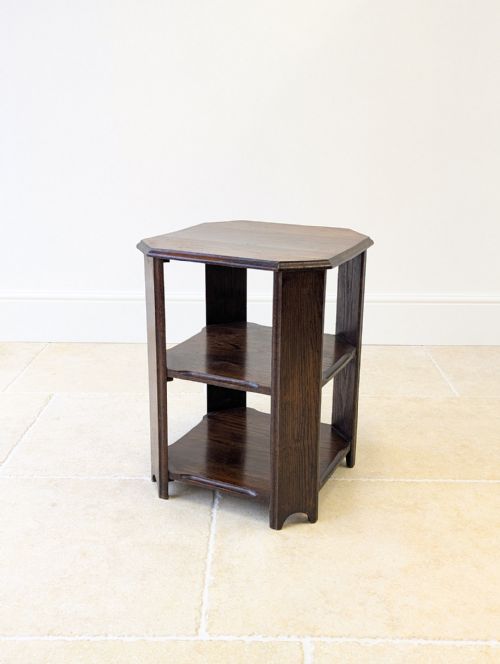
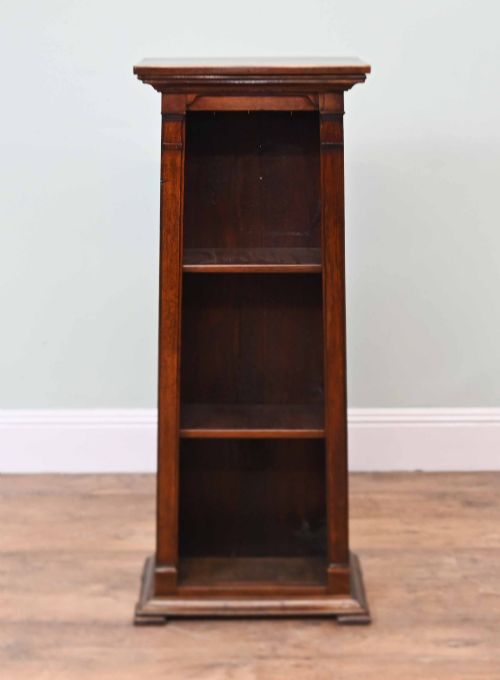
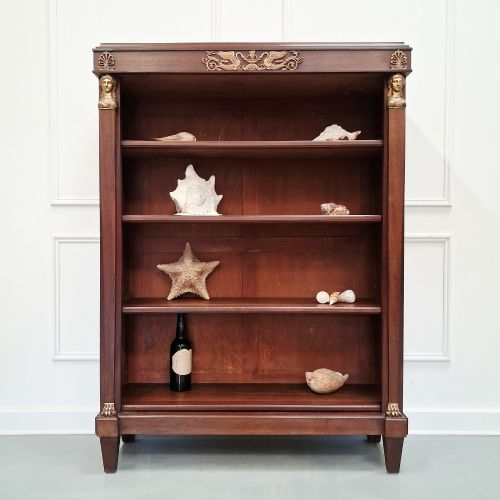
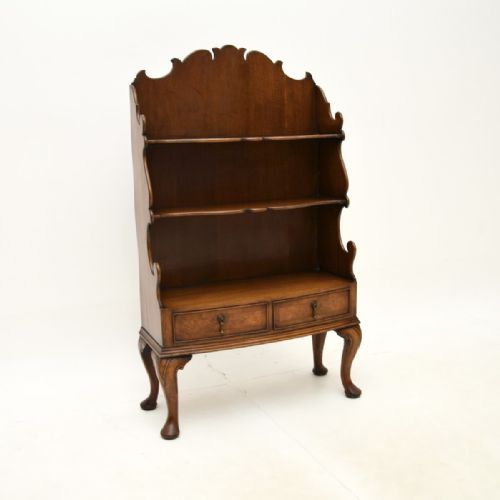
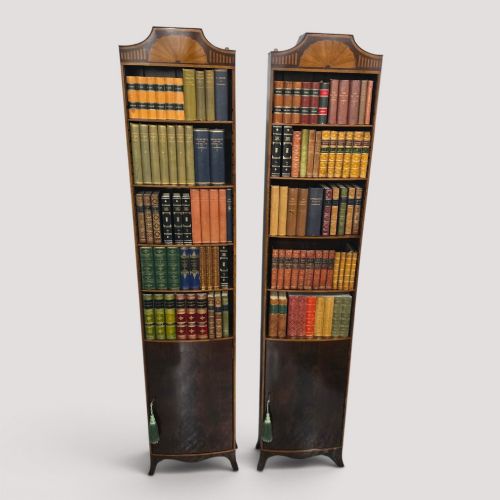
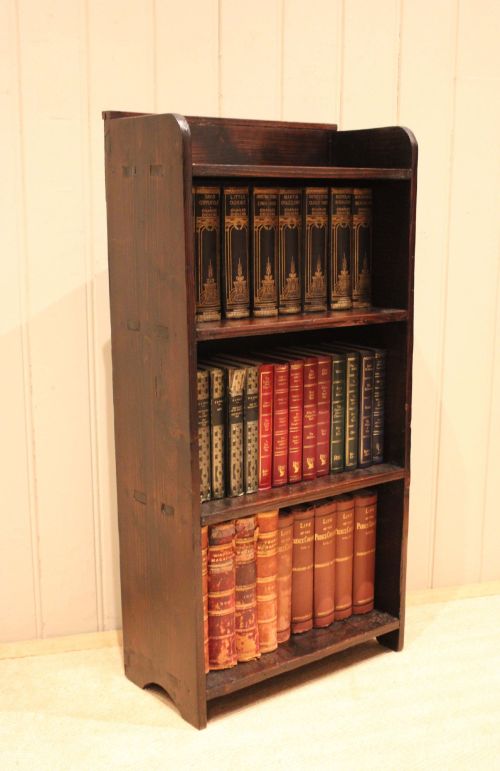
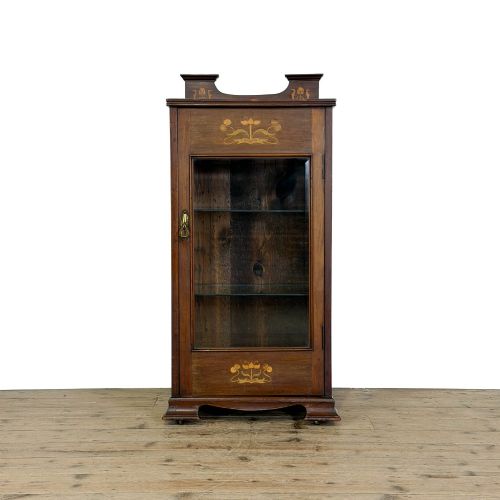
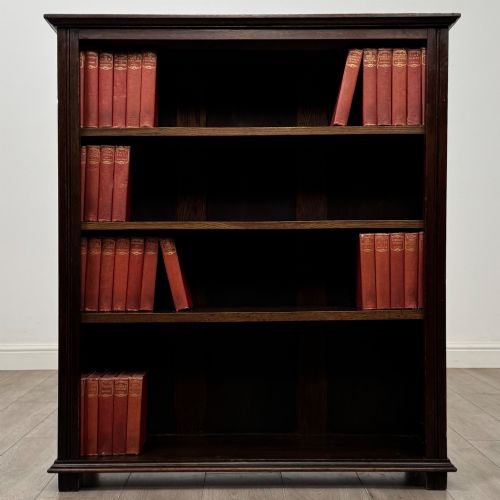
A standing book display functions as an open shelf or tiered stand designed to present books and decorative objects at accessible heights within a room. When searching for a standing book display, buyers encounter open bookcases, revolving shelves, tiered whatnots, and low freestanding cabinets.
The pieces appearing on this page span the Victorian, Edwardian, and Regency periods, alongside early twentieth-century examples in oak, mahogany, and rosewood. Oak open bookcases and mahogany tiered stands form the most frequent encounters in this selection.
Makers and workshops across these decades adapted the form for domestic libraries, studies, and parlours, incorporating adjustable shelving, glass doors, and inlaid timber surfaces. Each variation reflects the specific storage and display needs of its period of manufacture.
Materials and Construction Methods
Cabinet makers utilised dense hardwoods such as oak, mahogany, rosewood, walnut, and pine to construct the carcasses and frames of these display pieces. Timber selection dictated the weight and grain character of each shelf, cabinet, and whatnot.
Joinery methods involved traditional panel construction, dovetailing, and carved ornamentation executed by hand during the nineteenth and early twentieth centuries. Brass mounts, glass panels, and leather inserts added functional and decorative detail to select library pieces.
Listings feature standing book displays from the nineteenth and early twentieth centuries, spanning Victorian, Edwardian, and Art Deco periods.
Distinctions in Quality and Execution
Quality in a standing book display lies in the selection of figured timber veneers, the crispness of carved mouldings, and the integration of functional elements like adjustable shelving. Superior examples demonstrate balanced proportions and deliberate grain matching across open tiers and cabinet doors.
The refinement of brass hardware, precise joinery in drawer and shelf construction, and subtle inlay work separate standard utilitarian pieces from exceptional examples originating from notable workshops and cabinet makers.
Gillows·Heals
The Standing Book Display Glossary
- Étagère
- A piece of furniture consisting of a set of open shelves for displaying small articles or books. This French term frequently applies to lighter nineteenth-century standing display pieces.
- Waterfall bookcase
- A standing bookcase featuring graduated shelves that recede in depth from bottom to top. This design creates a stepped profile reminiscent of cascading water.
- Revolving bookcase
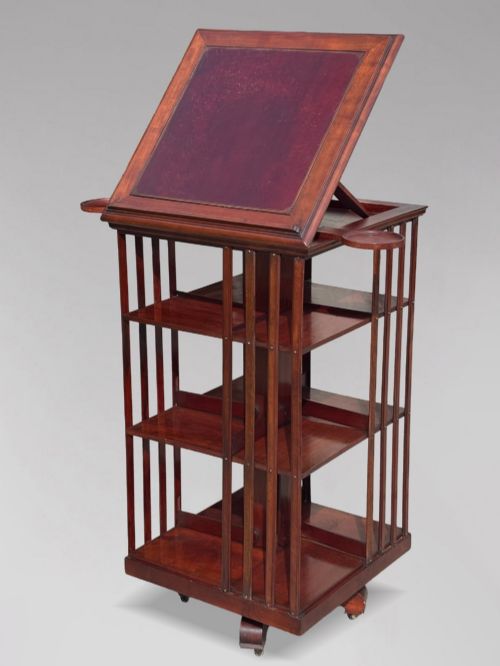
- A compact freestanding book stand mounted on a rotating pivot mechanism. It allows users to access volumes from multiple angles without repositioning the unit.
- Open bookcase
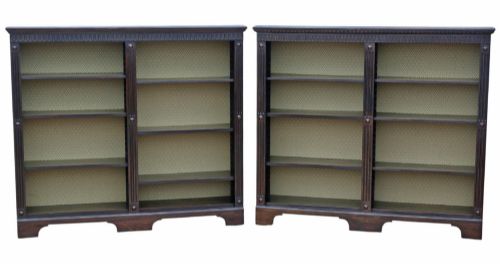
- A shelving unit without doors, designed for immediate access to books. These pieces frequently incorporate adjustable wooden shelves resting on traditional supports.
Standing Book Display: Frequently Asked Questions
How do I choose between an open bookcase and a cabinet?
Open bookcases provide immediate visibility and quick access to active reading collections. They suit everyday domestic spaces where ease of selection matters most.
Cabinets with glazed or solid doors offer enclosed protection for delicate or antiquarian volumes. They shield bindings from dust and light while maintaining a formal appearance.
Where should I place a revolving bookcase?
Revolving bookcases suit corners, reading nooks, or spaces beside armchairs where floor area is restricted. Their pivoting design permits access from any seated position.
Placing them away from direct sunlight and heat sources protects the timber grain and historical finishes from drying out.
How do I identify Edwardian oak bookcases?
Edwardian oak bookcases typically date from around 1900 to 1910, featuring lighter golden oak tones and simpler linear forms than heavier Victorian furniture. They often incorporate open backs and adjustable shelving.
Art Nouveau influence occasionally appears through subtle carved plant motifs or stylized brass hardware integrated into the cabinet framework.