




Stamped Seat Chairs
These stamped seat chairs carry maker marks and stamps that record their origins, offering solid craftsmanship across various Victorian and early twentieth-century designs.
Stamped Seat Chairs
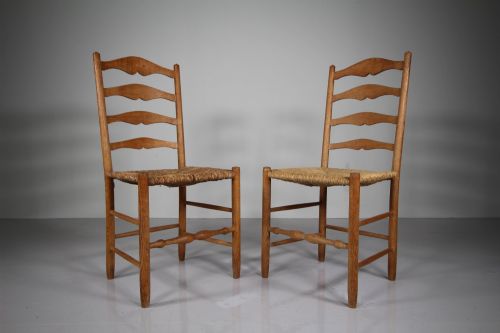
Stamped seat chairs encompass a variety of seating forms, including dining chairs, hall chairs, armchairs, and bistro chairs. These pieces span the nineteenth century, the Victorian period, and up to nineteen twenty, featuring makers and workshops from Dublin, London, and continental Europe.
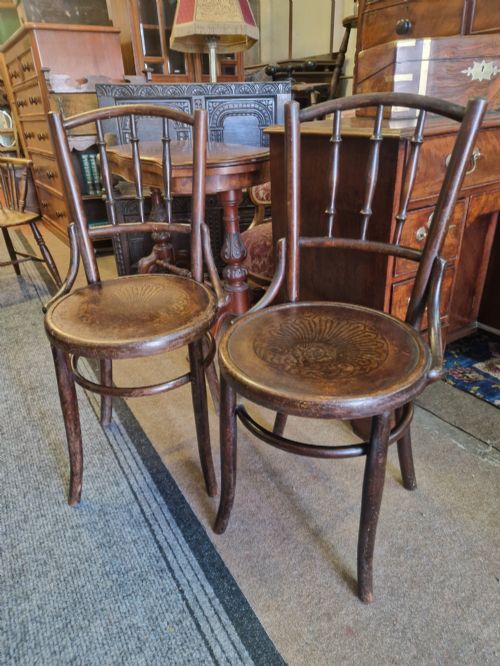
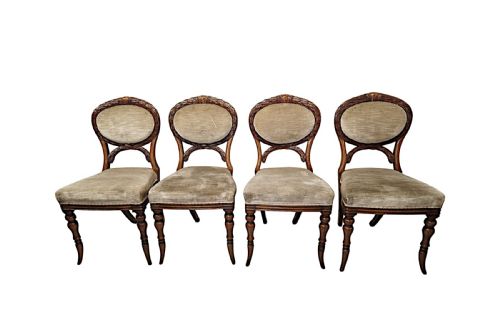
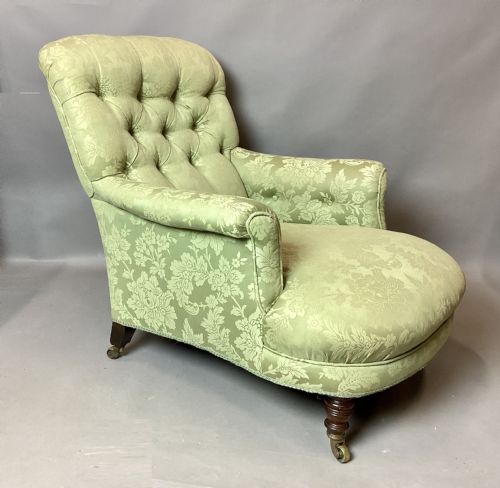
Buyers searching for stamped seat chairs encounter sturdy dining sets, upholstered armchairs, bentwood bistro models, and carved hall chairs. Solid oak, Cuban mahogany, beech, and timber form the main structures, paired with fabric, velvet, metal, and brass details.
The selection ranges from robust oak dining chairs to curved bentwood designs and comfortable upholstered armchairs. Each piece bears a stamp or maker mark that ties it directly to a specific workshop or cabinetmaker.
How they were made
Makers utilised solid timbers such as oak, beech, and Cuban mahogany to construct the frames of these chairs. Joinery techniques varied from steam-bent beech in bistro models to traditional jointing in heavy dining and hall chairs.
Upholstered versions relied on horsehair and webbing beneath top coverings of fabric and velvet, often finished with brass castors. Stamps were typically pressed directly into the wood of the seat rail, frame, or underside.
Stamped Seat Chairs Retail Price Guide 2026
Typical asking prices for stamped seat chairs among the pieces listed under this phrase on Sellingantiques today, from the lower quarter to the upper quarter. They describe what is for sale here now, not the wider market.
A solitary armchair stamp might just reveal where a Victorian cabinetmaker rested after a long day of gluing.
What varies in quality
Quality rests in the clarity and placement of the maker stamp, alongside the integrity of the timber frame. Crisp lettering from recognised workshops elevates a piece above unmarked or faintly stamped equivalents.
The selection of materials dictates durability, with dense Cuban mahogany and solid oak showing superior grain and structural resilience compared to simpler utility timbers. Original components such as castors and upholstery foundations also influence the overall standard.
Strahan of Dublin·Gillows of Lancaster·Thonet·Howard and Sons·James Shoolbred
The Stamped Seat Chairs Glossary
- Maker mark
- A stamped symbol, name, or initials pressed into the timber by the manufacturer. This mark identifies the workshop or retailer responsible for the piece.
- Bentwood
- Wood softened by steam and bent into curved shapes, commonly utilised in nineteenth-century bistro chairs. This technique allows for lightweight yet sturdy frames.
- Castor
- A small wheel fitted to the legs of armchairs to ease movement across floors. Brass fittings are typical on nineteenth-century upholstered models.
- Hall chair
- A stiff-backed wooden chair designed for placement in an entrance hallway. These pieces often feature carved backs and solid timber seats.
Stamped Seat Chairs: Frequently Asked Questions
Where do I find the maker stamp?
Maker stamps are usually pressed into the underside of the wooden seat rail, along the rear edge, or directly onto the frame. Search along the exposed wooden sections near the legs or beneath upholstered cushions.
Some makers utilised metal plaques or paper labels instead of wood stamps, though nineteenth-century pieces often feature direct hot-iron impressions.
How do I care for stamped wooden chairs?
Clean wooden surfaces with a dry cloth and apply occasional wax polish to nourish the timber. Avoid placing chairs in direct sunlight or near heat sources to prevent wood splitting.
Check upholstered sections regularly and vacuum fabric gently to remove dust without disturbing internal padding.
Were these chairs used for dining?
Many stamped seat chairs served as formal dining sets, particularly the solid oak and mahogany models produced in larger quantities. Smaller armchair variants and bistro chairs were suited to studies, parlours, or commercial cafes.
Dining chairs were often made in sets of four, six, or ten to match large household tables.
How do I distinguish Victorian styles?
Victorian pieces encompass various revivals, from Gothic Revival hall chairs with pointed arches to heavy upholstered armchairs designed for comfort. The materials and ornamentation reflect the shifting tastes throughout the nineteenth century.
Stamps and structural joinery help confirm the period alongside stylistic indicators like turned legs and carved crest rails.