

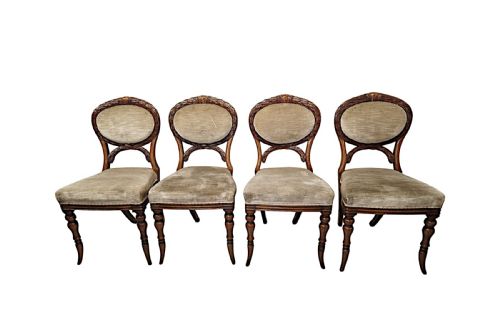
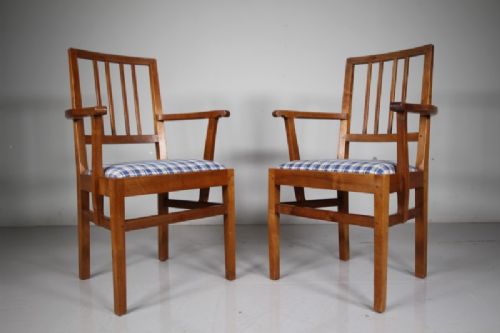


Stamped Chair
A stamped antique chair bears the maker's mark, confirming its origin and lifting it far above ordinary seating.
Stamped Chair
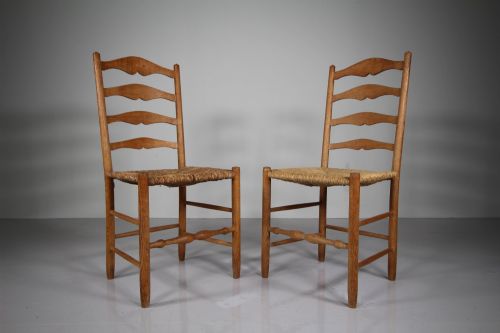
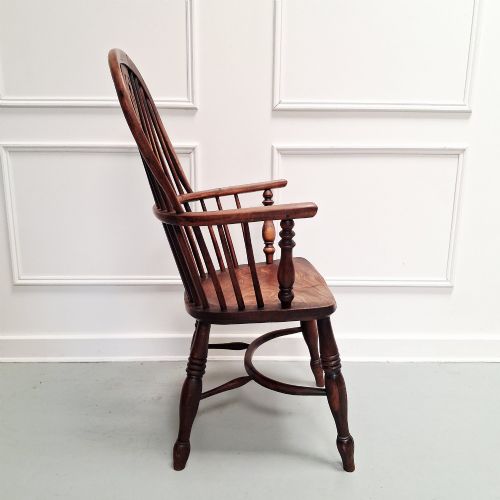
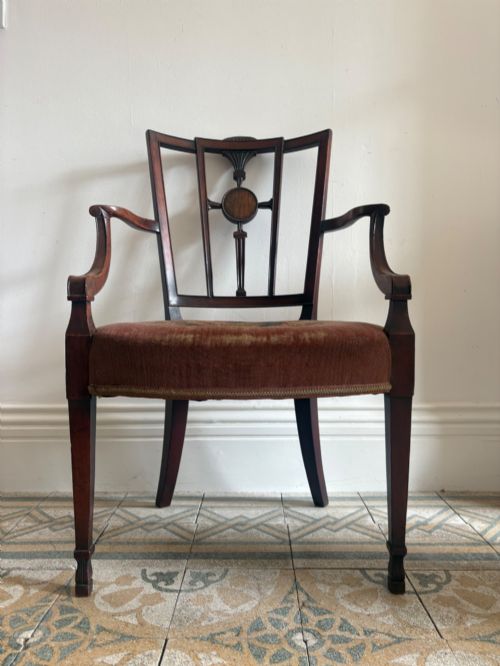
A stamped antique chair carries a maker's mark or stamp impressed directly into the timber, identifying the workshop or retailer responsible for its construction. These pieces range from formal dining chairs and desk chairs to Windsor armchairs and bentwood bistro designs spanning the eighteenth, nineteenth, and early twentieth centuries.
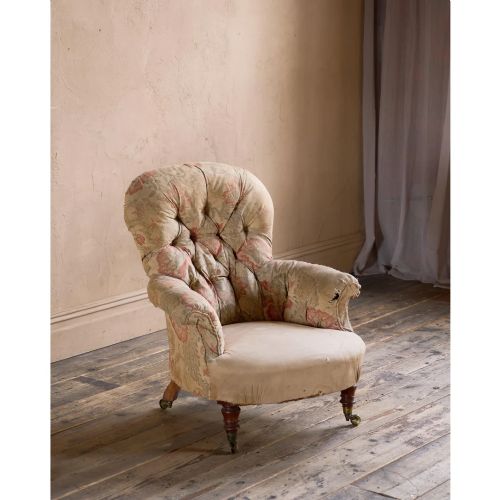
You are most likely to encounter nineteenth-century upholstered armchairs, Victorian dining sets, and Windsor forms stamped by notable cabinet makers or regional makers. These include mahogany, oak, and beech examples showing distinct stylistic periods from Georgian restraint through to Arts and Crafts and Art Deco.
How they were made
Makers constructed these chairs using solid timbers such as mahogany, oak, elm, beech, and walnut, often shaping components with traditional joinery like mortise and tenon. Bentwood examples utilise steam-bent beech techniques pioneered for European bistro seating, while upholstered models integrate webbing, springs, horsehair, and covers in fabric, leather, or velvet.
Metal elements appear where structural support or mobility requires them, utilising brass castors on upholstered armchairs and desk chairs. Finishes range from polished wood surfaces to applied maker stamps and paper labels.
Stamped Chair Retail Price Guide 2026
Typical asking prices for stamped chair among the pieces listed under this phrase on Sellingantiques today, from the lower quarter to the upper quarter. They describe what is for sale here now, not the wider market.
Listings for stamped chairs feature nineteenth-century, Victorian, Edwardian, and eighteenth-century periods constructed from mahogany, oak, beech, elm, timber, fabric, brass, and velvet.
What varies in quality
The clarity and placement of the maker's stamp significantly influence the standing of a stamped antique chair, alongside the crispness of the timber carving and joinery. Pieces retaining original components such as brass castors, leather upholstery, and designated maker markings command greater interest from collectors.
Design complexity and timber selection dictate the tier of the piece, moving from utilitarian elm and ash Windsor chairs up to Cuban mahogany dining suites and burr walnut armchairs by prominent London workshops.
Thonet·Gillows·Edward Barnsley·Holland & Sons·Howard and Sons·Johnstone & Jeanes·Hille London·W W Peirce·James Shoolbred
The Stamped Chair Glossary
- Maker's stamp
- An impressed mark left in the wood by a workshop, retailer, or maker to identify origin. This stamp serves as a primary point of authentication for collectors.
- Bentwood
- Wood softened by steam and bent into curved structural forms, commonly utilised in nineteenth and early twentieth-century bistro seating.
- Windsor chair
- A traditional wooden chair featuring a solid saddle-shaped seat into which the legs and back spindles are wedged directly. These typically combine ash, elm, and beech timbers.
- Gainsborough armchair
- A wide, low-seated upholstered armchair with open padded arms, originating in the mid-eighteenth century and produced in later periods.
- Castor
- A small wheel attached to the base of chair legs to allow smooth movement across floor surfaces. Brass is frequently utilised for these fittings on nineteenth-century upholstered seating.
Stamped Chair: Frequently Asked Questions
Where do I find the stamp on a chair?
Makers typically impressed their stamp onto the upper edge of the seat frame, beneath the rails, or on the inside of the rear legs. On upholstered pieces, you may need to examine exposed wooden framing where fabric does not cover the structure.
Searching these areas carefully reveals the indented lettering left by the workshop or retailer before finishing.
How do I know if a stamp is genuine?
A genuine stamp matches the period typography, wood ageing, and known practices of the workshop recorded in furniture history. The impression should show natural wear consistent with the surrounding timber rather than sharp modern tooling.
Comparing the mark to documented examples from the same maker helps confirm authenticity.
Can I use an antique stamped chair daily?
Most stamped chairs are structurally robust enough for regular use provided the joints remain tight and stable. Solid timber dining chairs and desk chairs handle routine sitting well, while upholstered pieces may require internal webbing checks.
Placing them away from direct heat sources protects the timber and nineteenth-century finishes from drying out.
What styles appear among stamped chairs?
The selection encompasses Georgian, Regency, William IV, Victorian Gothic Revival, Arts and Crafts, Art Nouveau, and Art Deco styles. Forms range from formal dining sets to library armchairs and bentwood bistro seating.
Each style reflects the prevailing aesthetic of its manufacturing period.