

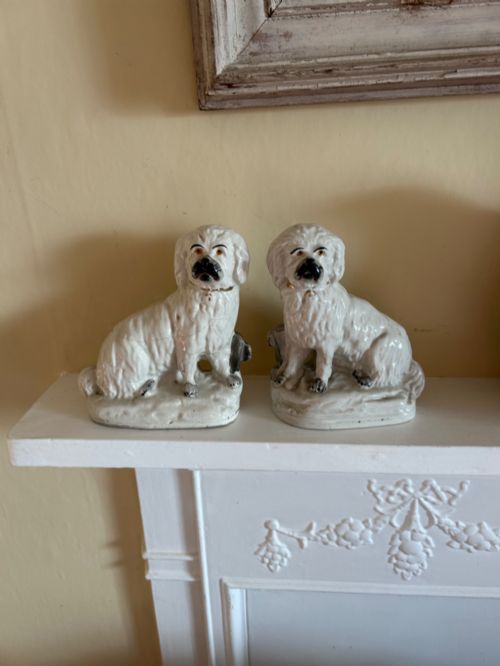


Staffordshire Mantel Figures
Staffordshire mantel figures are charming ceramic ornaments that bring Victorian character to a shelf.
Staffordshire Mantel Figures
Staffordshire mantel figures are earthenware ornaments produced across the nineteenth century to decorate British homes. Buyers search for this phrase to find traditional pottery animals, human portrait figures and spill vases that capture the folk art aesthetic of the Victorian era.
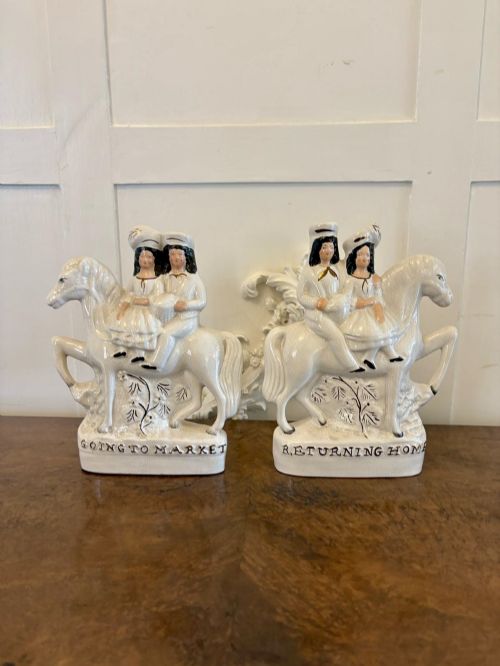
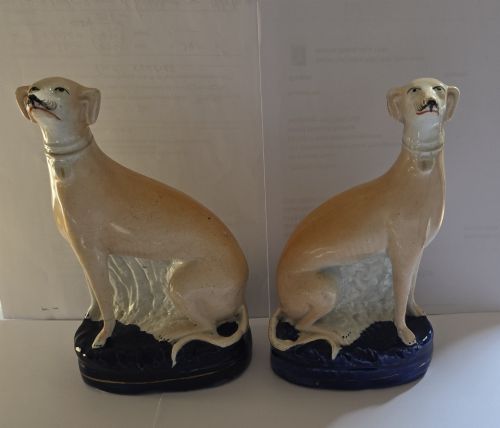
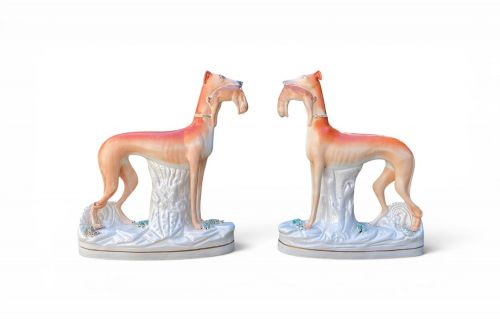
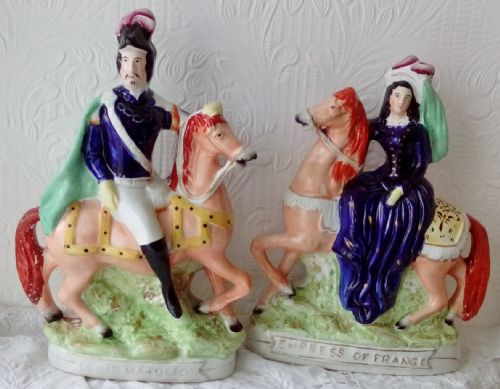
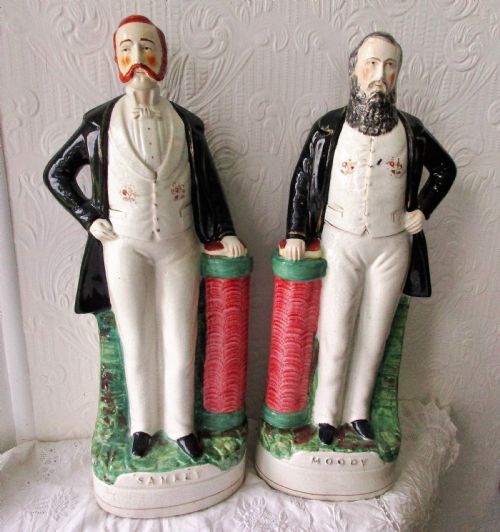
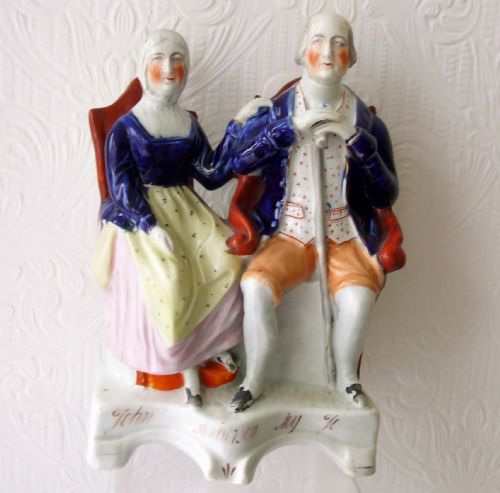
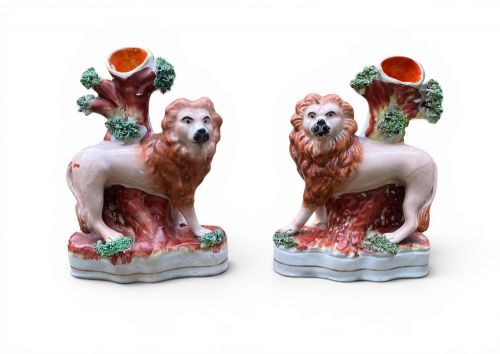
The version most commonly met on this page is the pair of flat back figures designed to sit neatly against a wall on a fireplace mantel. These include seated dogs, lions, and romantic or patriotic couples modelled in regional English potteries.
Pieces range from simple country pottery figures to detailed portrait groups depicting historical figures, literary characters and exotic animals. They offer a direct link into nineteenth century domestic display and popular culture.
Materials and production methods
These figures are made from earthenware clay, formed using press moulds and slip casting techniques to achieve standard shapes. Potters then smoothed the flat backs before firing the clay bodies in kilns.
Decoration relies on lead glaze and enamel paint applied over the ceramic surface, sometimes accented with gilt or copper lustre details. Colours were often hand-painted simply, giving each piece individual character within mass production.
Staffordshire Mantel Figures Retail Price Guide 2026
Typical asking prices for staffordshire mantel figures among the pieces listed under this phrase on Sellingantiques today, from the lower quarter to the upper quarter. They describe what is for sale here now, not the wider market.
Listings feature earthenware materials and Victorian styles spanning the mid to late nineteenth century.
Distinctions in quality
The presence of rich gilding, copper lustre highlights or well-defined modelling separates superior decorative items from simpler folk art output.
Thomas Parr·Royal Doulton
The Staffordshire Mantel Figures Glossary
- Flat back
- A figure moulded with a finished front and sides while the reverse is left flat or unglazed for resting against a wall. This technique saved clay and made the pieces lighter for mantel display.
- Spill vase
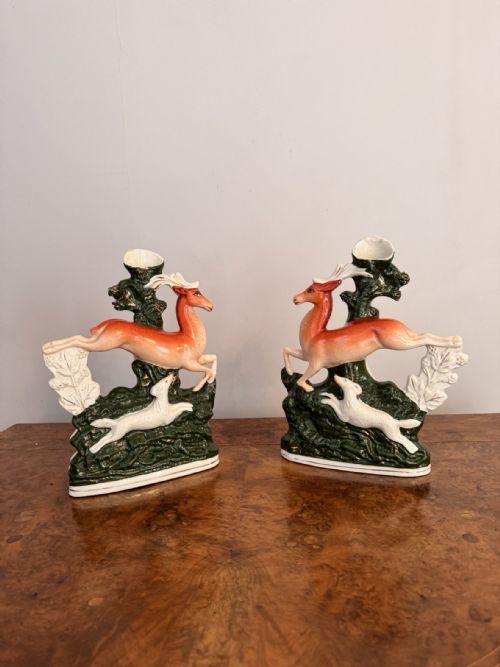
- A hollow cylindrical container incorporated into the figure design to hold wooden spills used for lighting fires or pipes. They combine practical household utility with ornamental pottery.
- Earthenware
- A porous ceramic body fired at lower temperatures than stoneware or porcelain. It forms the standard clay base for nineteenth century Staffordshire pottery figures.
- Lead glaze
- A glossy vitreous coating containing lead oxide applied to earthenware to seal the porous clay and fix the enamel colours. It gives the figures their characteristic shine.
- Copper lustre
- A metallic glaze finish that produces a reflective, coppery sheen on the surface of the ceramic. Potters used this technique to add decorative borders or coat entire figures.
Staffordshire Mantel Figures: Frequently Asked Questions
What are Staffordshire mantel figures?
Staffordshire mantel figures are nineteenth century earthenware ceramic ornaments made in English potteries for domestic display.
They depict animals, human portraits, and historical scenes designed to sit upon fireplace mantels.
How were these figures displayed?
These ornaments were traditionally placed on fireplace mantels, often arranged in matched pairs facing each other.
Their flat backs allowed them to sit flush against the wall or mirror glass above the hearth.
What were spill vases used for?
Spill vases incorporated a hollow tube alongside the main figure to hold thin wooden tapers called spills.
Users drew these spills from the vase to transfer fire from the hearth to candles or pipes.
How do I identify Victorian pieces?
Victorian pieces are identified by their earthenware construction, lead glazes, and typical nineteenth century subjects.
Stylistic markers like flat backs and enamel paint help distinguish these period examples from later reproductions.