


Staffordshire Dog Pair
A staffordshire dog pair brings character to a mantelpiece, offering the traditional charm of nineteenth-century ceramic figures.
Staffordshire Dog Pair types
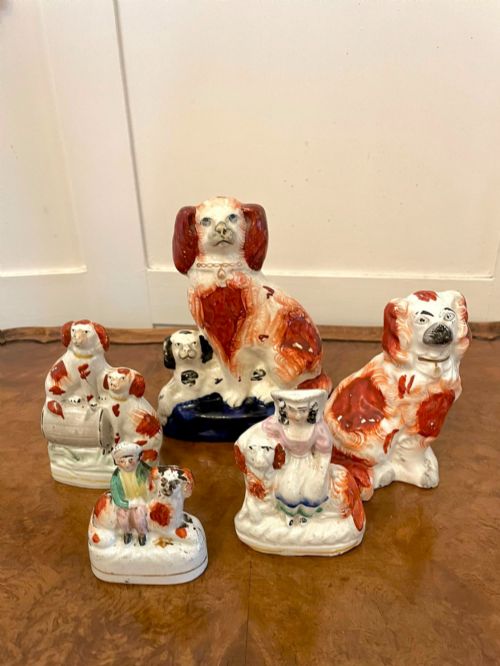
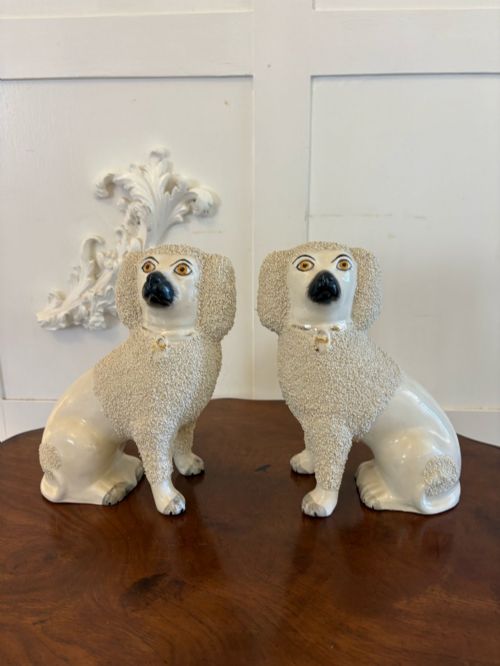
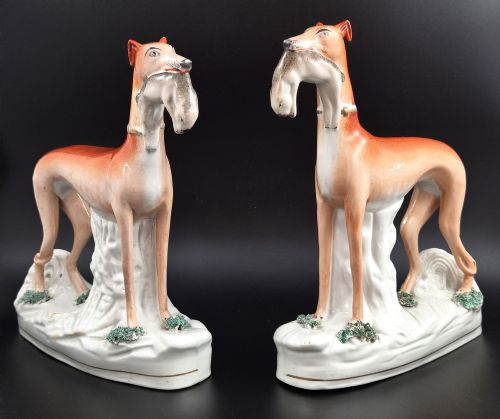
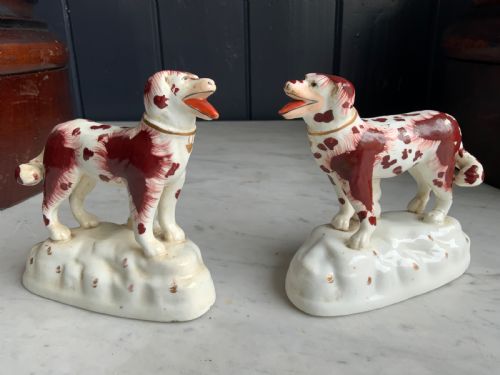
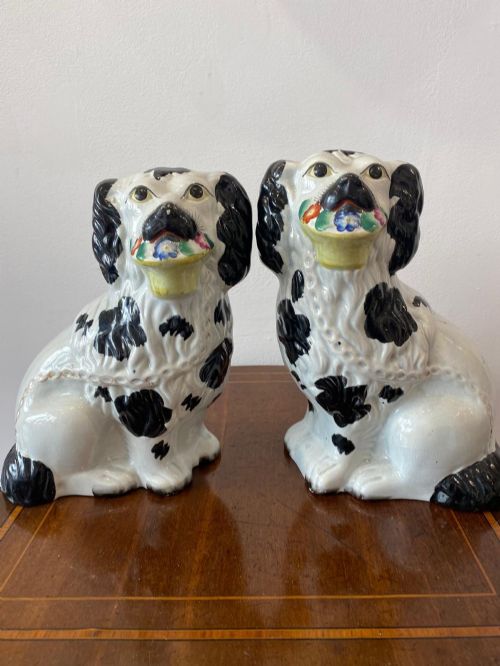
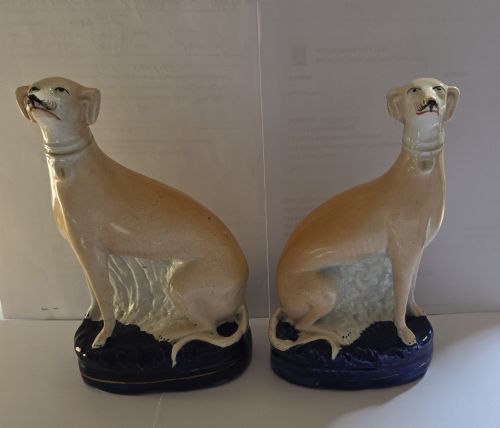
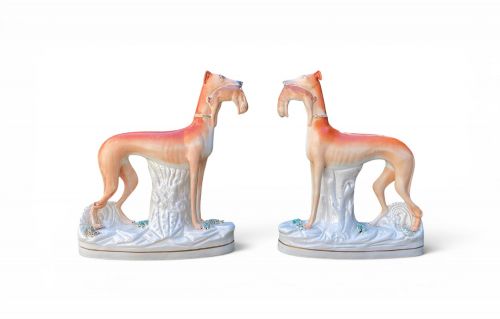
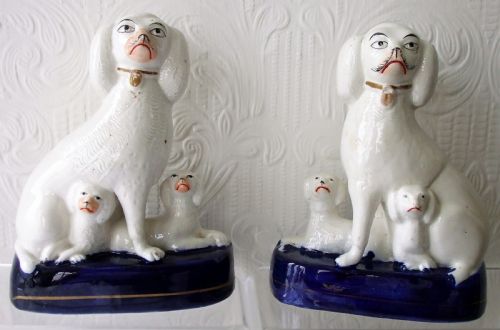
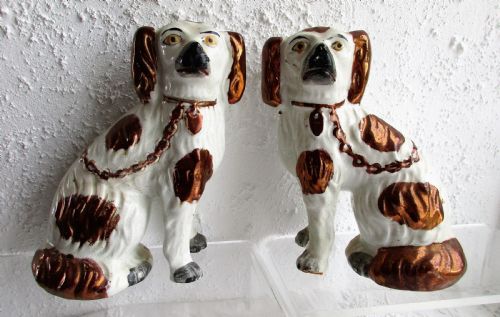
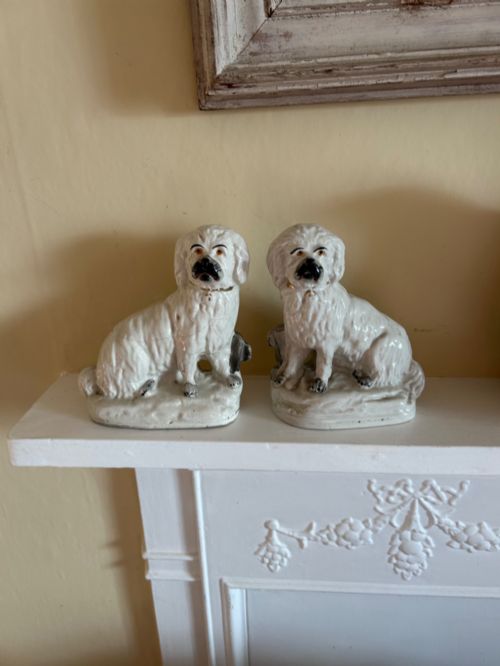
A staffordshire dog pair is typically encountered as seated spaniels, poodles, dalmatians, greyhounds, or St Bernards originating from the nineteenth century. These decorative figures were modelled in matching left and right orientations to sit symmetrically at either end of a fireplace or shelf.
The evidence shows various forms including miniature pairs, spill vases, and models accompanied by puppies or lions. Victorian examples dominate the selection, spanning periods from the Regency era through to nineteen hundred.
Materials and construction
Makers utilised earthenware, porcelain, ceramic, and glazed pottery to shape these figures. The raw clay bodies were formed into decorative figurines before receiving an outer coat of glaze.
Surface details were finished with gilt, gold leaf, and enamel colours. Some variations include specific treatments such as copper lustre or textured gravelware effects.
Retail Price Guide 2026
Typical UK retail prices for staffordshire dog pair, calculated from the Sellingantiques database of over a million retail prices indexed since 2003. This retail price guide relies exclusively on Sellingantiques data; no external sources or auction records are used, so the figures do not describe the wider market.
Some poodles sport textured gravelware coats, proving Victorian dog owners loved a bit of grooming flair.
Distinctions in quality
Size and scale also influence the tier of the piece, with larger dimensions and complex configurations such as additional pups or spill vases representing more ambitious workshop production.
The Staffordshire Dog Pair Glossary
- Earthenware
- A porous pottery body fired at lower temperatures, commonly used for nineteenth-century ceramic figures. It requires a vitreous glaze to ensure the surface remains sealed.
- Spill vase
- A hollow cylindrical holder incorporated into the figurine design to store wooden tapers for lighting fires or pipes. These dual-purpose objects combined utility with mantelpiece ornament.
- Gravelware
- A textured finish applied to pottery surfaces using sand or crushed particles to simulate fur or natural ground. This technique appears on specific nineteenth-century poodles and novelty figures.
- Copper lustre
- A metallic glaze finish imparting a coppery, reflective sheen to the ceramic surface. It was achieved by applying metallic oxides during the firing process.
- Regency
- An architectural and decorative period spanning the early nineteenth century. Pieces from this era precede the height of Victorian production.
Frequently Asked Questions
Where were they meant to sit?
These pairs were traditionally placed at either end of a mantelpiece or fireplace shelf. Their matching left and right orientations created a symmetrical display.
They also found homes on side tables and dressers within nineteenth-century parlours.
What dog breeds do these figures show?
The most common breed represented is the spaniel, though poodles, dalmatians, greyhounds, and St Bernards also appear. Less frequent variations include lions and poodles with pups.
Each breed reflects the domestic and decorative tastes of the Victorian period.
How do I spot a Victorian pair?
Victorian examples often feature painted facial expressions, hand-applied gilt, and characteristic earthenware or glazed pottery bodies. The modelling style aligns with nineteenth-century decorative conventions.
Evidence points to production spanning the Regency era up to nineteen hundred.
What are spill vases?
Spill vases are figures that incorporate a vertical hollow cylinder behind the animal. This tube held wooden spill sticks used for transferring flames from the hearth to candles.
They combined everyday practicality with ornamental mantelpiece display.