






Stacking Lamp Tables
Stacking lamp tables are space-saving nests designed to hold bedside or living room lighting.
Stacking Lamp Tables
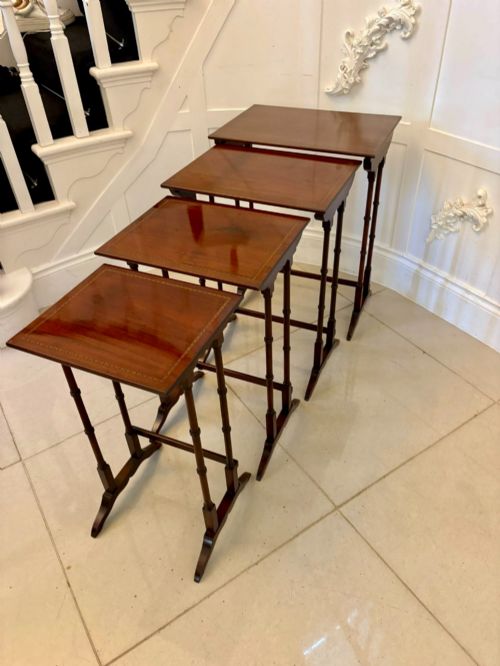
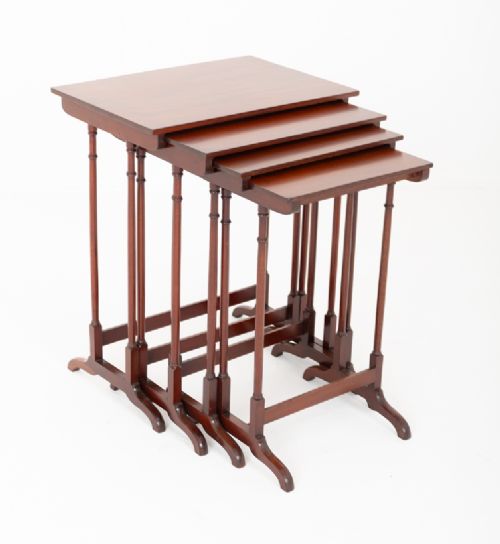
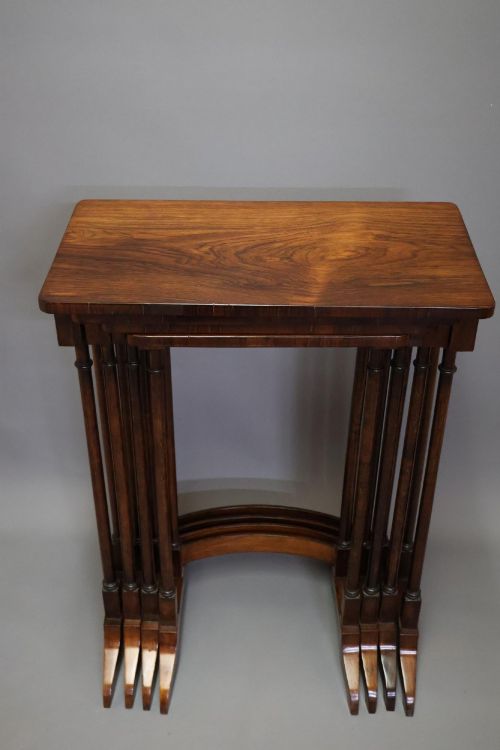
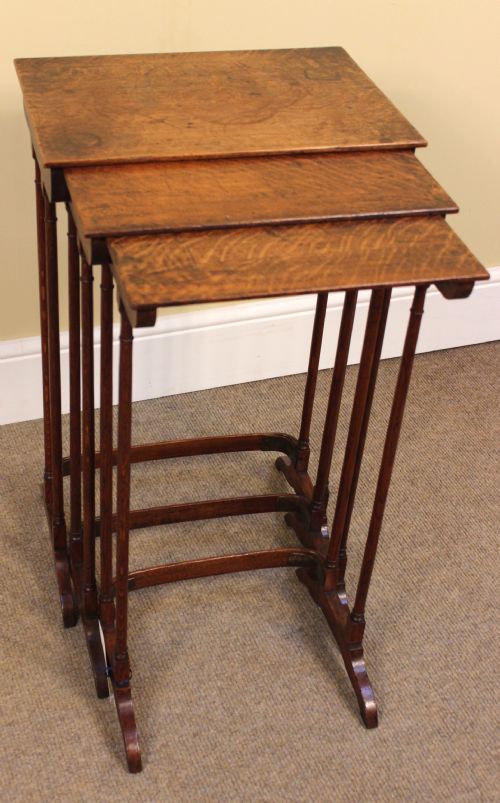
Stacking lamp tables, commonly found as nests of tables, provide versatile surfaces for domestic interiors. Buyers searching for stacking lamp tables typically encounter sets of three or four graduated tables designed to slide neatly beneath one another when not in use.
The selections span predominantly Edwardian and Victorian eras, alongside Regency revivals and early twentieth-century examples. Most pieces take the form of nests of tables, though occasional table lamps appear within the groupings.
How they were made
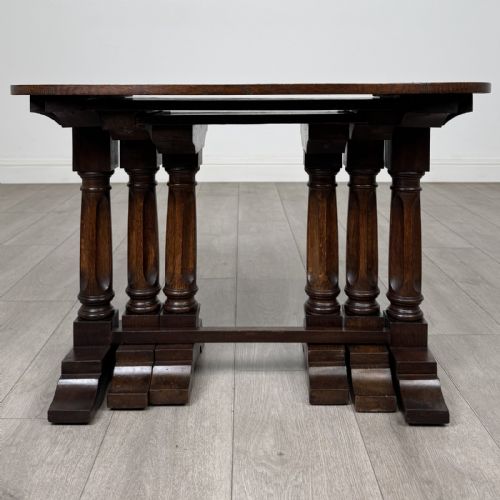
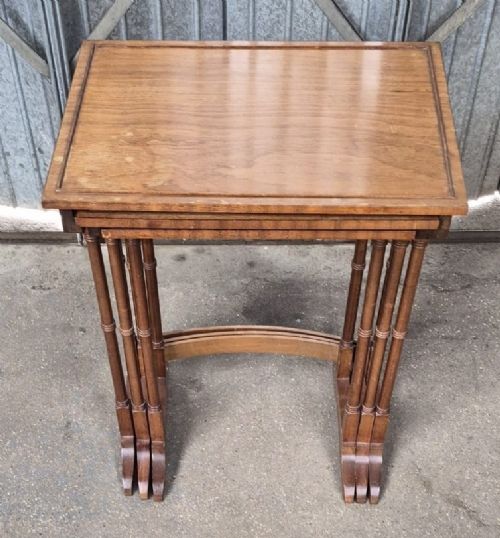
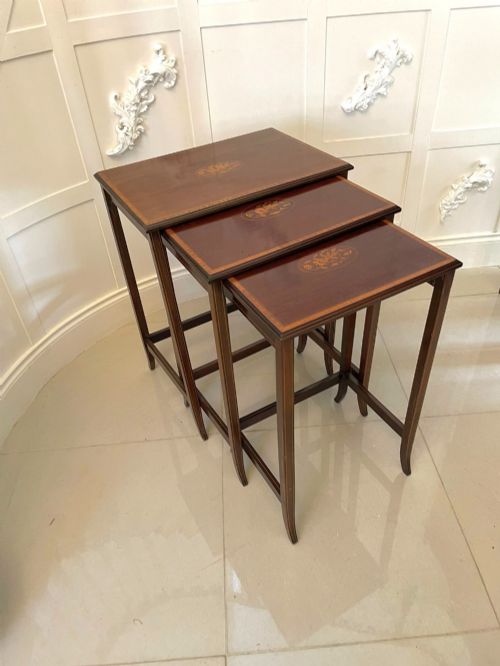
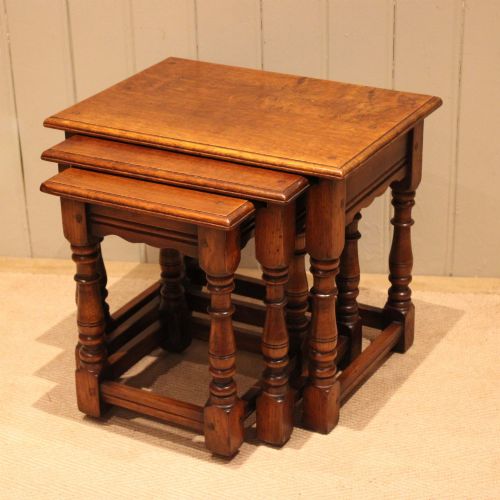
Cabinet makers utilised dense hardwoods such as mahogany and oak, frequently applying satinwood inlay and marquetry for surface decoration. Construction relies on traditional joinery to ensure each smaller table fits precisely within the frame of the preceding one.
Alternative finishes include lacquer, Chinoiserie decoration, and gilt painting applied to oriental hardwood or rosewood structures. These varied surface treatments reflect the aesthetic preferences of late nineteenth and early twentieth-century workshops.
Stacking Lamp Tables Retail Price Guide 2026
Typical asking prices for stacking lamp tables among the pieces listed under this phrase on Sellingantiques today, from the lower quarter to the upper quarter. They describe what is for sale here now, not the wider market.
Mahogany and oak dominate the timber selections, appearing alongside decorative satinwood inlay and lacquered oriental hardwood.
What varies in quality
Quality rests primarily in the precision of the graduated fit and the integrity of the timber framing. Superior examples maintain structural stability across all four tiers without excessive looseness in the joints.
Decorative execution further distinguishes the range, separating plain utilitarian oak sets from finely inlaid satinwood and hand-painted Chinoiserie surfaces. The crispness of the marquetry and the preservation of original lacquering dictate the standing of individual nests.
E.Daligny
The Stacking Lamp Tables Glossary
- Quartetto
- A set of four graduating tables designed to stack inside one another. This term appears frequently in nineteenth and early twentieth-century descriptions of nests.
- Nest of tables
- A set of multiple small tables engineered to fit beneath the largest surface. They offer flexible placement for lamps and drinks.
- Marquetry inlay
- Decorative patterns formed by fitting small pieces of veneered wood into a contrasting background. It requires considerable skill to achieve crisp floral or geometric motifs.
- Satinwood
- A pale, lustrous timber utilised extensively for stringing and decorative panels on Edwardian furniture. It provides a sharp visual contrast against darker mahogany.
- Chinoiserie
- European decorative style imitating Chinese artistic traditions, often featuring painted motifs on lacquered surfaces. It adds vibrant pictorial detail to occasional tables.
Stacking Lamp Tables: Frequently Asked Questions
What are stacking lamp tables?
Stacking lamp tables are sets of graduated occasional tables designed to slide together into a single footprint. They provide portable surfaces for lighting and drinks without cluttering a room.
Most examples consist of three or four pieces sharing a unified timber and decorative scheme. Their compact nature made them staples in period drawing rooms.
How were nests of tables used?
Victorian and Edwardian households deployed these tables across sitting rooms and boudoirs as portable resting places for reading lamps and tea services. When guests arrived, the smaller tiers were pulled out to serve multiple people.
Once entertaining concluded, the tables returned to their stacked formation against a wall or beside a chair. This efficient storage appealed to homes requiring flexible living arrangements.
How do I tell Edwardian sets apart?
Edwardian stacking tables frequently feature lighter mahogany frames enhanced by delicate satinwood inlay or stringing. They often adhere to the quartetto format of four graduating pieces.
Earlier Victorian iterations tend toward heavier oak or rosewood constructions with simpler lines. Later twentieth-century versions introduce modernist cubic forms or golden oak finishes.
Can these tables hold heavy items?
The largest table in a nest is constructed to bear standard domestic objects such as table lamps and books. The smaller subordinate tiers are lighter and built primarily for temporary use.
Care should be taken with the smallest graduating tables, as their reduced frames and slim legs are suited for lighter loads. Placing heavy items centrally helps maintain stability across all tiers.