


Stable Interior Artwork
Stable interior artwork captures equine portraits and sporting scenes within timber stalls, offering a direct window into nineteenth-century equestrian life.
Stable Interior Artwork
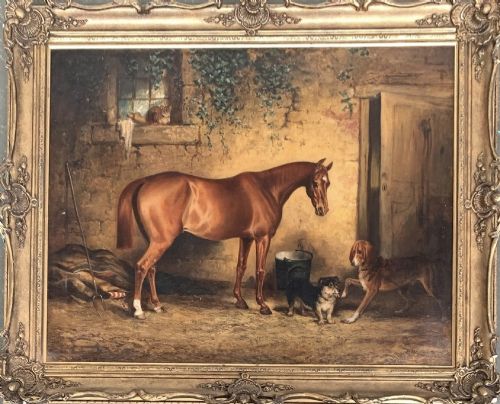
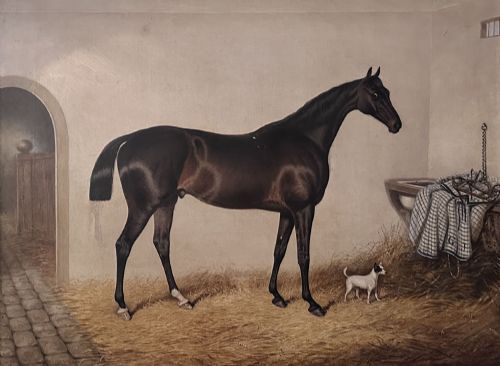
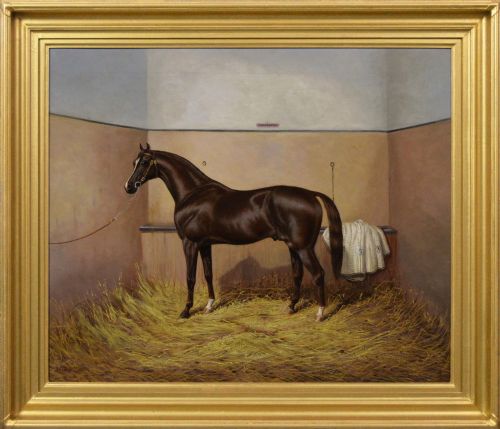
Stable interior artwork focuses primarily on nineteenth-century oil paintings depicting hunters, racehorses, and ponies housed within traditional wooden stalls. These works often include equine companions such as terriers or grooms attending to the animals.
The pieces on this page span the Victorian era, with specific dates reaching back to the early nineteenth century and the Georgian period. Buyers encounter both signed canvases by known painters and traditional works created in the manner of established sporting artists.
Subjects range from individual portraits of named horses like Worcester and Balmoral to broader compositions featuring stablehands and working dogs. Oil on canvas and oil on board serve as the primary mediums for these historical animal studies.
How these paintings were constructed
Artists painted primarily in oil on canvas or oil on board, building up rich layers of pigment to capture the gloss of a horse's coat and the texture of wooden stables. Prepared canvas stretched over wooden frames provided the standard foundation for these nineteenth-century works.
Ornate framing often involved wood, oak, and gold leaf or gilt finishes to complement the domestic and sporting interiors where these paintings hung. Traditional gilding techniques gave the frames a warm metallic sheen that contrasted with the dark tones of the stable backgrounds.
The listings on this site utilise oil on canvas, oil on board, and wood, spanning periods from the early 19th century through the Victorian era.
What separates standard works from finer examples
Quality rests heavily on the anatomical precision of the horse and the handling of light within the confined stable space. Finer paintings capture the subtle musculature of the animal and the gleam of light on straw, whereas lesser works treat the background with formulaic stiffness.
Attribution to documented painters or their immediate circles elevates a piece above anonymous studio output. The depth of character in the animal's eye and the natural interaction between horse, groom, and terrier distinguish superior sporting art.
Albert Clark·Benjamin Cam Norton·Edwin Frederic Holt·Charles Bilger Spalding·John Nost Sartorius·John Ferneley Jnr·William Shayer Snr
The Stable Interior Artwork Glossary
- Bay
- A horse coat colour characterised by a reddish-brown body with a black mane, tail, and lower legs. This shade appears frequently in nineteenth-century equine portraits.
- Roan
- An even mixture of white hairs with red, brown, or black hairs on a horse's body. The strawberry grey roan is a distinct variation seen in Victorian sporting art.
- Gilt
- A thin layer of gold applied to wood or other surfaces to create a decorative frame finish. Many Victorian oil paintings retain their original gilt surrounds.
- Sporting Art
- A genre of painting dedicated to horses, hunting, racing, and dogs. This tradition flourished during the Georgian and Victorian periods.
Stable Interior Artwork: Frequently Asked Questions
What is stable interior artwork?
These pieces are nineteenth-century oil paintings that depict horses resting inside traditional timber stalls, often accompanied by grooms or dogs. They record the deep cultural importance of equestrianism during the Victorian and Georgian eras.
Created as both portraits of prized animals and records of sporting life, the works utilise oil paint on canvas or board. They offer modern collectors a tangible link to historical animal husbandry and sporting traditions.
How do I identify a Victorian horse painting?
Victorian horse paintings generally feature deep, rich oil colours, dark wooden stable backgrounds, and realistic anatomical portrayals of hunters or racehorses. Artists of this period paid careful attention to tack, grooming tools, and stable architecture.
Framing also provides a clue, as many authentic works retain period oak frames finished with gold leaf or gilt. Inscriptions on the canvas or stretcher bars often name the specific horse or the artist.
Where should I hang these paintings?
Stable interior artwork suits traditional reception rooms, studies, or hallways where timber furniture and classic decor complement the dark tones of the canvas. Placing them away from direct sunlight protects the oil pigments and the delicate gilt frames.
Because these works feature warm earthy palettes, they anchor a room decorated in traditional colours. Pairing them with wooden architectural details enhances the historical atmosphere of the stable scene.
Who painted these stable scenes?
Specialist animal and sporting artists of the nineteenth century painted these interior scenes, often working on commission for horse owners, breeders, and landed gentry. Some painters focused exclusively on equine portraits while others captured broader rural and sporting environments.
Signatures or attributions on the works point to both celebrated Victorian painters and skilled artists working within established sporting traditions. Their careful observation preserved individual animals and working practices for posterity.