



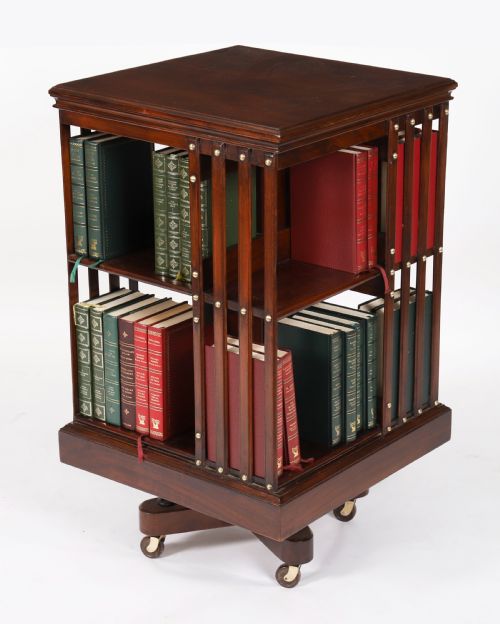


Square Library Bookcase
A square library bookcase is a compact revolving piece built to hold volumes within arm's reach while turning smoothly on a central spindle.
Square Library Bookcase
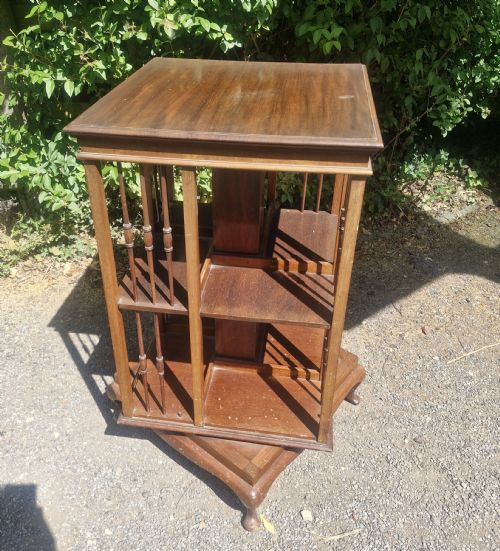
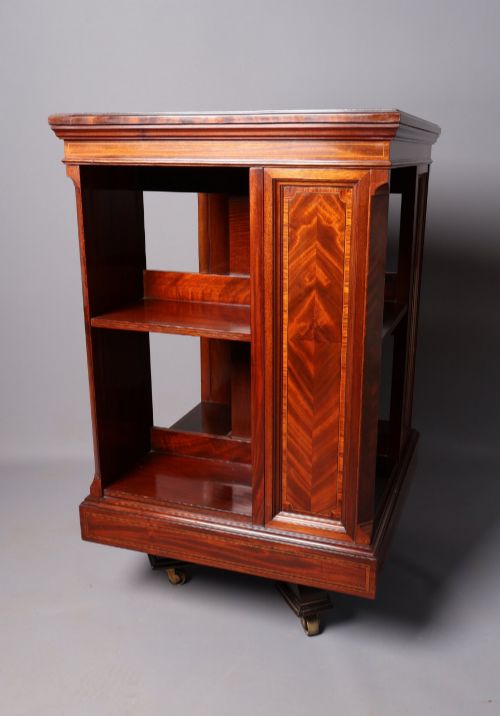
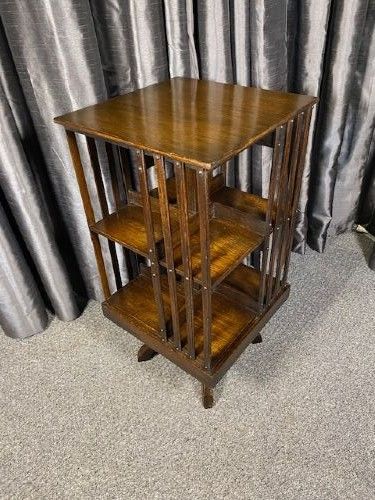
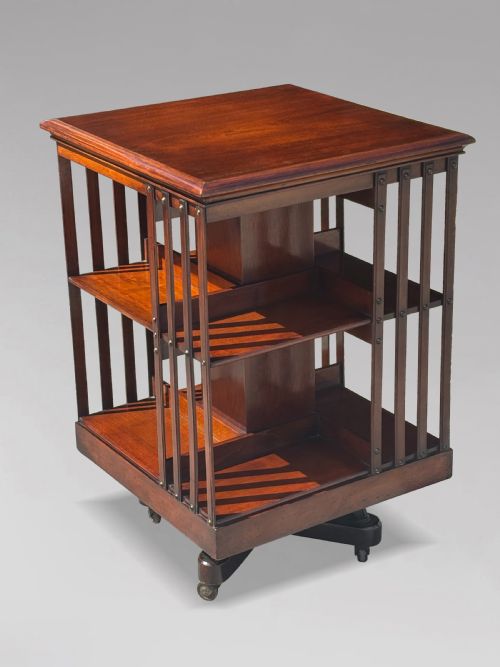
A square library bookcase most commonly appears on this page as a revolving table-top or floor-standing model. These pieces date predominantly from the Victorian and Edwardian periods, reflecting the domestic and study habits of the late nineteenth and early twentieth centuries.
The selections span simple open formats alongside variations equipped with shelves for compact storage. Oak and mahogany dominate the construction, often enhanced by satinwood inlay or brass fittings.
Originating largely from English workshops, these items serve as practical furniture for studies, drawing rooms, and libraries. Buyers encounter both petite editions and larger structures designed to hold substantial collections.
Materials and Construction
Cabinetmakers utilised dense timbers such as mahogany, walnut, and oak to construct the main framework of each square library bookcase. These hardwoods provided the necessary structural integrity to bear the weight of numerous heavy volumes.
Internal mechanisms frequently incorporate iron, cast iron, and brass components to facilitate the smooth rotation of the tiers. Artisans also applied delicate satinwood inlay to enrich the exterior surfaces of select Edwardian examples.
Square Library Bookcase Retail Price Guide 2026
Typical asking prices for square library bookcase among the pieces listed under this phrase on Sellingantiques today, from the lower quarter to the upper quarter. They describe what is for sale here now, not the wider market.
Quality Variations
The distinction between standard examples and superior productions rests in the selection of timber and the refinement of the rotating mechanism. Fine grain matching in the mahogany or walnut indicates a more thoughtful approach by the maker.
Execution of decorative details, such as precise satinwood inlay and robust brass or cast iron hardware, separates workshop output. Superior pieces maintain alignment and stability across all tiers during rotation.
Maple and Co·Heals
The Square Library Bookcase Glossary
- Revolving bookcase
- A freestanding or table-top unit mounted on a concealed pivot mechanism allowing access to books from all sides. This design became particularly popular during the late Victorian and Edwardian eras.
- Satinwood inlay
- A decorative technique where contrasting light-coloured wood is set into the primary timber surface. It appears frequently on Edwardian pieces to add subtle geometric or floral detailing.
- Chippendale style
- A design influence drawing on mid-eighteenth-century English furniture aesthetics, characterised by carved mahogany and classical proportions. Items adopting this style interpret traditional motifs for later domestic interiors.
- Cast iron
- A strong, heavy metal alloy utilised in the internal pivot mechanism to support the rotating weight. Its durability ensured the smooth operation of multi-tiered revolving furniture.
Square Library Bookcase: Frequently Asked Questions
What is a square library bookcase?
A square library bookcase is a compact piece of furniture designed to sit on a floor or table while holding books across multiple tiers. These units are engineered to rotate on a central pivot, allowing users to browse titles easily from a seated position.
Most surviving examples date from the Victorian and Edwardian periods, constructed in timbers like mahogany, walnut, and oak. They were intended for studies, libraries, and parlours where space efficiency was paramount.
How do I date a revolving bookcase?
Dating relies on examining the timber, decorative techniques, and mechanical hardware. Edwardian pieces often feature satinwood inlay and lighter mahogany tones, whereas Victorian versions tend to be heavier and darker.
Makers' stamps or labels, when present, provide definitive attribution to firms such as Maple and Co or Heals. The construction of the revolving mechanism also offers clues regarding the manufacturing era.
Where should I place it?
These revolving bookcases function best beside an armchair, desk, or sofa where books remain within immediate reach. Because they turn 360 degrees, they do not need to sit flat against a wall and can occupy corners or open spaces.
Their compact square footprint makes them suitable for rooms with limited wall space for traditional shelving. Placing them away from direct heat sources protects the timber and veneer.
How do I maintain the wood?
Routine maintenance involves dusting with a dry, soft cloth to prevent particulate accumulation on the polished surfaces. Applying occasional quality beeswax helps nourish traditional hardwoods like mahogany and oak without building up residue.
Avoid placing damp items directly onto the timber, and protect the surface from prolonged exposure to direct sunlight. The internal pivot mechanism benefits from occasional professional inspection to ensure smooth rotation.