






Square Cut Diamond
A square cut diamond brings crisp geometry and sharp brilliance to rings and pendants across multiple eras.
Square Cut Diamond
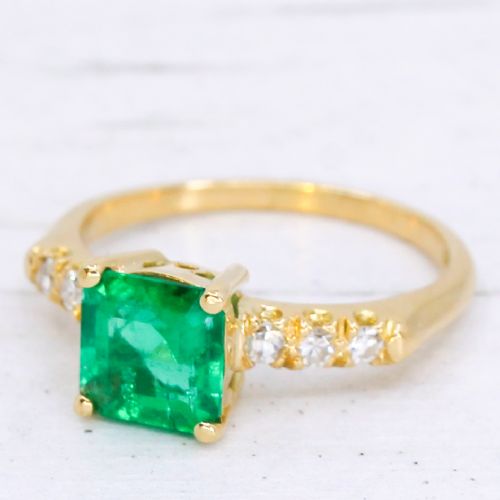
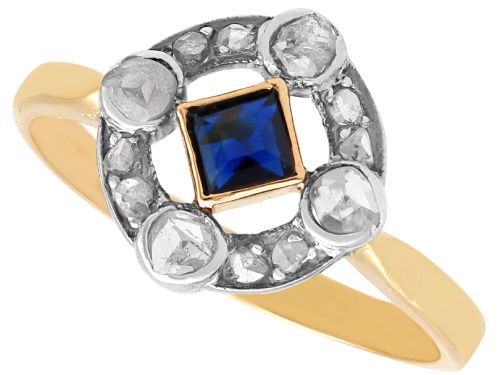
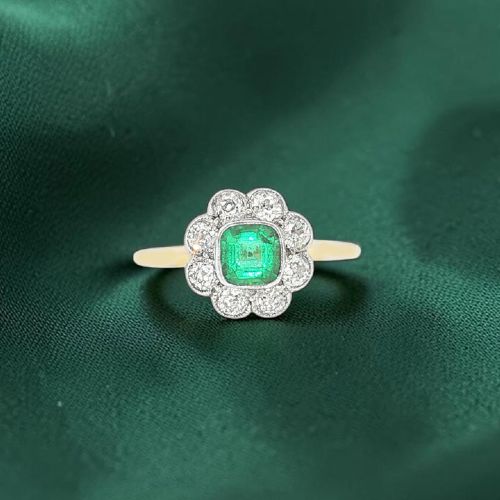
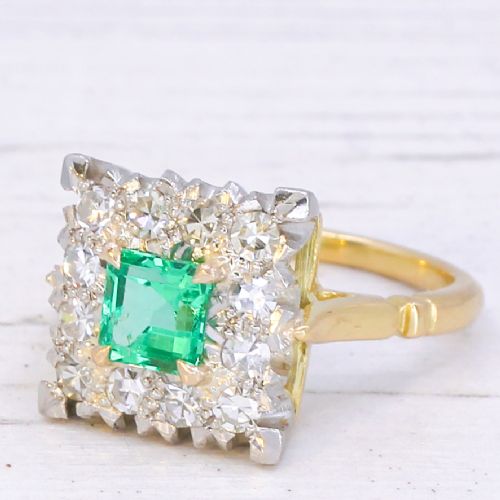
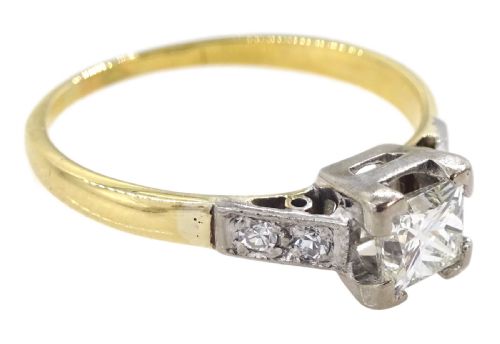
A square cut diamond sits at the centre of various antique and vintage items, appearing most frequently in cluster engagement rings, cocktail rings, and dress rings spanning the Edwardian period to the mid-twentieth century. These jewels pair geometric stones with surrounding collets of emeralds, sapphires, rubies, or smaller accent diamonds.
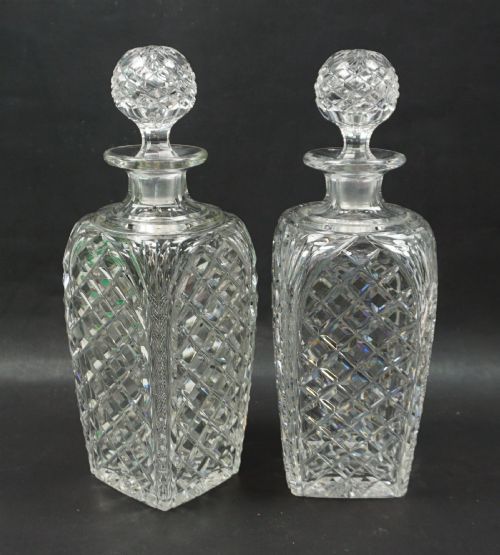
Beyond jewellery, pieces bearing square cutting extend into decorative domestic objects including heavy crystal decanters, inkwells, bowls, and biscuit jars shaped with square profiles. These household items demonstrate how geometric facets were applied to glass and lead crystal alongside precious gemstones.
The selection spans from nineteenth-century glass vessels and Victorian brass-mounted inkwells through to distinct Art Deco platinum settings and robust 1950s or 1960s gold designs. Buyers encounter everything from delicate Edwardian cluster configurations to bold mid-century cocktail pieces.
Materials and Construction
Jewellery pieces utilise enduring precious mountings in platinum, 18ct yellow gold, rose gold, and white gold, often pairing the central diamond with high-purity metal settings designed to secure sharp corners. Craftsmen utilised durable prongs and bezel techniques to hold angular stones firmly within intricate cluster arrangements.
Household glassware employs heavy-cut lead crystal and standard cut glass formed into square sections and tapered profiles. Artisans shaped these glass vessels using traditional wheel-cutting and hobnail patterning to create light-reflecting surfaces.
Square Cut Diamond Retail Price Guide 2026
Typical asking prices for square cut diamond among the pieces listed under this phrase on Sellingantiques today, from the lower quarter to the upper quarter. They describe what is for sale here now, not the wider market.
Materials appearing across current items include diamond, platinum, 18ct gold, emerald, sapphire, cut glass, lead crystal, and brass.
Factors Determining Quality
Quality rests upon the precision of the stone cutting and the integrity of the metalwork surrounding fragile corners. Superior pieces maintain crisp geometric facets without chipping, while lesser examples show softening from wear or clumsy past resizing.
In glassware and decorative vessels, quality is visible in the depth of the wheel-cut patterns, the clarity of the crystal, and the weight of the piece. Fine antique decanters and bowls present sharp, uniform hobnail or square-section cutting rather than shallow, blurred moulding.
The Square Cut Diamond Glossary
- Cluster ring
- A ring featuring a central gemstone surrounded by a border of smaller stones, frequently diamonds framing a sapphire or emerald.
- Hobnail pattern
- A decorative glass-cutting motif featuring rows of small, raised pyramidal projections resembling the hobnails on traditional boots.
- Platinum
- A dense, ductile precious metal used extensively in Edwardian and Art Deco jewellery for its strength in delicate, secure settings.
- Collet
- A band or collar of metal that holds a gemstone in place, often with a visible rim around the edge of the stone.
Square Cut Diamond: Frequently Asked Questions
How do I date a diamond ring?
Dating relies on the mounting style, metal choices, and the cutting technique of the stones. Edwardian and Art Deco settings show specific platinumwork and millegrain detailing that differ markedly from later mid-century designs.
Examination of the inner shank and gem-setting methods often reveals hallmarks or construction traits characteristic of specific decades between the nineteenth century and the 1960s.
What is a cluster ring?
A cluster ring arranges multiple smaller gemstones around a prominent central stone to create a larger visual impact on the finger. This layout was immensely popular during the Victorian, Edwardian, and Art Deco eras.
The central stone is typically a diamond, sapphire, emerald, or ruby, encircled by matching or contrasting accent stones set in platinum or gold.
How were old cut diamonds made?
Old cut diamonds were shaped largely by hand using primitive diamond-cutting tools, resulting in smaller tables, higher crowns, and larger culets than modern stones. Artisans aimed to maximise weight retention and sparkle under candlelight.
These stones exhibit distinctive chunky facets that cast broad flashes of light rather than the precise brilliance of contemporary brilliant-cut gems.
How do I care for antique glass decanters?
Antique glass decanters require careful hand washing in lukewarm water with mild soap, avoiding sudden temperature changes that can crack old crystal. Wooden or metal stands and stoppers should be kept dry to prevent tarnishing or wood swelling.
Storing them away from direct sunlight and vibration protects both the glass body and any historical stoppers fitted to the neck.