



Spool Turn Chair
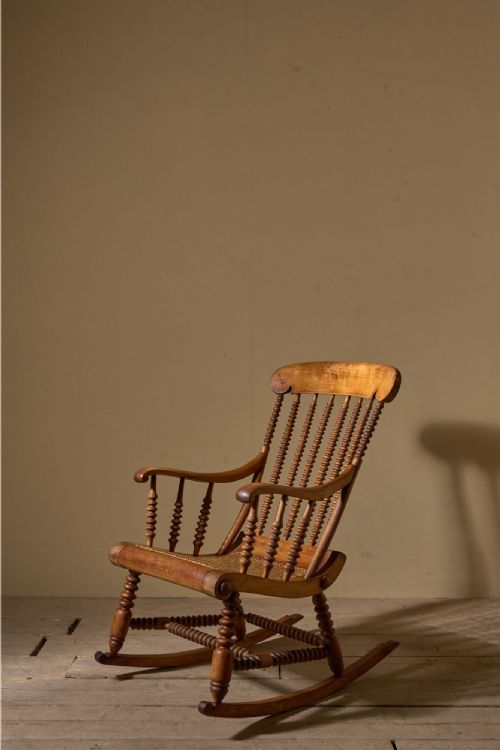
Spool turn chair examples bring repetitive turned woodwork into domestic spaces through armchairs, rockers, and day beds.
Spool Turn Chair
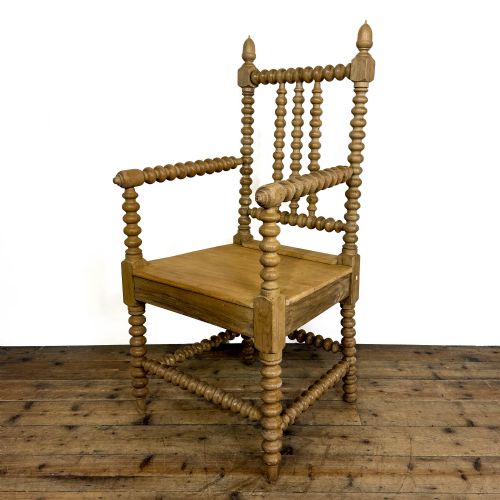
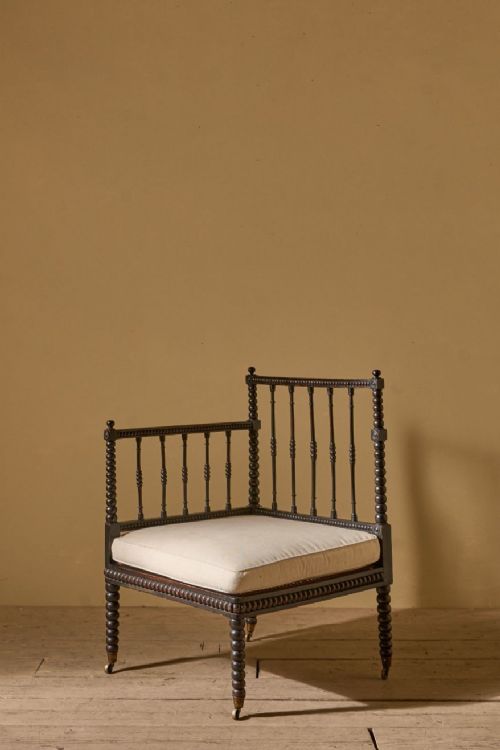
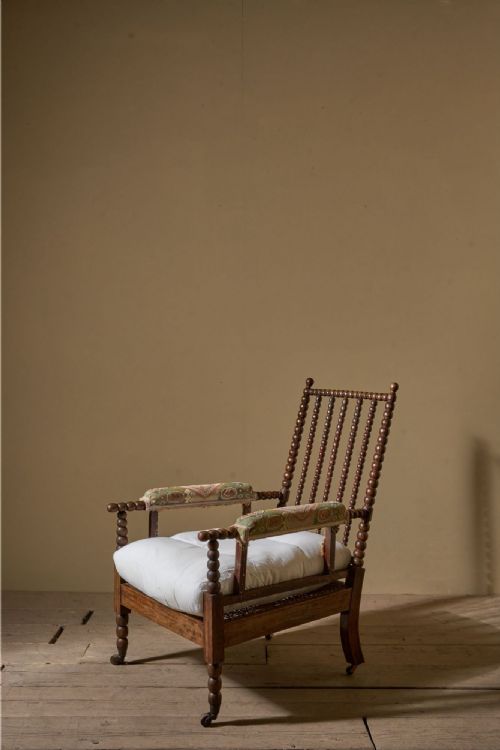
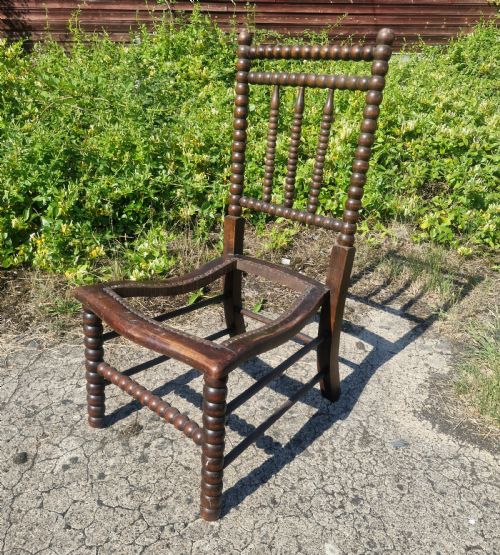
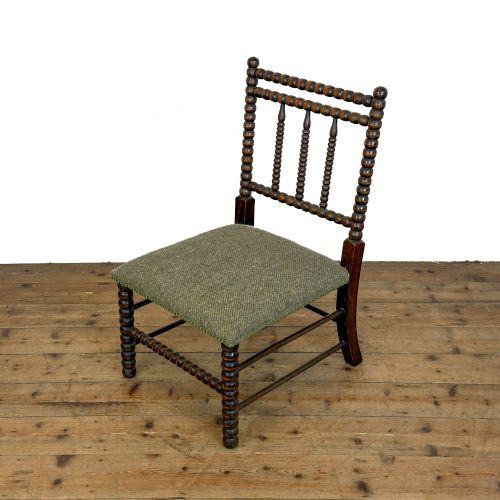
Most examples encountered on this page date from the nineteenth century, including Victorian country iterations, ebonised pieces, and simulated rosewood versions. Makers utilised various seating configurations, ranging from low bedroom chairs and slipper chairs to large country throne armchairs.
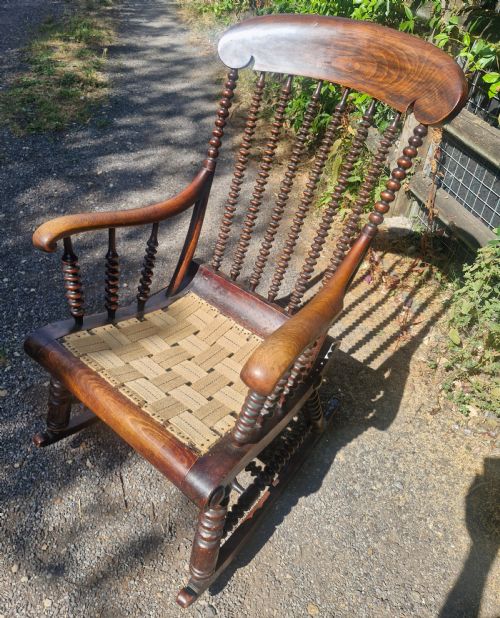
The defining characteristic remains the continuous bobbin or spool ornamentation applied to the uprights, stretchers, and arms. Regional variations manifest in vernacular Scottish rockers, Swedish country throne chairs, and Italian Baroque revival open armchairs.
Materials and construction
Workshops constructed these frames using hardwoods such as oak, walnut, and rosewood, alongside softer woods finished with ebonisation or simulated grain painting. Turning lathes shaped the repetitive spool or bobbin motifs along the structural members.
Seating portions incorporate cane work, upholstered fabric, textile cushions, and velvet inserts fitted into the wooden frames. Brass accents and hardware occasionally appear on nineteenth-century iterations to secure upholstery or joints.
Spool Turn Chair Retail Price Guide 2026
Typical asking prices for spool turn chair among the pieces listed under this phrase on Sellingantiques today, from the lower quarter to the upper quarter. They describe what is for sale here now, not the wider market.
Some nineteenth-century makers evidently enjoyed turning so many wooden bobbins that they extended the pattern to child-sized thrones.
Assessing quality and execution
The precision and uniformity of the turned bobbins indicate the skill of the original woodturner, distinguishing carefully proportioned frames from simpler work. The choice of timber also dictates grade, with solid walnut or oak demonstrating greater structural integrity than softer painted woods.
Original seating materials, whether woven cane or traditional upholstery textiles, reflect the integrity of the piece. Fine examples maintain balanced proportions between the dense turning and the overall seating form, avoiding clumsy joints.
The Spool Turn Chair Glossary
- Bobbin turning
- A form of woodturning where a series of rounded, spool-like shapes are cut sequentially along a length of wood. This technique creates the characteristic repetitive profile seen on the frames of these chairs.
- Ebonisation
- A chemical treatment or pigmented finish applied to timber to imitate the dark, dense appearance of ebony. Nineteenth-century makers frequently utilised this method on fruitwood or hardwood framing.
- Vernacular
- Regional furniture styles produced by local cabinetmakers using native materials to satisfy domestic needs. Scottish and Swedish examples on this page reflect distinct local interpretations.
- Corner chair
- A seating form designed to fit into the corner of a room, featuring a square seat set diagonally with a curved backrest supported by turned spindles.
Spool Turn Chair: Frequently Asked Questions
What is a spool turn chair?
A spool turn chair is a seating piece defined by wooden frames shaped on a lathe into repetitive rounded segments resembling bobbins or spools. These frames appear across armchairs, rocking chairs, and day beds from various European traditions.
Most surviving examples date from the nineteenth century, utilising woods like oak, walnut, and ebonised hardwood.
How do I date a bobbin chair?
Dating relies on examining the timber species, finishing techniques like ebonisation, and the structural form of the chair. Eighteenth-century versions typically employ solid oak, while nineteenth-century pieces often feature walnut, rosewood, or painted softwoods.
Regional styles such as Scottish vernacular or Swedish country pieces also provide clues to the period and origin of the construction.
Were these chairs used in bedrooms?
Yes, specific forms such as low seat bedroom chairs and slipper chairs were designed for domestic chamber use during the nineteenth century. Their lower profile accommodated dressing routines and smaller spaces.
Larger armchairs and rocking chairs served primary living rooms and country house reception spaces.
What seat materials are common?
Original seating configurations include woven cane panels, dropped-in cushions, and fixed upholstery using textiles or velvet. Many open armchairs paired wooden frames with cane seats for domestic comfort.
Upholstered variants often incorporated loose cushions placed directly over the wooden support structure.