






Spiral Twist Candlesticks
Spiral twist candlesticks bring tactile warmth to a room through turned wood and polished metal.
Spiral Twist Candlesticks
Spiral twist candlesticks are functional items for holding candles that use a helical turn along the stem for visual movement. When searching for spiral twist candlesticks, buyers encounter varied forms spanning the Georgian, Victorian and Edwardian periods.
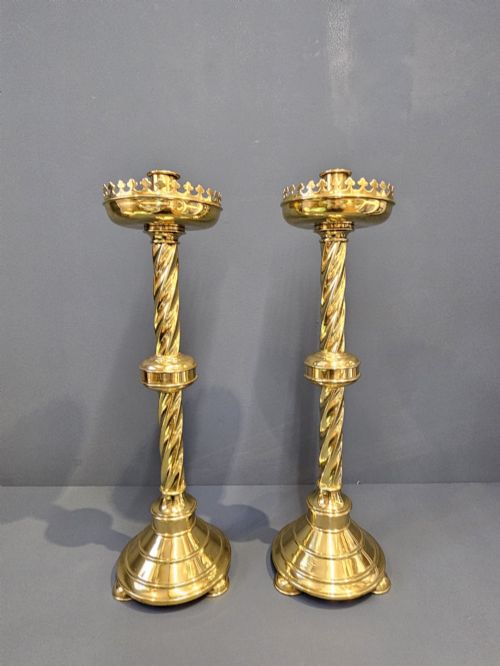
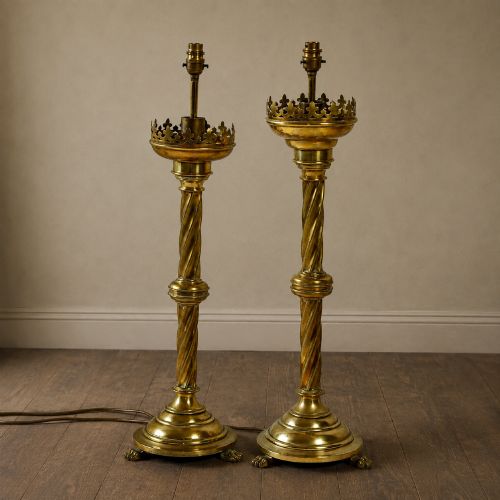
The selection here encompasses pairs and singles produced from materials ranging from turned timber to ecclesiastical brass. Most common are standard domestic candlesticks alongside taller altar and church variants adapted for interior lighting.
How they were made
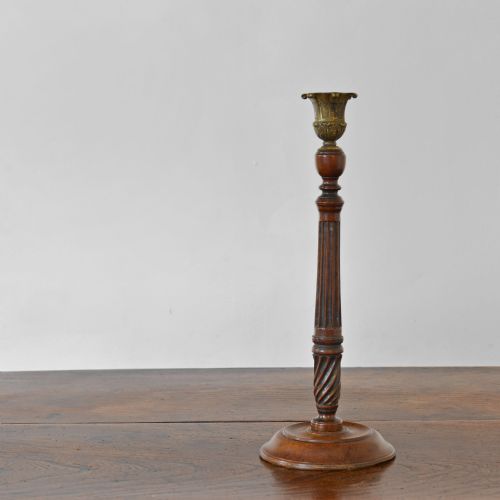
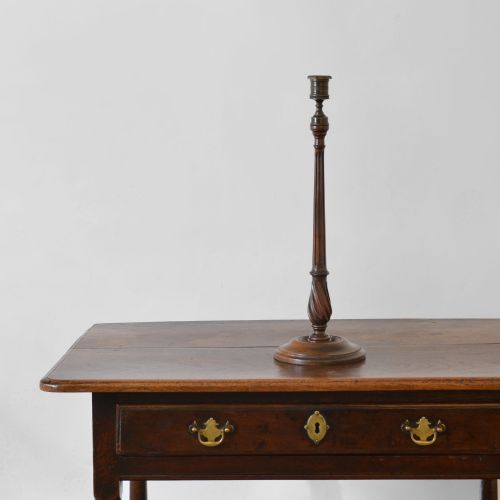
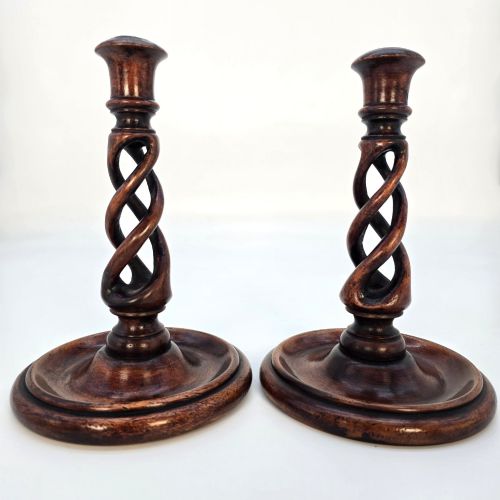
Wood examples such as oak, mahogany, walnut and fruitwood rely on lathe turning to cut the open or closed spiral stems. Walnut and fruitwood often show hand finishing to crisp the edges of the twist.
Metal versions in brass and copper utilise casting and jointing methods, sometimes pairing a heavy metal stem with a fitted wooden base or enamel details. Crystal glass pieces are moulded and finished with domed and folded feet.
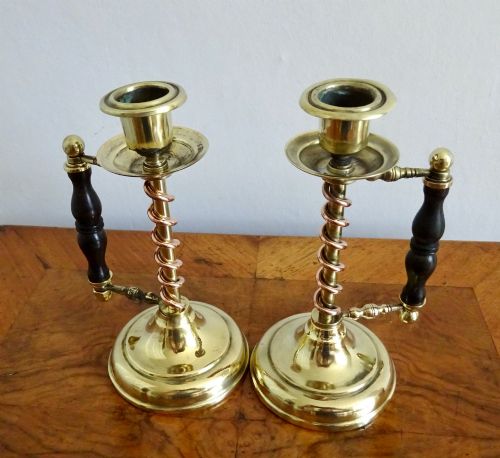
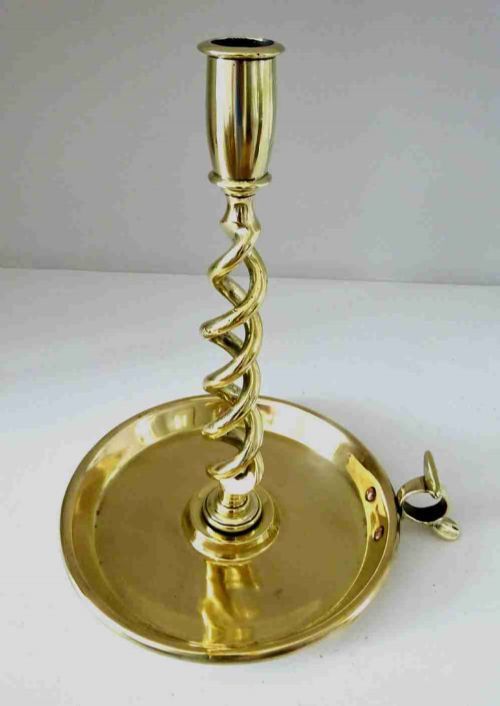
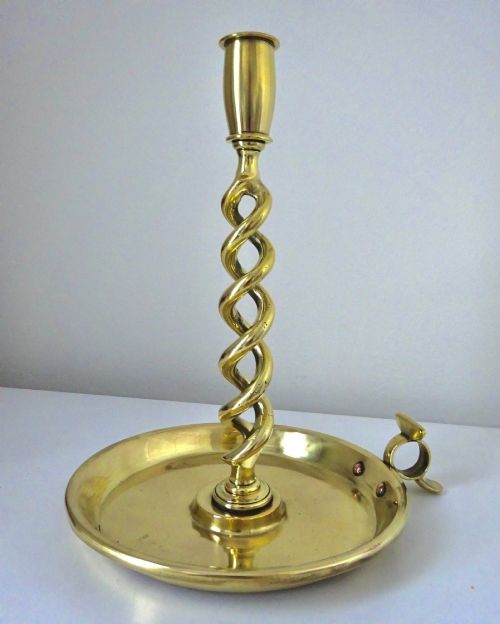
Some Victorian brass candlesticks come with integrated trays and carrying handles for navigating dark corridors before bedtime.
What varies in quality
Quality rests in the precision of the twist and the integrity of the material. Sharp, deep cuts in timber show skilled hand turning, whereas soft or shallow grooves indicate rushed production.
Heft and balance distinguish better metalwork. Solid brass castings with clean seams and well-fitted components hold stability, while inferior examples feel light or rely on excessive solder.
T Thomason & Co
The Spiral Twist Candlesticks Glossary
- Barley twist
- A type of turned column resembling a barley sugar stick, featuring a continuous helical spiral. This form is common in seventeenth-century revival furniture and later nineteenth-century woodwork.
- Open twist
- A spiral design where material is removed from the centre of the helix to leave an open space through the middle. This technique requires considerable skill to execute without splitting the timber.
- Ecclesiastical
- Pertaining to the church, describing heavy brass or bronze altar candlesticks used in liturgical settings. These pieces are typically larger and sturdier than domestic lighting.
- Gothic Revival
- An architectural and decorative style popular during the nineteenth century that reinterprets medieval forms. Candlesticks in this style often incorporate ecclesiastical motifs and heavy bases.
Spiral Twist Candlesticks: Frequently Asked Questions
How do I clean antique brass candlesticks?
Dust gently with a soft dry cloth to preserve the aged surface patination. Avoid harsh chemical polishes that strip the historic finish.
For stubborn residue, warm soapy water on a damp cloth works best. Dry thoroughly immediately after to prevent water spotting.
Can I convert these candlesticks into table lamps?
Many taller brass and wooden examples are adapted into electric table lamps over time. Check the base and stem for existing wiring holes before proceeding.
Using a professional restorer ensures the conversion preserves the structural integrity of the antique. Reversible wiring methods protect the long-term value of the piece.
How can I tell Georgian wood from Victorian revivals?
Georgian timber work tends to show tighter proportions and richer grain patination from natural ageing. Tool marks inside the turned sockets often indicate eighteenth-century hand methods.
Victorian revivals often use heavier bases and display machine precision in the twist. Examining the timber species and construction joints clarifies the manufacturing era.
Are these pairs matched or assembled later?
Pairs from the nineteenth and early twentieth centuries sometimes consist of slightly mismatched components due to replacements over decades. Inspect the weight, height and turning pitch closely to verify symmetry.
Slight variations in brass colour or timber grain are normal for hand-finished items. Even when assembled later, matched pairs function well together visually on a mantelpiece.