



Spiral Turned Legs
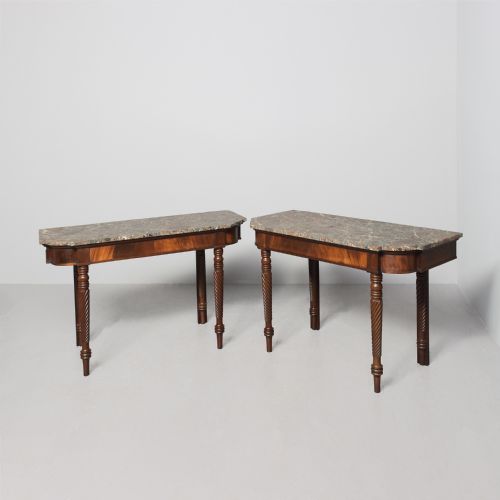
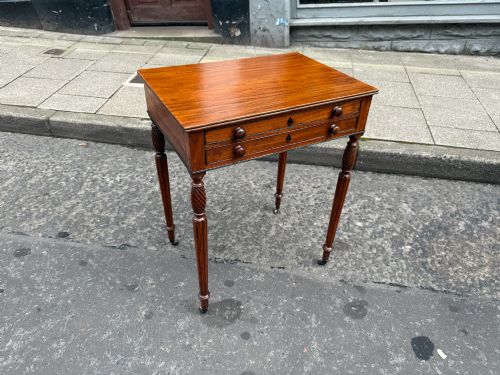
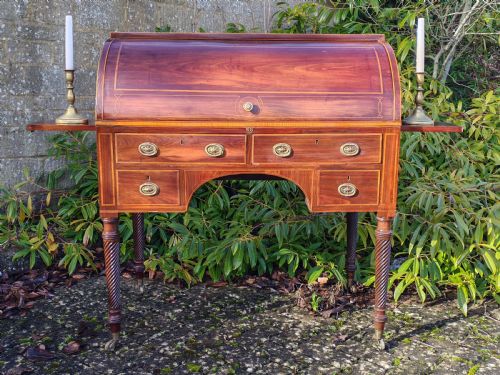
Spiral turned legs bring architectural vigour to tables and seating, giving substantial weight to walnut cabinets and mahogany side pieces alike.
Spiral Turned Legs
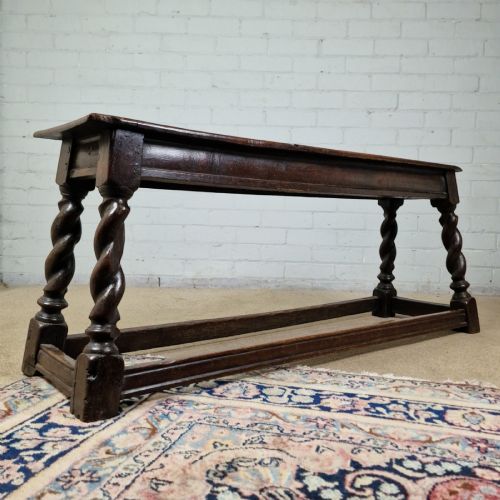
When you search for spiral turned legs, you encounter supports formed by carving or lathe-working timber into twisting, rope-like columns. These structural members appear across multiple centuries, supporting surfaces from 17th Century walnut cabinets on stands to Georgian mahogany side tables and Victorian desks.
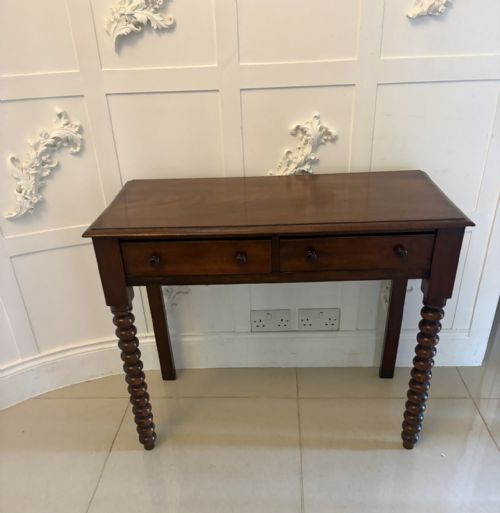
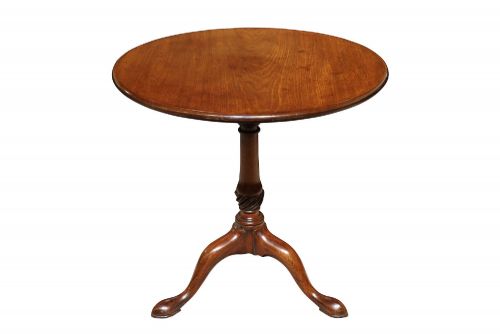
The version you are most likely to meet on this page is the side table or occasional table in oak, mahogany, or walnut, dating from the 17th Century through to the 19th Century. Tables and seating utilise these twisted profiles to introduce movement and rhythm into domestic furniture without sacrificing structural integrity.
Originating in earlier baroque joinery, the form persists through the Regency and Victorian eras, adapting to changing fashions in cabinet-making. Whether applied to an 18th Century long stool, a William and Mary centre table, or a late 19th Century occasional table, the twisting column remains a defining feature of the design.
How they were made
Cabinet-makers fashioned these elements primarily in oak, walnut, and mahogany, selecting timbers capable of holding crisp lines under hand tools or lathe work. Woods such as laburnum and satinwood also appear, allowing makers to contrast the twisted supports with parquetry, marquetry, or oyster veneers across the main body of the piece.
The twist itself was achieved by cutting helical grooves down a turned wooden shaft, either by hand chisel or specialised lathe rigging, ensuring each curve catches the light. Master joiners then integrated these turned legs firmly into frames using traditional joinery methods, securing them to rails, stretchers, or platforms on cabinets on stands and heavy dining tables.
Spiral Turned Legs Retail Price Guide 2026
Typical asking prices for spiral turned legs among the pieces listed under this phrase on Sellingantiques today, from the lower quarter to the upper quarter. They describe what is for sale here now, not the wider market.
A sturdy cat or plate stand proves that even household pets and dinnerware deserved a proper twist.
What varies in quality
Quality rests upon the precision of the twist and the harmony between the turned supports and the wider piece of furniture. A well-executed leg maintains consistent depth and rhythm along its helical path, whereas lesser examples display uneven cutting or clumsy proportions relative to the top.
Material selection also dictates distinction, with dense woods like walnut and mahogany retaining sharper definition over centuries than softer timbers. The integration of the turnings into the broader structure - such as robust framing on cabinets on stands or stable joints on armchairs - separates standard utility work from finer cabinet-making.
Gillows
The Spiral Turned Legs Glossary
- Spiral turn
- A wooden support shaped into a continuous helical twist resembling a rope or screw. This profile provides both vertical strength and visual texture.
- Barley twist
- An alternative term for a spiral turning, named for its visual resemblance to twisted barley sugar. It is commonly found on 17th Century and later furniture.
- Oyster veneer
- Slices cut transversely from small branches or roots to produce circular or oval patterns resembling oyster shells. This technique appears on high-status surfaces paired with turned supports.
- Parquetry
- Geometric wood-mosaic work used for flooring or furniture tops. Makers often combined parquetry panels with turned leg structures on tables and cabinets.
- Marquetry
- Decorative veneer work forming pictorial or floral designs using various coloured woods. It frequently adorns the bodies of 17th Century stands supported by turned legs.
Spiral Turned Legs: Frequently Asked Questions
How do I date spiral turned legs?
Dating depends heavily on the secondary timbers, construction methods, and overall furniture form rather than the twist alone. Seventeenth-century examples often utilise oak or walnut with heavy under-framing, while later 19th Century revivals show different jointing techniques.
Examining the wear patterns and tool marks around the turning helps distinguish period production from later interpretations. Match the leg style with the carcass design, such as a cabinet on stand or a Pembroke table, to narrow down the era.
Are these legs always hand carved?
Many early pieces rely on hand chisels and rasps to cut the helical path into the turned wood. As mechanical techniques advanced into the 19th Century, lathes played a larger role in shaping the timber.
Close inspection of the grooves reveals subtle tool variations that separate hand-worked pieces from later mechanical production. Both methods produce durable supports, though hand-finished items carry distinct marks of individual craftsmanship.
Which woods are most common?
Oak and walnut dominate the earlier pieces from the 17th Century, providing dense structures for heavy stands and tables. Mahogany becomes prevalent in Georgian and Regency items, offering a smooth surface for fine turning.
Satinwood and laburnum appear on specialised or decorative pieces, adding varied grain patterns to the composition. Each timber responds differently to the turning process, influencing the sharpness of the final twist.
How do I care for turned furniture?
Maintain stable humidity levels to prevent the timber from splitting along the grain of the turned columns. Gentle dusting with a dry cloth keeps debris out of the helical grooves without harming the finish.
Avoid placing these items in direct sunlight or near heat sources that might dry out the wood. Occasional application of appropriate wax preserves the surface sheen on mahogany, walnut, and oak.