



Spiral Turned Candlesticks
Spiral turned candlesticks bring wonderful movement to a table, combining structural turning with the warm glow of turned wood and polished brass.
Spiral Turned Candlesticks
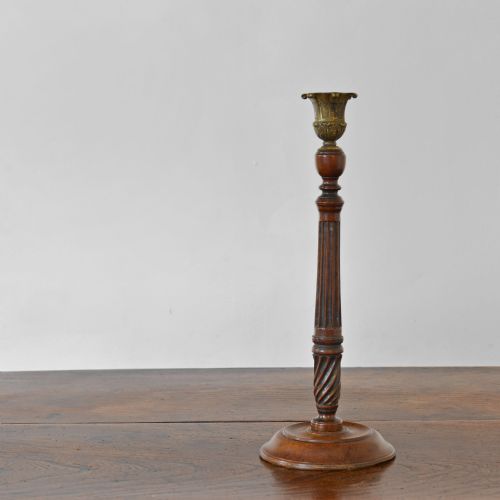
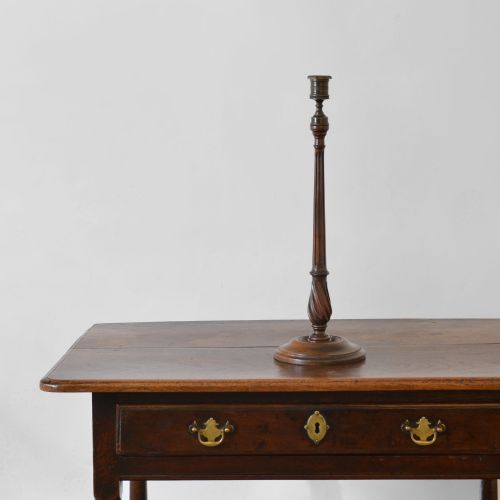
Spiral turned candlesticks are vertical lighting supports characterised by their distinctive twisted shafts, which create a dynamic sense of motion along the column. When you search for spiral turned candlesticks, you encounter a range of forms spanning from the Georgian period through to the early twentieth century.
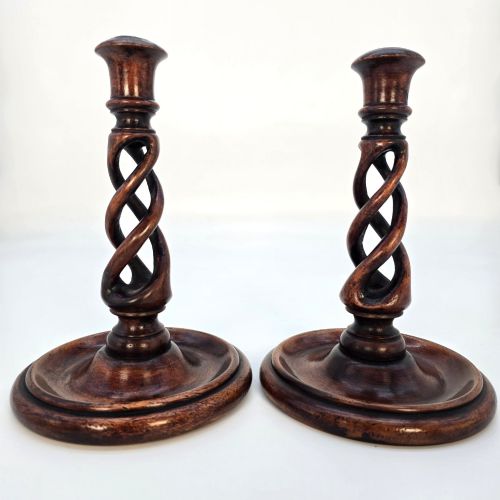
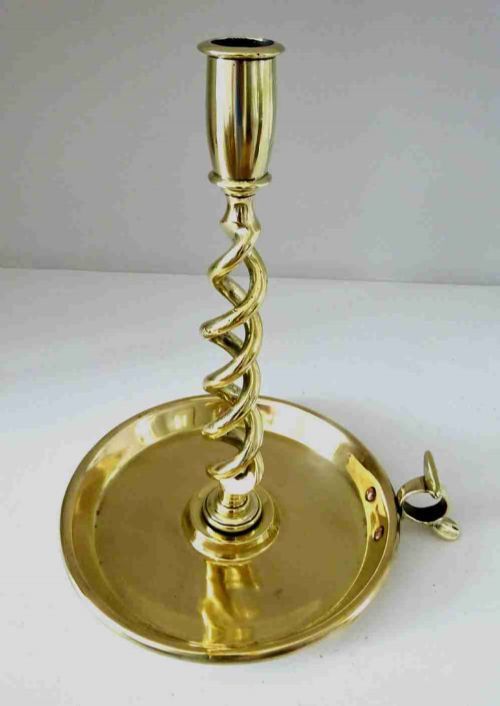
Formations vary from tall proportions to smaller desk examples, sometimes incorporating brass fittings, fitted bases, or open twist designs. Oak and mahogany versions dominate the selection, often reflecting Jacobean revival tastes or simple vernacular traditions.
How they were made
The production of these pieces relies heavily on lathe work, where timber is secured and turned to achieve the characteristic helical or barley twist profile. Craftsmen utilised hand tools to shape the shafts, resulting in either closed twists or open twist variations that required considerable precision.
Brass elements are cast and fitted to the wooden columns, creating durable sockets and weighted bases that provide stability for holding wax candles safely. The combination of turned wood and metal components demonstrates traditional joinery and metalworking techniques appropriate to each period.
Listings feature items spanning the Georgian, Victorian, and Edwardian eras, predominantly made from oak, mahogany, and brass.
What varies in quality
Quality in these items rests upon the crispness of the turning and the proportional harmony between the base, shaft, and drip pan. A master turner achieves smooth, even undulations along the spiral, whereas lesser examples show uneven spacing or rigid tool marks.
The choice of material and timber figuring significantly influences the character of the piece, with dense walnut, richly grained mahogany, and well-patinated oak elevating the overall presence. Integrated brass fittings that fit securely without wobbling also distinguish superior workshop production from simpler vernacular items.
The Spiral Turned Candlesticks Glossary
- Barley twist
- A type of spiral turning resembling the shape of a barley sugar stick, popular in seventeenth-century furniture and revived in later lighting.
- Open twist
- A helical column carved so that empty space runs through the centre of the spiral, requiring great skill from the woodturner.
- Fruitwood
- A dense, pale timber sourced from fruit trees such as pear or apple, prized by turners for its fine grain and ability to hold crisp detail.
- George III style
- A design category referencing the furniture aesthetics of the late eighteenth century, often reinterpreted by later makers around nineteen hundred.
- Folk art
- Objects created by self-taught or non-professional makers, often displaying charming irregularities and regional character.
Spiral Turned Candlesticks: Frequently Asked Questions
How do I date a twisted wooden candlestick?
Dating relies on timber species, tool marks, and the style of the base and brass fitments. Earlier examples from the eighteenth century typically exhibit hand-carved open twists in native timbers like fruitwood.
Later pieces from the Victorian and Edwardian eras often utilise machine-assisted turning on oak or walnut, sometimes accompanied by standardised brass socket inserts.
What is the difference between barley twist and open twist?
A barley twist is a solid wooden shaft carved with a continuous spiral that remains attached to a central core. This solid construction offers robust structural strength for daily use.
An open twist removes the material from the centre of the helix, creating a delicate, airy column that showcases the turner's advanced skill.
How should I clean a wooden twist candlestick?
Dust the turned grooves regularly with a soft, dry cloth to prevent dirt from settling in the recesses of the spiral. Avoid using harsh chemical cleaners or excessive water on antique wood.
An occasional application of a suitable beeswax polish helps nourish the timber and maintain its natural lustre.