








Spindled Whatnot Shelf
These spindled whatnot shelf examples bring timber tiers and turned uprights together to hold books and ornaments with distinct Victorian character.
Spindled Whatnot Shelf
When buyers search for a spindled whatnot shelf, they encounter multi-tiered display furniture designed for books, ceramics, and ornaments. These pieces serve as practical corner or wall-mounted storage that lifts collections off the floor.
The selections on this page are predominantly Victorian examples, spanning the nineteenth century alongside earlier George III, Regency, and William IV iterations. Most items appear in rich mahogany, walnut, and rosewood timbers.
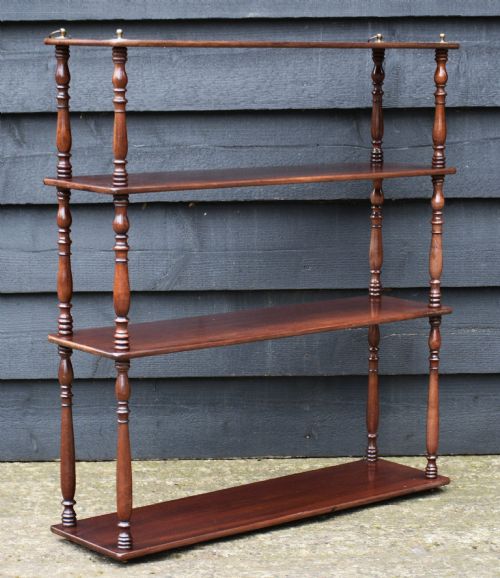
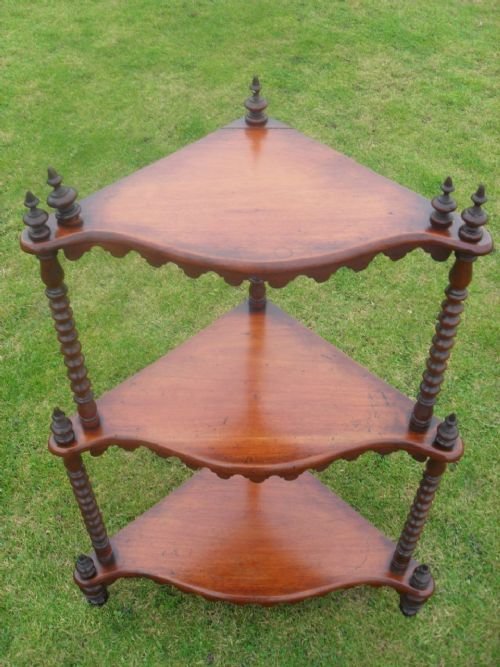
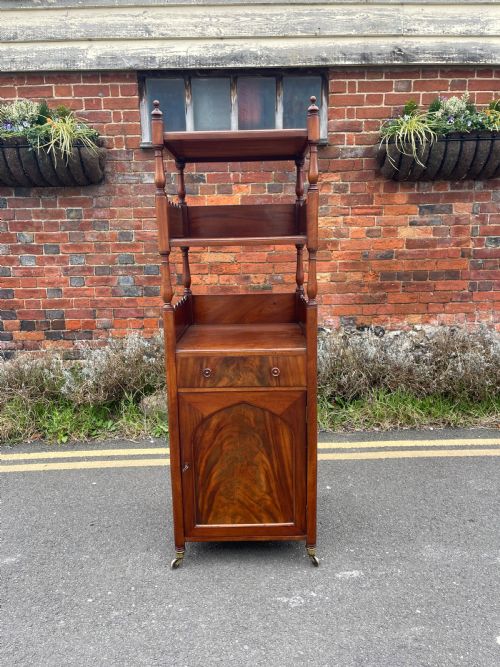
Forms range from wall-hanging shelving units and diminutive etageres to larger floor-standing pieces with cupboard bases or cellarettes. One encounters three-tier and four-tier formats, including serpentine fronts and mounted display cabinets.
Materials and construction
Cabinetmakers utilised dense hardwoods like mahogany, walnut, and rosewood to build the sturdy uprights and shelves of each unit. These timbers were selected for their deep grain and ability to support tiered structures.
Turned wooden spindles and brass mounts provide the characteristic open framework that defines the etagere style. Joinery combined traditional cabinet construction with delicate structural supports for display tiers.
Spindled Whatnot Shelf Retail Price Guide 2026
Typical asking prices for spindled whatnot shelf among the pieces listed under this phrase on Sellingantiques today, from the lower quarter to the upper quarter. They describe what is for sale here now, not the wider market.
Judging quality in these pieces
Quality rests in the choice of timber and the precision of the turned spindles rather than mere ornamentation. Superior examples display carefully matched grain patterns across every shelf.
The integration of functional additions, such as lower cupboards or cellarettes, separates standard tiered shelving from more ambitious cabinet work. Proportions remain balanced, ensuring the vertical tiers support the visual weight of the piece.
The Spindled Whatnot Shelf Glossary
- Whatnot
- A set of open shelves for displaying small objects and ornaments. These pieces gained popularity during the nineteenth century for parlour use.
- Etagere
- A piece of furniture consisting of a series of open shelves for displaying articles. The term derives from the French word for a stage or shelf.
- Cellarette
- A lockable container or cabinet built into furniture for holding bottles. Examples occasionally appear integrated into the base of larger shelving units.
- Serpentine
- A curved line or front resembling the winding shape of a snake. This shaping adds considerable cost and refinement to the lower shelf or cabinet base.
Spindled Whatnot Shelf: Frequently Asked Questions
What is a spindled whatnot shelf used for?
These pieces were originally designed to hold books, small ceramics, and decorative ornaments in principal rooms. They keep collections visible while utilising vertical wall or floor space efficiently.
Today, they serve the same display function in modern interiors, fitting narrow spaces where enclosed cabinetry would feel too heavy. Their open tiers suit trailing plants, glassware, and framed photographs.
How do I identify a Victorian piece?
Victorian examples typically feature dense mahogany or rosewood timbers combined with distinct turning on the vertical supports. They often incorporate three or four open tiers for display.
One also finds regional variations incorporating walnut and mounted display cabinets bearing mid-nineteenth-century proportions. The construction reflects the high output of cabinet workshops during this period.
Are wall-hanging versions common?
Wall-hanging shelves appear alongside floor-standing etageres and pieces with cupboard bases. They attach directly to walls to provide elevated display space without occupying floor area.
These smaller hanging formats retain the characteristic spindled galleries and multiple tiers seen in larger floor-standing furniture.
What woods were used for these shelves?
Cabinetmakers relied primarily on mahogany, walnut, and rosewood for their rich colour and durability. These dense hardwoods took a fine polish and supported slender turned components.
Selection depended on the prevailing fashion of the decade, shifting from earlier George III mahogany toward nineteenth-century rosewood and walnut variations.