





Spindle Bookcase
These spindle bookcase options offer sturdy timber construction and open shelving for any room.
Spindle Bookcase
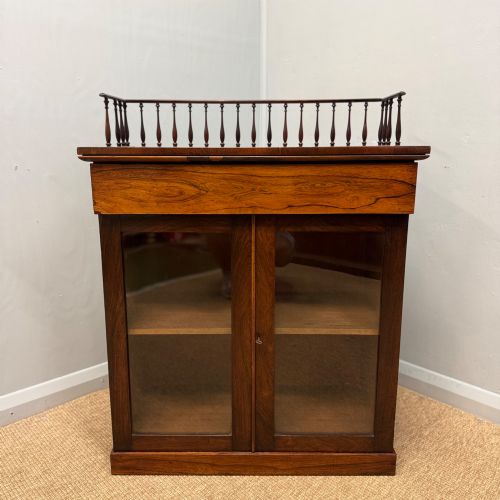
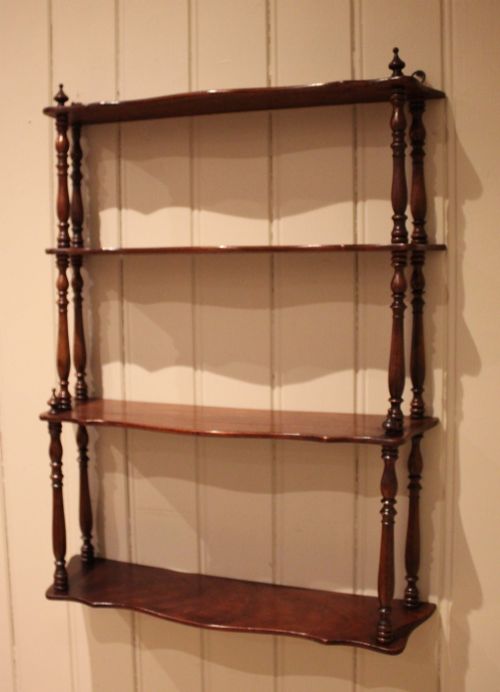
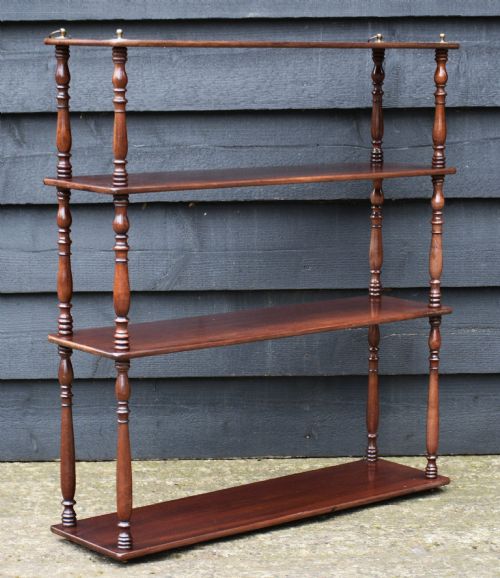
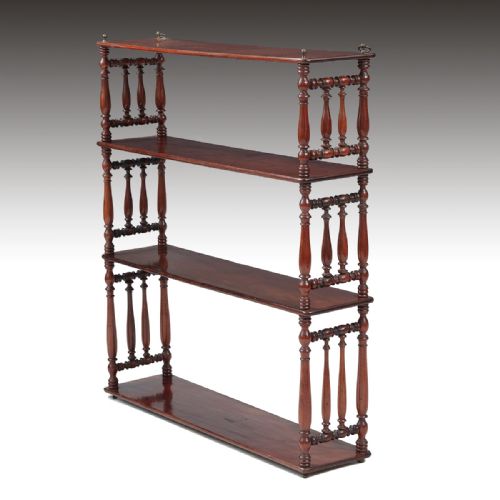
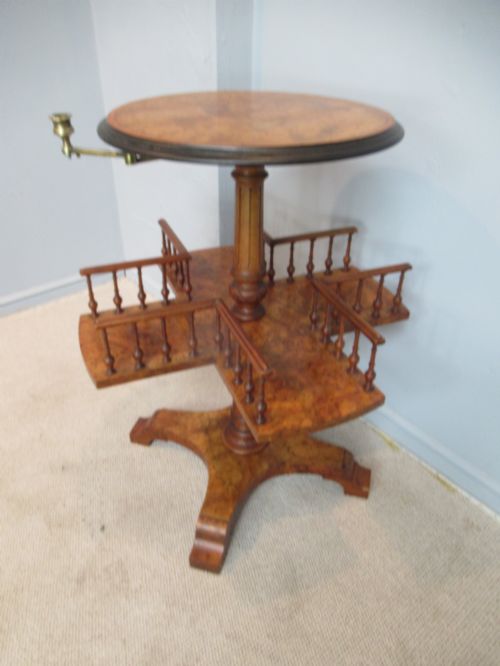
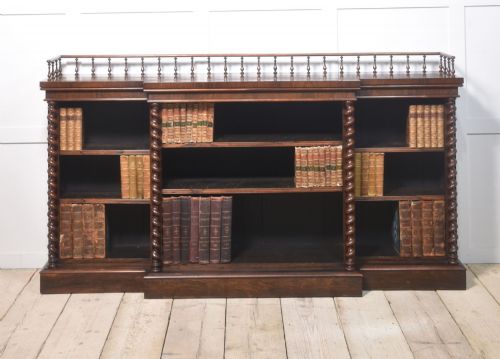
A spindle bookcase provides open storage across multiple tiers, using turned wooden spindles to support the structure and frame the shelves. These pieces appear in forms such as wall hanging shelves, revolving book stands, and multi-tiered whatnots.
The selection ranges across the nineteenth century, including Victorian, Regency, and Georgian periods. Mahogany, walnut, burr walnut, and rosewood feature prominently as the primary timbers used in their construction.
Buyers will encounter various formats on this page, from compact revolving stands designed for table tops to large open bookcases and wall shelves. Each piece serves to organise books and display objects while introducing traditional timber craftsmanship to an interior.
Materials and construction methods
Cabinet makers utilised dense hardwoods such as mahogany, walnut, and rosewood to build the frames and shelves, ensuring stability for heavy volumes. Turning lathes shaped the characteristic spindles and columns that connect the tiers.
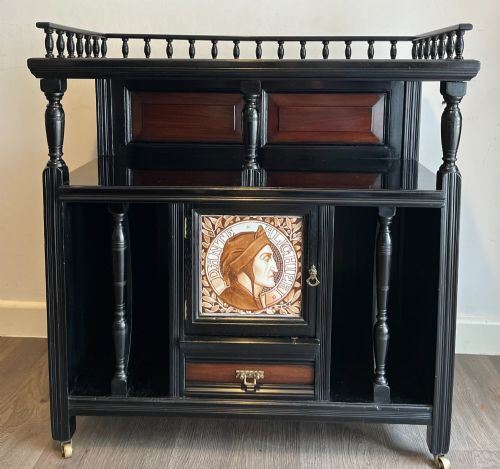
Joinery techniques relied on pegged joints, dovetails, and fitted shelving to bear the weight of books. Finer examples incorporate decorative elements like mirror backs, brass fittings, and ceramic details alongside the turned woodwork.
Spindle Bookcase Retail Price Guide 2026
Typical asking prices for spindle bookcase among the pieces listed under this phrase on Sellingantiques today, from the lower quarter to the upper quarter. They describe what is for sale here now, not the wider market.
Some revolving book stands were nicknamed novel libraries, ready to spin your entire reading list in circles.
Evaluating build and finish
Quality rests upon the selection of timber grain, particularly in figured woods like burr walnut and mahogany, and the precision of the turned spindles. Tighter grain and balanced proportions indicate superior workshop standards.
The smoothness of the revolving mechanism on rotating book stands distinguishes better examples from simpler fixed shelving. Original surfaces and patination on the timber further define the grade of each piece.
Lambs of Manchester
The Spindle Bookcase Glossary
- Whatnot
- A piece of furniture consisting of several open shelves for displaying small objects or books. These typically feature slender corner posts or spindles.
- Etagere
- A set of open shelves for displaying ornaments, sharing a similar tiered form to the whatnot. These units rely on slender uprights to support each level.
- Revolving bookcase
- A rotating shelving unit designed to hold books accessibly within a compact footprint. The mechanism allows the entire tier structure to turn smoothly on a fixed base.
- Burr walnut
- A prized timber cut from the gnarled growths of walnut trees, displaying intricate and swirling grain patterns. Cabinet makers used this veneer on prominent exterior surfaces.
- Ebonised wood
- Timber treated with a dark finish to imitate ebony. This technique appeared frequently on nineteenth-century furniture to create high-contrast decorative effects.
Spindle Bookcase: Frequently Asked Questions
Where should I place a wall hanging shelf?
Wall hanging shelves mount securely to timber studs or masonry walls, providing elevated display space without consuming floor area. They work well above desks or sideboards in living areas.
These shelves often feature turned wooden spindles along the gallery rails to keep books and decorative objects from sliding off.
How do I care for nineteenth-century mahogany?
Nineteenth-century mahogany benefits from regular dusting with a soft, dry cloth and occasional application of appropriate beeswax. Avoid placing timber furniture near direct heat sources or strong sunlight.
Maintaining stable room humidity preserves the joints and prevents the polished surface from drying out or cracking over time.
What defines the Victorian style?
The Victorian style encompasses diverse design revivals spanning the nineteenth century, drawing inspiration from Gothic, Elizabethan, and classical forms. Furniture from this era often highlights rich timbers and detailed turnings.
Bookcases and whatnots from this period balance practical storage needs with decorative spindle work and robust joinery.
How do I identify a whatnot?
A whatnot is characterised by multiple stacked open shelves supported by slender vertical columns or turned spindles. They were traditionally used to store books, papers, and ornaments.
These versatile pieces appear in freestanding formats with three or four tiers, as well as corner configurations designed to utilise awkward spaces.