



Spindle Back Settle
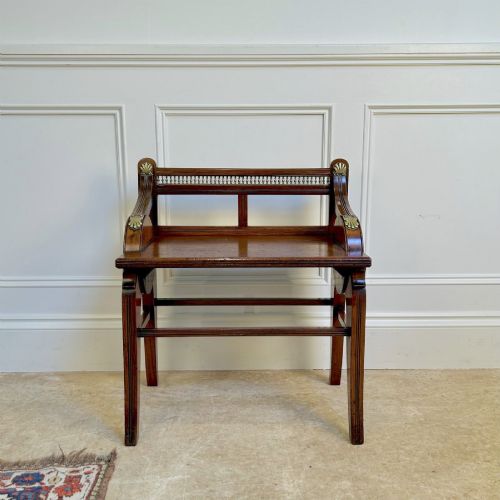
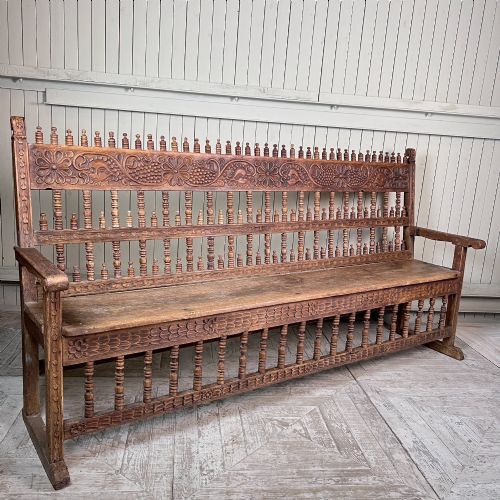
These spindle back settle examples are substantial wooden seats built with open upright rails, offering both hallway utility and regional charm.
Spindle Back Settle
A spindle back settle provides a solid wooden seat flanked by arms, featuring a high back constructed from vertical turned or shaved timber uprights. These pieces serve as traditional hallway or kitchen seating across various European rural traditions. You will encounter forms originating from country workshops in Hungary, Sweden, Austria, France, and Spain.
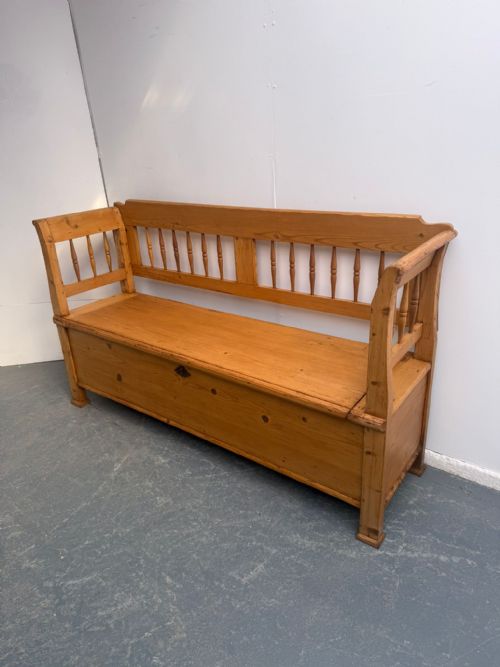
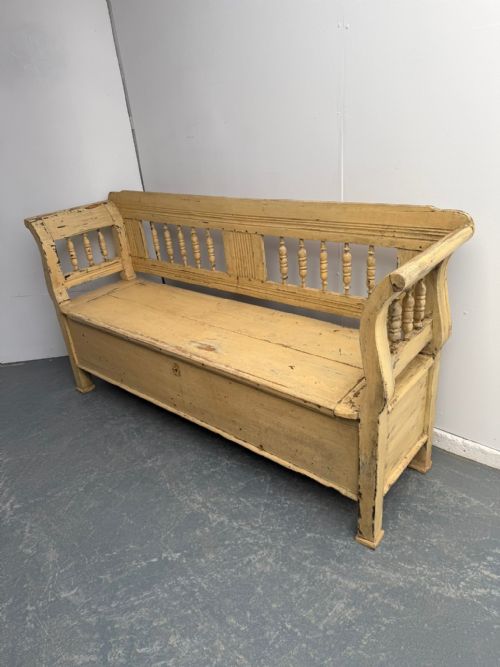
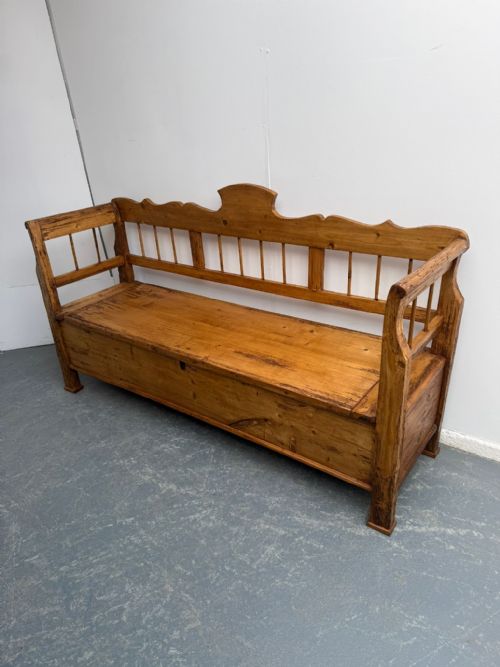
The specific examples on this page lean heavily towards nineteenth-century Victorian pieces and eighteenth-century Georgian or continental designs. Many incorporate box seats underneath the bench top, providing concealed storage for household goods. Pine, walnut, fruitwood, and hardwood form the primary structural timbers of these regional seats.
How they were made
Maker workshops constructed these settles using solid timbers such as pine, walnut, ash, elm, and fruitwood, often joining components with traditional pegging and mortise and tenon joints. Turners shaped individual wooden spindles on a lathe to form the open backrests, inserting them firmly into drilled rails. Iron hardware occasionally reinforced structural stress points on the box settles and bench frames.
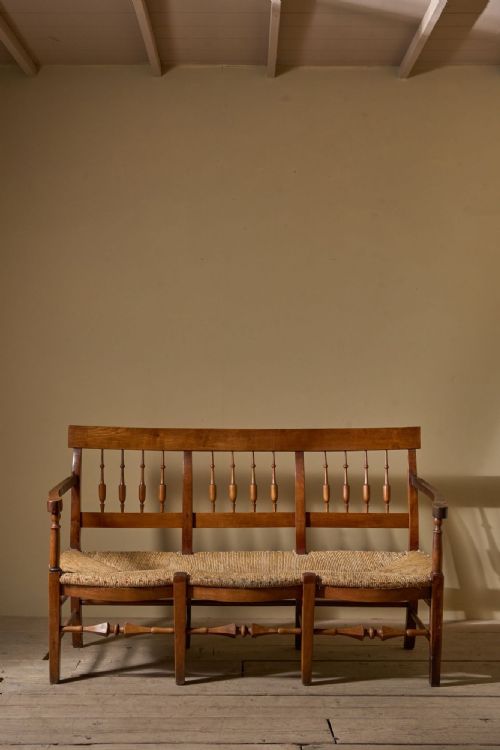
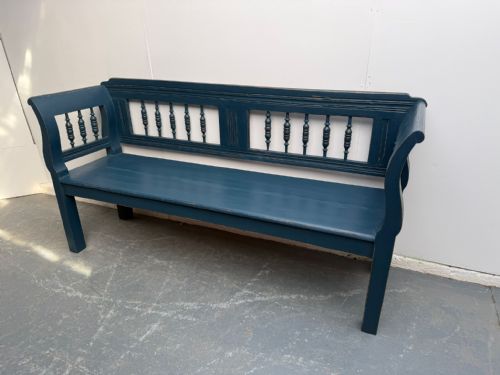
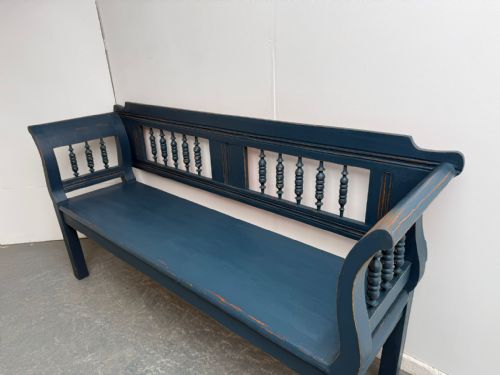
Surfaces frequently show layers of historic paint or wax finishes, with several items retaining original cream or blue pigments over the bare wood. Rush seating appears on specific French variants, providing a woven platform above the wooden rails. Carpenters selected local hardwoods appropriate to each region, resulting in distinct tactile finishes across Hungarian, Swedish, and Austrian examples.
Spindle Back Settle Retail Price Guide 2026
Typical asking prices for spindle back settle among the pieces listed under this phrase on Sellingantiques today, from the lower quarter to the upper quarter. They describe what is for sale here now, not the wider market.
Several Hungarian three-seater settles wear cheerful layers of original blue or cream paint, surviving centuries of farmhouse life.
What varies in quality
Quality rests upon the integrity of the original timber frame, the balance of the turned spindles, and the preservation of early painted or waxed surfaces. Pieces retaining genuine unstripped paint finishes or patinated waxed pine hold higher character than stripped equivalents. The crispness of the spindle turnings and the tightness of the joinery distinguish careful rural craftsmanship from basic utility furniture.
Proportion and scale dictate the visual weight of the settle within a room, with larger three-seater box varieties demanding specific spatial consideration. The survival of original structural elements, such as hinged box seats and authentic floor stretchers, elevates the integrity of the piece. Regional idiosyncrasies in carving and assembly reflect the individual workshop standards of the period.
James Shoolbred
The Spindle Back Settle Glossary
- Settle
- A wooden bench featuring a high back and solid arms, traditionally designed to block draughts in domestic interiors. These seats often incorporate a lidded box beneath the squab for storage.
- Spindle back
- A chair or bench backrest constructed from a series of slender, vertical turned wooden rods. These uprights support the sitter while lightening the visual mass of the high timber back.
- Box settle
- A variant featuring an integrated enclosed storage compartment beneath the seat, accessed by lifting the hinged top panel. This design maximises utility in traditional farmhouse kitchens.
- Patina
- The surface sheen and colour depth developed by wood and paint over decades of handling, cleaning, and exposure to light. This quality indicates age and authenticity.
- Rush seating
- Woven chair or bench bottom made from dried marsh grasses twisted into cords and laced across a wooden frame. This technique appears on specific continental hall benches.
Spindle Back Settle: Frequently Asked Questions
What is a spindle back settle used for?
These benches functioned historically as primary seating near hearths or in hallways, offering protection from cold drafts while providing a sturdy perch.
Today, they serve well in entrance halls, boot rooms, or large kitchens, where their high backs create a strong architectural presence against a wall.
How do you identify a box settle?
A box settle incorporates a concealed storage compartment directly beneath the seat boards, accessed by lifting the hinged lid.
This built-in chest distinguishes standard benches from storage variants used to house blankets, textiles, or household stores.
Are these benches painted or bare wood?
Many regional examples feature historic painted surfaces, often in tones of blue, cream, or white over pine and hardwood structures.
Other pieces are finished with wax to highlight the natural grain of walnut, fruitwood, or pine surfaces accumulated over centuries.
Where were these settles made?
The listings include pieces originating from various European regions, including Hungary, Sweden, Austria, France, and Spain.
Local timber availability and distinct regional carpentry traditions dictated the specific style, whether French rush-seated variants or Hungarian box settles.