





Specimen Storage Unit
A specimen storage unit gathers small drawers and secure compartments designed to hold natural history items or specialised tools, offering compact organisation for the collector.
Specimen Storage Unit
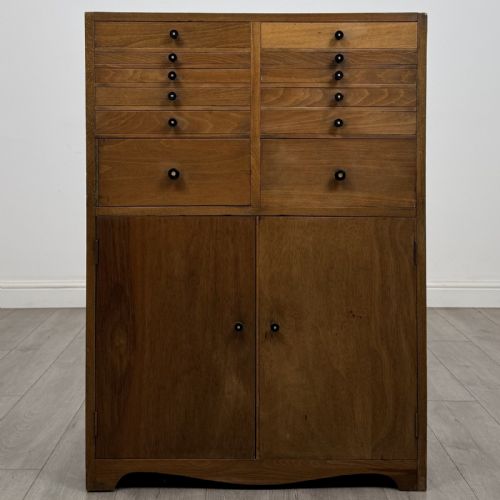
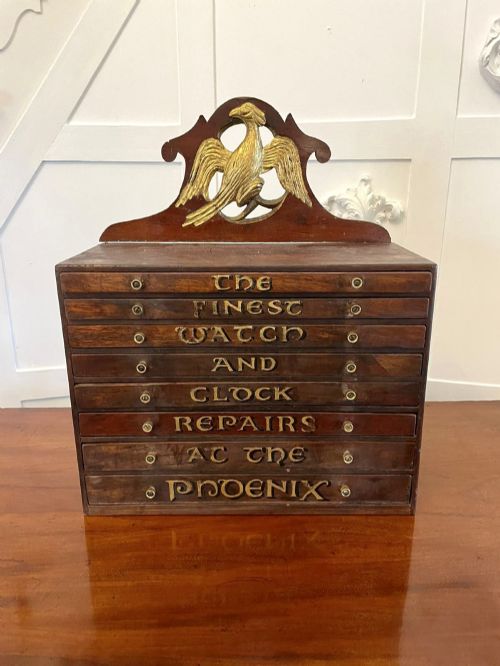
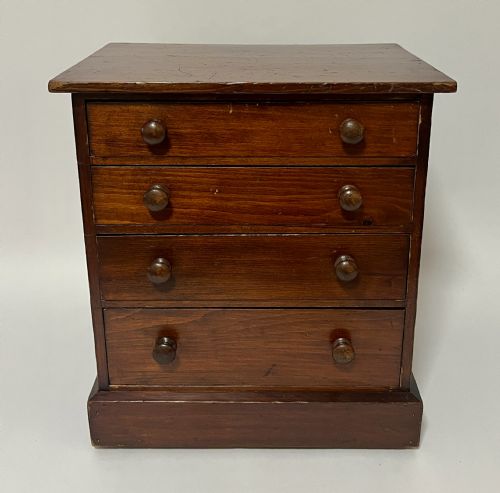
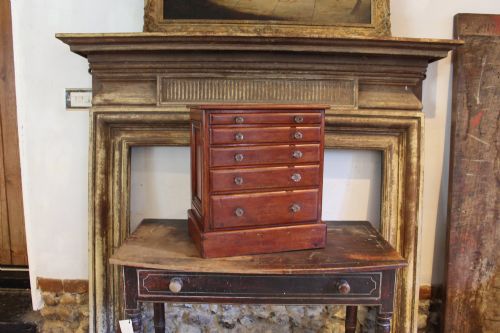
A specimen storage unit encompasses various forms of small cabinetry, from Victorian collectors cabinets and miniature apprentice chests to dental and apothecary furniture. Buyers searching for a specimen storage unit encounter multi-drawer configurations originally built for specific trades or scientific hobbies, such as clock repair, music storage, or botanical collection.
The pieces listed on this page span the nineteenth century through the early twentieth century, taking shape as mahogany dental cabinets, oak fitted storage units with eleven drawers, and banks of twenty-five drawers. Stained pine collectors cabinets and medical carrying chests also appear alongside burr walnut and music cabinets.
Victorian and Edwardian eras dominate the origins, reflecting a period when organised storage of small items was essential for professionals and hobbyists alike. These cabinets rely on multiple shallow drawers to sort and protect delicate objects, maintaining order within a compact footprint.
How they were made
Construction methods focus on housing numerous small drawers tightly within a secure outer frame to protect contents from dust and light. Gilt wood and metal accents appear on specific pieces, matching the functional requirements of medical, dental, and watch repair workshops.
Specimen Storage Unit Retail Price Guide 2026
Typical asking prices for specimen storage unit among the pieces listed under this phrase on Sellingantiques today, from the lower quarter to the upper quarter. They describe what is for sale here now, not the wider market.
Storage configurations range from miniature apprentice chests to large banks of twenty-five drawers and specialised dental cabinets.
What varies in quality
Quality separates simple utility pieces from finer cabinetry through the selection of timber and the precision of the drawer construction. Mahogany and burr walnut examples with numerous fitted drawers demonstrate greater craftsmanship than standard stained pine storage.
The inclusion of specialised internal elements, such as milk glass linings in dental cabinets or original brass fittings, elevates the standard of a piece. The complexity of the drawer arrangement, ranging from seven small medical chests to banks of twenty-five drawers, dictates the sophistication of the build.
The Specimen Storage Unit Glossary
- Collectors Cabinet
- A piece of furniture fitted with multiple shallow drawers intended for organising natural history specimens or small artefacts. These units protect delicate items behind enclosed doors.
- Dental Cabinet
- A specialised storage unit featuring multiple small drawers and milk glass surfaces designed for clinical instruments and materials. They originate from early twentieth-century dental practices.
- Burr Walnut
- A highly figured wood veneer sourced from walnut tree growths, valued for intricate swirling grain patterns. It frequently appears on decorative Victorian cabinet surfaces.
- Bank of Drawers
- A multi-tiered stack of numerous narrow drawers housed within a single upright frame. Such units served commercial and professional workshops for efficient stock organisation.
Specimen Storage Unit: Frequently Asked Questions
What were specimen storage units originally used for?
These cabinets served professionals, scientists, and hobbyists who needed to organise delicate items securely. They held geological samples, biological specimens, watch repair tools, and dental instruments.
Different trades required specific internal layouts, leading to variations like milk glass linings for hygiene or numerous shallow drawers for classification.
How do I identify a Victorian specimen cabinet?
Victorian examples typically feature dense hardwoods such as mahogany or burr walnut, combined with traditional hand-cut joinery. They often display panelled doors enclosing banks of small, tight-fitting drawers.
Design cues from this era lean towards heavier, classical proportions and functional brass hardware designed for frequent daily handling.
What is the difference between a collectors cabinet and an apothecary cabinet?
Collectors cabinets focus on display and organisation of natural history objects, utilising shallow drawers with clean interiors. Apothecary and chemist drawers were built to store medicinal ingredients and dry goods in busy working environments.
Pharmacy units often carry utilitarian pine or oak construction, whereas collectors pieces occasionally employ finer decorative veneers.
Where should I place a multi-drawer storage unit at home?
These compact cabinets fit well in studies, hallways, or living rooms where surface space is limited. Their numerous small drawers provide practical storage for stationery, collections, or modern odds and ends.
Keeping them away from direct heat sources helps preserve the antique timber and fitted drawer movements over time.