





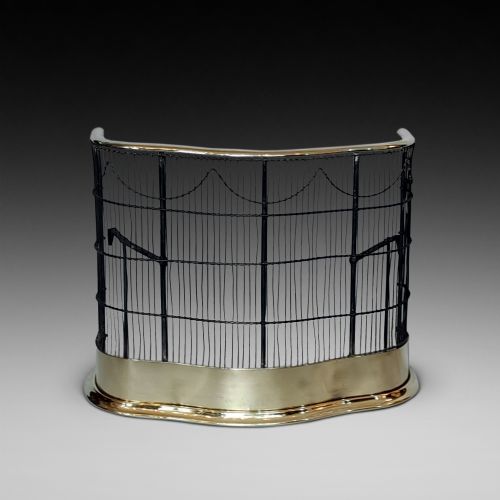

Spark Guard Fender
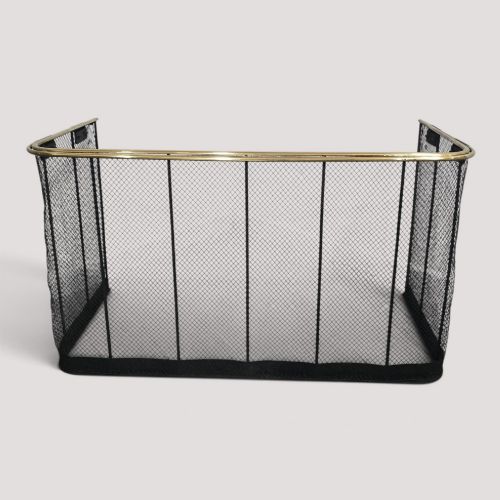
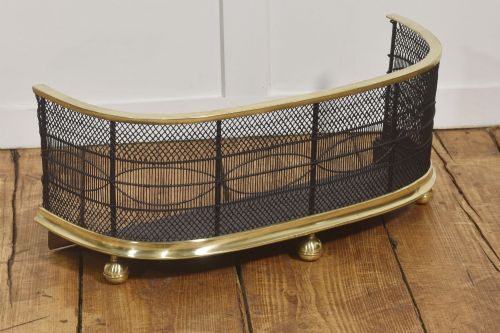
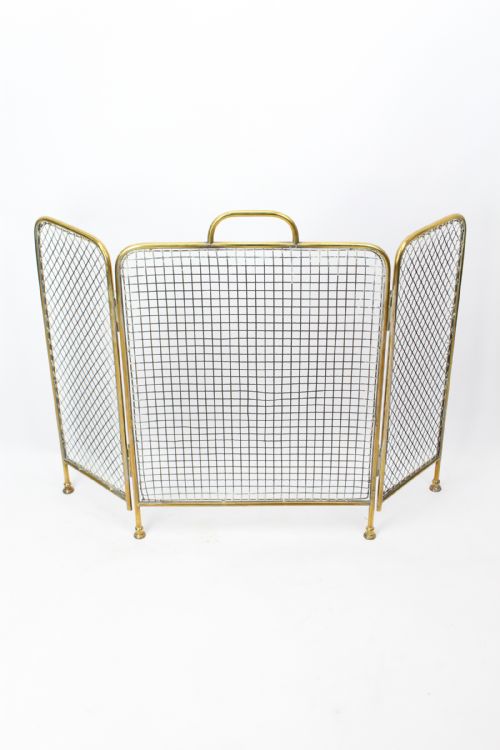
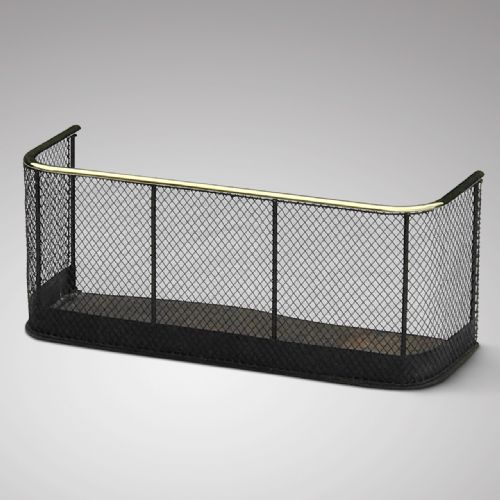
These spark guard fender pieces combine heavy brass framing with fine wire mesh to protect rooms from stray embers.
Spark Guard Fender
A spark guard fender protects a room from stray embers while enclosing the hearth with a sturdy metal barrier. When searching for a spark guard fender, buyers encounter various forms designed for period fireplaces.
The most common examples on this page date from the nineteenth century, including Victorian and Edwardian variations. Pieces range from simple iron wire designs to elaborate brass framed guards with mesh panels.
Forms include nursery fenders equipped with clothes rails, bowed or serpentine guards, and gate fronted versions. These items serve the practical purpose of hearth safety while retaining period character.
How they were made
Construction relies heavily on brass and iron, forming the structural frames and decorative top rails. Wrought iron and steel provide strong skeletons for daily use.
Mesh panels utilise woven iron wire or steel wire fixed securely within the metal frames. Pierced brass details and brass rims add decorative finishing touches to the functional wire structures.
Spark Guard Fender Retail Price Guide 2026
Typical asking prices for spark guard fender among the pieces listed under this phrase on Sellingantiques today, from the lower quarter to the upper quarter. They describe what is for sale here now, not the wider market.
Some nursery fenders feature built in rails specifically designed for airing small garments by the hearth.
What varies in quality
Quality separates through the weight of the metal and the precision of the wire mesh weaving. Solid brass frames and carefully joined components distinguish finer examples from standard utility items.
Decorative elements such as flower pierced brass work and sturdy top rails indicate superior craftsmanship. The integrity of the wire mesh and the rigidity of folding mechanisms show the standard of original manufacture.
The Spark Guard Fender Glossary
- Nursery fender
- A tall protective guard designed to surround a hearth completely and prevent children from reaching the fire. These often include an integrated top rail.
- Serpentine
- A gentle curving shape in the outline of a fender or guard, popular during the Regency and Victorian periods. This profile adds elegance to the hearth.
- Wire mesh
- A woven metal grid utilised in fire guards to contain sparks while allowing heat to pass through into the room. It forms the primary protective screen.
- Fire guard
- A freestanding barrier placed in front of an open fireplace to catch flying embers. They utilise metal frames and mesh or wirework.
Spark Guard Fender: Frequently Asked Questions
What is a spark guard fender used for?
These pieces act as a physical barrier between an open fire and the room, catching flying embers and sparks before they reach carpets or furniture.
They also provide a safe perimeter around the hearth, particularly in homes with children or pets, combining safety with period metalwork.
How do I date a brass fire guard?
Dating relies on observing construction methods, materials, and stylistic cues such as Regency curves or Victorian flower piercing. The use of wrought iron and specific wire techniques also points to particular nineteenth century decades.
Makers often utilised heavy brass frames and specific wire gauges that shifted between the Victorian and Edwardian eras.
Are nursery fenders different from regular spark guards?
Nursery fenders are typically taller and designed to enclose a larger area around the hearth to keep children completely away from the fire. Many versions include a built in clothes rail.
Standard fire guards often sit closer to the fireplace opening, focusing strictly on containing sparks rather than creating a wide perimeter.
How do I clean a brass and wire mesh guard?
Cleaning requires gentle dusting of the wire mesh and careful application of metal polish on brass frames to preserve the aged surface. Avoid harsh abrasives that might damage the woven iron wire or steel.
Regular maintenance keeps the metal surfaces bright while retaining the historic character of the piece.