





Southwest Persia Bag
These southwest persia bag examples are portable tribal weavings carrying centuries of nomadic artistry and practical utility.
Southwest Persia Bag
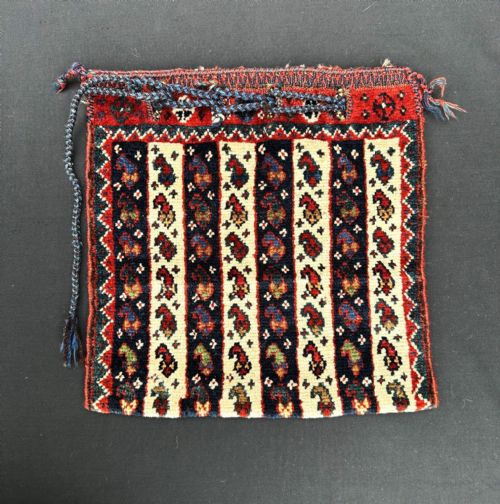
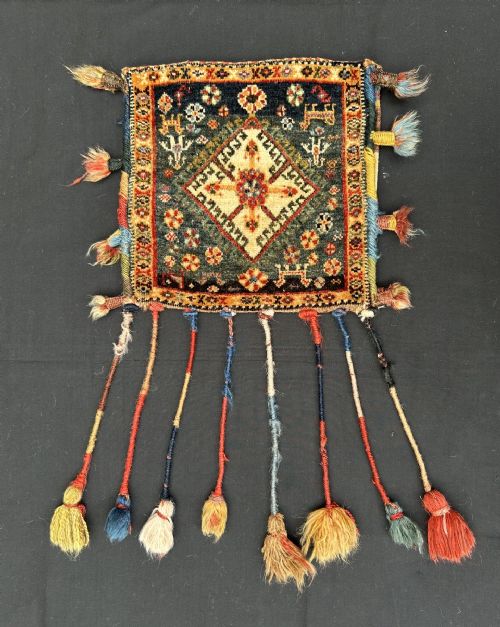
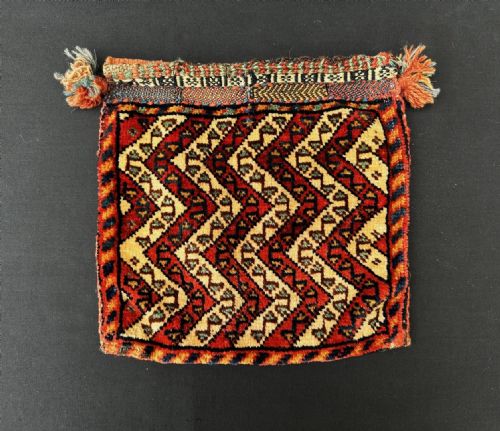
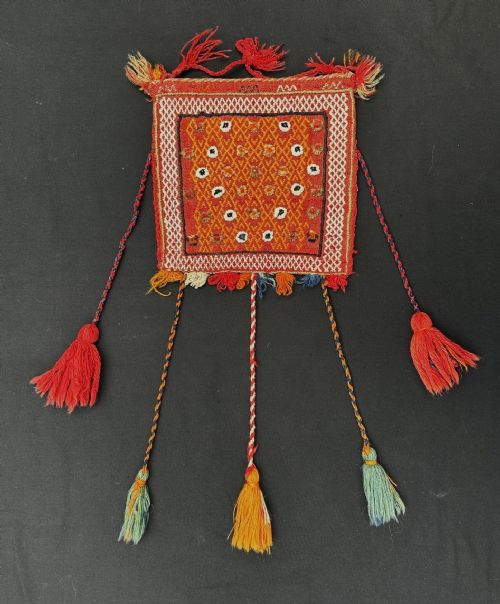
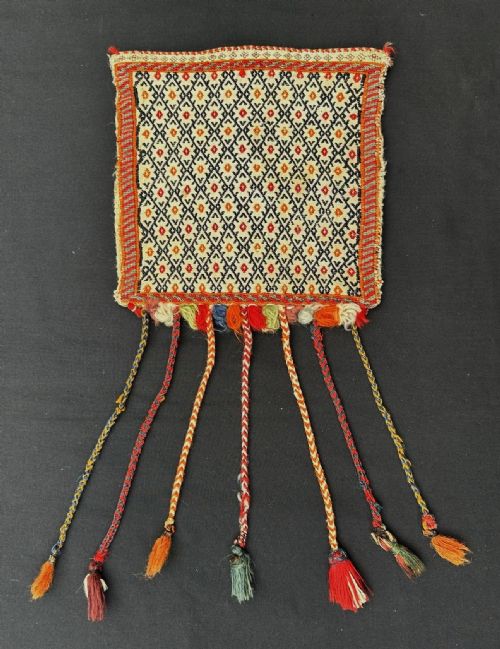
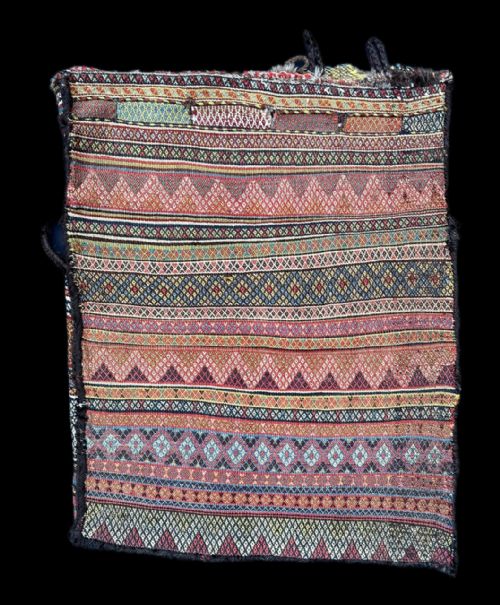
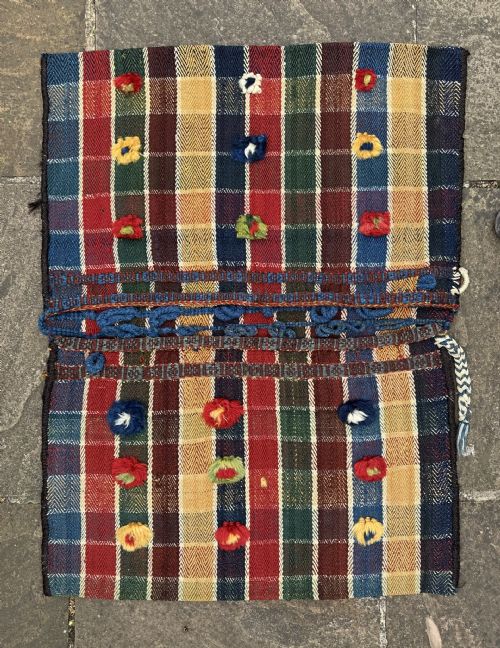
A southwest persia bag encompasses antique tribal textiles originating from the Fars Province and the Qashqa'i Confederacy. These pieces serve specific nomadic functions, ranging from vanity bags and salt bags to spindle pouches and saddle-bag faces.
The objects seen here date predominantly from the late nineteenth and turn of the twentieth centuries, specifically around eighteen-eighty and nineteen-hundred. They reflect the distinct sub-tribes and confederations of the region, including the Amaleh Tayefeh, Bolvardi, Kashkuli Tayefeh, Shekarlu Tayefeh, and Darrehshuri Tayefeh.
Forms vary from complete saddle-bag pairs and half-saddlebags to storage bags and small personal pouches. Each format illustrates the utilitarian requirements of nomadic life combined with sophisticated tribal iconography.
Materials and Construction
The construction of a southwest persia bag relies fundamentally on wool and hand-spun wool, providing a durable foundation for daily nomadic use. Cotton occasionally appears in the foundational structures alongside the predominant wool elements.
Colour comes from natural dyes applied to the hand-spun fibres, creating rich hues that age gracefully over time. The weavers employ traditional tribal techniques passed down through generations within the Qashqa'i Confederacy and associated groups.
Specific sub-tribes documented in these textile records include the Amaleh, Bolvardi, Kashkuli, Shekarlu, Darrehshuri, and Ard Kapan.
Assessing Quality
Quality in these tribal textiles rests on the fineness of the hand-spun wool and the complexity of the weave. Tighter construction and careful preparation of natural dyes elevate certain examples above others.
The clarity and precision of the tribal patterns distinguish superior pieces. A well-preserved surface and intact structural edges demonstrate the initial skill of the weaver from the Fars Province.
The Southwest Persia Bag Glossary
- Qashqa'i Confederacy
- A major tribal confederation in south-west Persia comprising various confederated groups and sub-tribes. They are renowned for producing distinctive wool tribal rugs and textile bags.
- Fars Province
- A region in south-west Persia where nomadic and village weavers produced traditional tribal textiles. This geographic area serves as the primary origin for these antique bags.
- Saddle-Bag Face
- The decorative front panel of a larger pack animal bag, often preserved independently after the reverse backing wore away. These panels display the principal design work of the weaving.
- Natural Dyes
- Colourants derived from plant, insect, and mineral sources rather than synthetic chemicals. They impart the characteristic varied tones seen in antique tribal woolwork.
Southwest Persia Bag: Frequently Asked Questions
What were these bags used for?
Nomadic families utilised these textiles for practical storage during seasonal migrations across the Fars Province. Specific formats held salt, vanity items, water pipes, or personal belongings.
Larger versions functioned as saddle bags carried by pack animals, while smaller pouches served personal needs within the tribal camp.
How do I date a Qashqa'i bag?
Dating relies on structural analysis, wool characteristics, and the specific natural dye palette visible in the weave. Pieces from the late nineteenth century typically display distinct hand-spun textures and traditional tribal attributions.
Comparing structural motifs with documented examples helps place pieces within specific decades around eighteen-eighty and nineteen-hundred.
Where did these bags originate?
These textiles originate from south-west Persia, specifically within the territories associated with the Qashqa'i Confederacy and its various sub-tribes. Weavers from groups such as the Kashkuli and Darrehshuri produced these items.
The regional environment and available materials directly influenced the wool quality and dye recipes employed by these nomadic makers.
How should I care for a textile bag?
Protect antique wool textiles from direct sunlight to prevent natural dye fading over extended periods. Regular gentle vacuuming without a rotating brush removes embedded dust safely.
Keep the wool dry and consult a specialist in antique tribal rugs if professional cleaning becomes necessary.