



Solid Wood Cupboard
A solid wood cupboard brings substantial presence and honest storage to a room, ranging from kitchen dressers to glazed display cabinets.
Solid Wood Cupboard
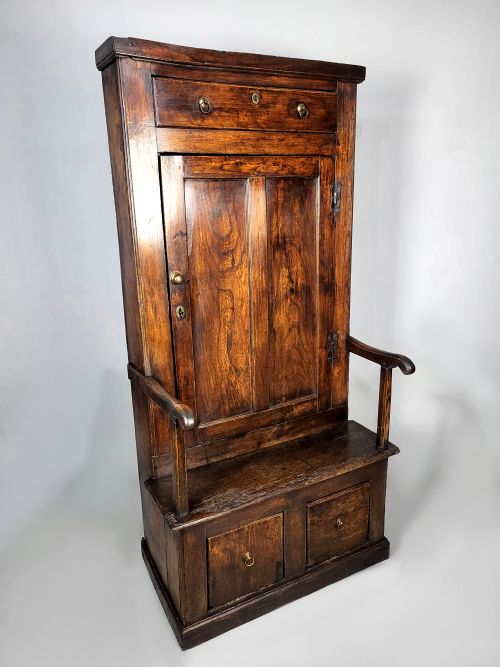
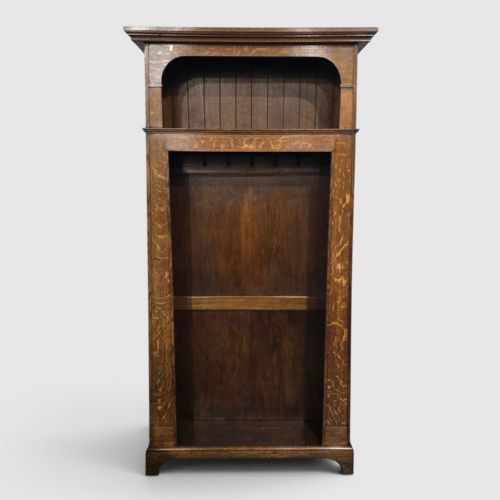
A solid wood cupboard is a heavy, utilitarian or display storage piece constructed primarily from timber such as oak, mahogany, cherry wood, and walnut without the heavy reliance on veneered secondary woods. When you search for a solid wood cupboard on this page, you encounter pieces designed for storage and display across centuries, including housekeeper's cupboards, sideboards, corner cupboards, and dressers.
The inventory on this page spans the 18th century, the Victorian and Edwardian eras, through to the 1920s, reflecting regional British, French, and Georgian domestic traditions. You are most likely to meet oak and mahogany examples originating from British and French workshops, encompassing styles from Jacobean revival to Arts and Crafts and Traditional Welsh forms.
Markers of quality
Quality rests in the selection of the timber and the honesty of the construction, distinguishing heavy utilitarian pieces from finer formal furniture. Superior examples display thoughtful grain matching, robust timber thicknesses that prevent warping in large doors, and well-executed hand carving rather than mechanical stamping.
The refinement of the hardware and interior fittings also separates pieces, from simple pegged joints in vernacular country furniture to sophisticated internal shelving arrangements in linen presses and corner cupboards. Original brass work and glass integrity add further distinction to the upper tier of survivors.
Solid Wood Cupboard Retail Price Guide 2026
Typical asking prices for solid wood cupboard among the pieces listed under this phrase on Sellingantiques today, from the lower quarter to the upper quarter. They describe what is for sale here now, not the wider market.
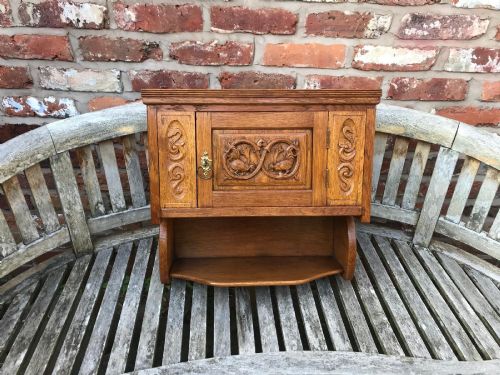
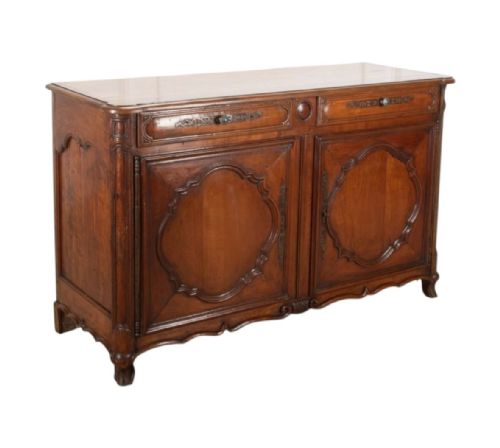
One 19th-century oak sideboard watches over your dining room with hand-carved green man foliage peering out from the woodwork.
The Solid Wood Cupboard Glossary
- Housekeeper's cupboard
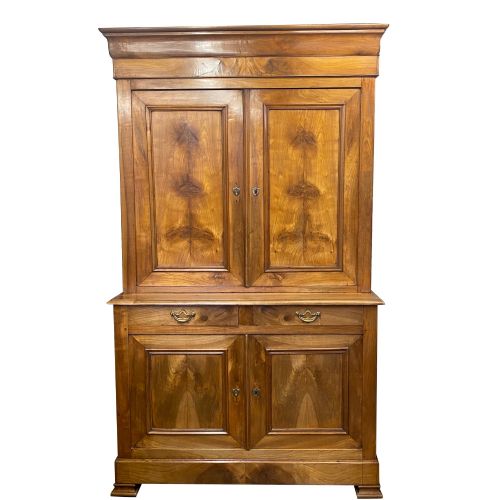
- A large, two-part storage cabinet traditionally used in country houses to store linens, dry goods, and household provisions. These substantial pieces usually feature upper and lower cupboard doors.
- Welsh dresser
- A kitchen or dining room storage unit combining base cupboards or drawers with an open plate rack on top. They originated in Wales as practical farmhouse furniture for displaying and storing tableware.
- Corner cupboard
- A specialised storage cabinet constructed with a triangular footprint designed to fit neatly into the corner of a room. These can be freestanding or made for hanging on a wall.
- Linen press
- A tall cupboard specifically designed for storing folded bedding, tablecloths, and garments. They typically feature sliding trays or shelves behind the upper doors with drawer storage below.
- Chiffonier
- A low sideboard or cabinet developed in the 19th century, typically featuring enclosed cupboards below and sometimes a small shelf or tier above. They served as compact serving surfaces and dining room storage.
Solid Wood Cupboard: Frequently Asked Questions
What is a housekeeper's cupboard?
A housekeeper's cupboard is a large, two-part storage piece designed for domestic utility, historically used in large homes for linen and provisions.
These pieces offer deep, practical storage capacity and are typically built from heavy timbers like oak or cherry wood with robust panel doors.
How do I care for solid wood?
Solid wood furniture responds best to stable room temperatures and protection from direct sunlight, which can dry out timber over time.
Regular dusting with a dry cloth and occasional application of appropriate natural wax help maintain the finish and nourish the grain.
Where should I place a corner cupboard?
Corner cupboards utilise awkward room angles effectively, making them well-suited for dining rooms, hallways, or living spaces.
Freestanding or hanging versions make efficient use of dead space while offering display or enclosed storage.
How do I date an oak cupboard?
Dating relies on observing construction methods, hardware types, tool marks, and stylistic details such as carved decoration or panel thickness.
Earlier vernacular pieces often show hand-pegged joinery and adzed surfaces, whereas later revival pieces incorporate machine tooling and historical design motifs.