



Solid Wood Console Table
A solid wood console table brings enduring timber construction and period character to a hallway or reception room.
Solid Wood Console Table
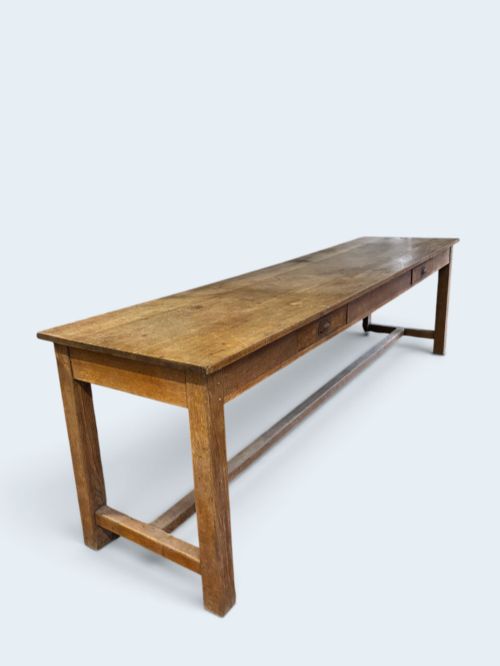
A solid wood console table is typically encountered as a side table, serving table, or tea table constructed from heavy timbers like oak, mahogany, walnut, and rosewood. These versatile items appear across multiple periods, including the 17th century, 18th century, 19th century, Victorian, and Edwardian eras, reflecting diverse regional styles from Spanish Baroque to rustic farmhouse.
Buyers seeking a solid wood console table will most frequently find related forms such as oak side tables, mahogany tea tables, and walnut serving tables on this page. Pieces range from early 18th century oak designs to Victorian mahogany console tables and Edwardian drop-leaf variants equipped with drawers and bamboo-turned legs.
How they were made
Construction relies upon dense hardwoods such as oak, walnut, mahogany, and rosewood, which provide the structural integrity required for heavy use. Timber selection dictates the weight and grain pattern, establishing the foundational character of each piece.
Metal elements such as brass and wrought iron appear in hardware and structural bracing, complementing the primary wooden frames. Joinery and turning techniques vary by period, ranging from rustic farmhouse execution to refined Victorian and Edwardian joinery.
Solid Wood Console Table Retail Price Guide 2026
Typical asking prices for solid wood console table among the pieces listed under this phrase on Sellingantiques today, from the lower quarter to the upper quarter. They describe what is for sale here now, not the wider market.
Early walnut tables arrive with centuries of dinner table conversations quietly absorbed into their original patina.
What varies in quality
Quality differences emerge through the selection of timber and the preservation of original surface characteristics, such as the patina seen on early walnut and oak examples. Superior pieces maintain their structural proportions and finish integrity over centuries.
The refinement of period details, from turned legs to drawer construction and folding mechanisms on tea tables, distinguishes finer workshop production from simpler utilitarian forms.
The Solid Wood Console Table Glossary
- Patina
- The surface sheen and coloration developed by timber through age, handling, and natural oxidation. A good original patina indicates minimal harsh restoration.
- Drop-Leaf
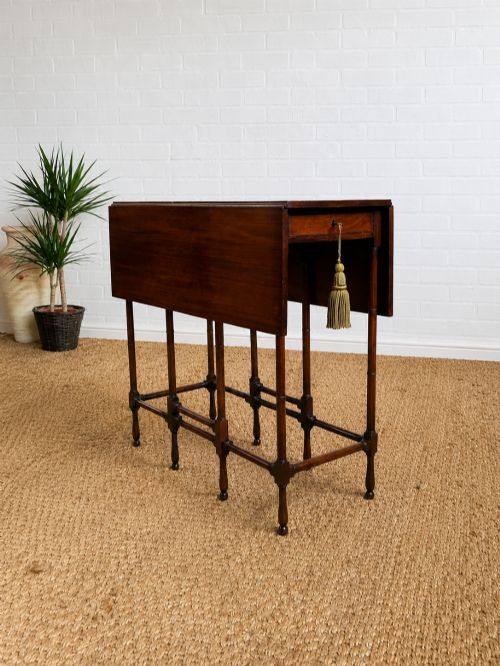
- A table design featuring hinged flaps on the sides that can be raised to extend the surface area or lowered when space is constrained. Edwardian mahogany examples frequently utilise this practical configuration.
- Serving Table
- A large side table traditionally utilised in dining spaces for food presentation prior to the widespread adoption of the sideboard. These pieces often exhibit robust solid oak or walnut construction.
- Sutherland Table
- A narrow drop-leaf table where both leaves fold down to a very slim profile, supported by swinging gate legs. Victorian walnut versions demonstrate this space-saving mechanism.
Solid Wood Console Table: Frequently Asked Questions
Where should a solid wood console table go?
These tables fit naturally in entrance halls, narrow corridors, or living rooms where surface space is needed without a large footprint. Their shallow depth allows them to sit flat against walls while providing functional display areas.
Taller serving tables and sideboards function well in dining rooms, whilst smaller drop-leaf and tea tables adapt easily to sitting rooms as occasional furniture.
How do I care for solid wood furniture?
Maintenance involves dusting with a dry or slightly damp cloth and avoiding placement near direct heat sources that can dry out historic timbers. Natural waxes help protect the surface and preserve the wood grain over time.
Harsh chemical cleaners should be avoided to protect the original finish and historical patina built up over centuries of use.
What is the difference between a console table and a side table?
Console tables are traditionally designed to stand directly against a wall, sometimes fixed in place, acting as a decorative and functional surface. Side tables are generally more versatile freestanding pieces that can move around a room as needed.
In historical listings, these terms often overlap with serving tables, tea tables, and dresser bases depending on the specific proportions and period terminology.
How can I tell the period of a wooden table?
Dating relies on observing the timber species, construction techniques, hardware, and stylistic markers such as Jacobean turning or Victorian proportions. Early pieces from the seventeenth and eighteenth centuries often display heavier oak or walnut construction with hand-worked joinery.
Later Victorian and Edwardian examples introduce refined mahoganies, bamboo-turned legs, and more complex folding mechanisms like those found on Sutherland and tea tables.