
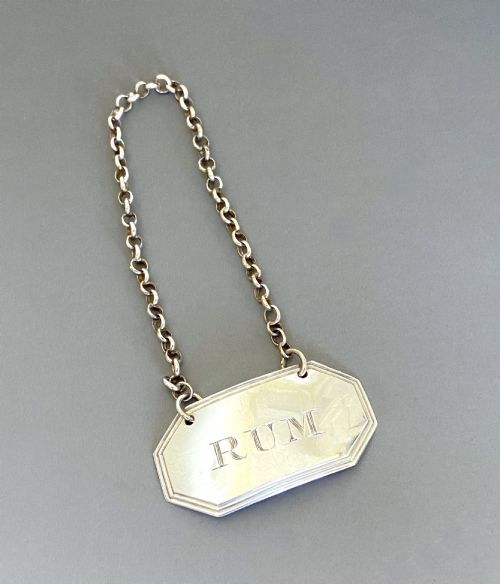
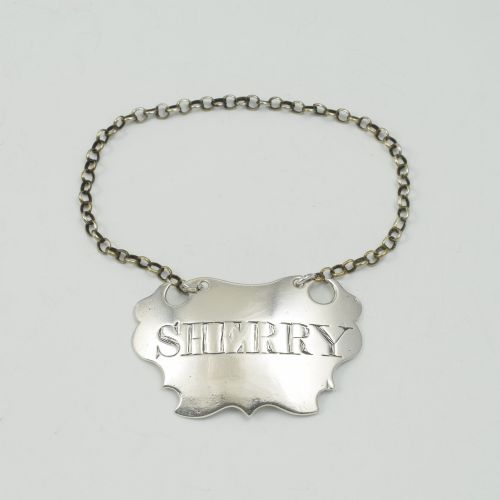


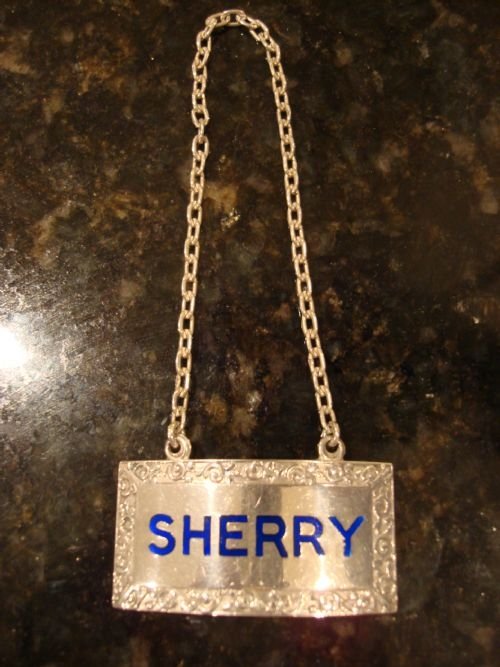
Solid Silver Wine Label
A solid silver wine label identifies the decanted bottle on the sideboard, crafted in silver and enamel across Georgian, Victorian, and later periods.
Solid Silver Wine Label
A solid silver wine label is a small piece of silver hung by a chain around the neck of a decanter, naming the drink within such as sherry, port, or brandy. These items serve to identify the contents of the decanter when the original bottle is absent.
The versions most commonly met on this page originate in the Georgian and Victorian eras, alongside later pieces from the Edwardian period and nineteen-sixties. Makers formed these objects into escutcheon shapes, vine leaf designs, and letter identifiers.
Makers inscribed specific beverage names directly onto the silver surface or decorated the pieces with motifs like Bacchus and vine leaves. Collectors encounter individual items as well as sets of antique silver decanter labels.
How they were made
Silversmiths utilised sterling silver and solid silver to form these bottle labels, often applying hallmarks to record the London or Birmingham origin and the year of manufacture. Enamel also appears as a material choice on certain pieces.
Techniques included piercing, engraving, and stamping the metal into escutcheon outlines or naturalistic vine leaf contours. Makers soldered suspension loops to the top edge to carry the chain.
Some labels named spirits now rarely seen on modern sideboards, including Marsala and gin.
What varies in quality
Quality in a solid silver wine label rests upon the crispness of the chased or engraved detail, particularly around vine leaves and facial motifs like Bacchus. Finer examples show sharp definition in the lettering and ornament, whereas lesser pieces display softened edges.
The reputation of the silversmith and the clarity of the town and date hallmarks contribute to the standing of the piece. Substantial gauge metal and intact original chains further distinguish superior items from standard production.
Elizabeth Morley·John Reily·William Sharp·Mappin And Webb·Taylor And Perry
The Solid Silver Wine Label Glossary
- Escutcheon
- A shield-shaped panel used as the primary outline for many early decanter labels. This form provides a traditional surface for engraved beverage titles.
- Hallmark
- An official stamp struck into silver to certify the purity of the metal, the maker, and the year of testing. These marks appear on London and Birmingham pieces.
- Bacchus
- The classical deity of wine, frequently depicted in silver relief amongst grapes and foliage on nineteenth-century bottle tickets. Such motifs connect the label directly to the spirit of the drink.
- Decanter label
- A small silver plaque suspended by a chain around the neck of a wine bottle or decanter. It prevents confusion between older vintages and spirits.
Solid Silver Wine Label: Frequently Asked Questions
What is a solid silver wine label?
A solid silver wine label is a small silver plaque hung around the neck of a decanter to name the beverage inside. They range from simple engraved shields to elaborate vine leaf designs.
Historically called bottle tickets, these items kept dining tables orderly by identifying ports, sherries, and brandies without lifting the decanter stopper.
How do I date a silver label?
Dating relies primarily on the stamped hallmarks showing the assay office, date letter, and maker's mark. Stylistic clues such as Regency rococo revival scrolls or Victorian vine motifs also help place the piece.
Georgian examples often feature bright-cut engraving and escutcheon shapes, while later nineteenth-century pieces lean towards naturalistic leaf outlines.
How were wine labels used?
They hung by a short silver chain or collar directly around the neck of the glass decanter. This allowed guests to identify the vintage or spirit easily during formal dining.
When servants decanted homemade or imported wines into unmarked glass vessels, these labels prevented mix-ups at the table.
Are these labels always marked?
Many solid silver pieces carry full sets of English hallmarks, including the lion passant for sterling silver and town marks for London or Birmingham. Smaller or earlier pieces might only display a maker mark or partial stamps.
Absence of a full hallmark does not preclude silver content, though stamped pieces offer clearer provenance regarding date and maker.