

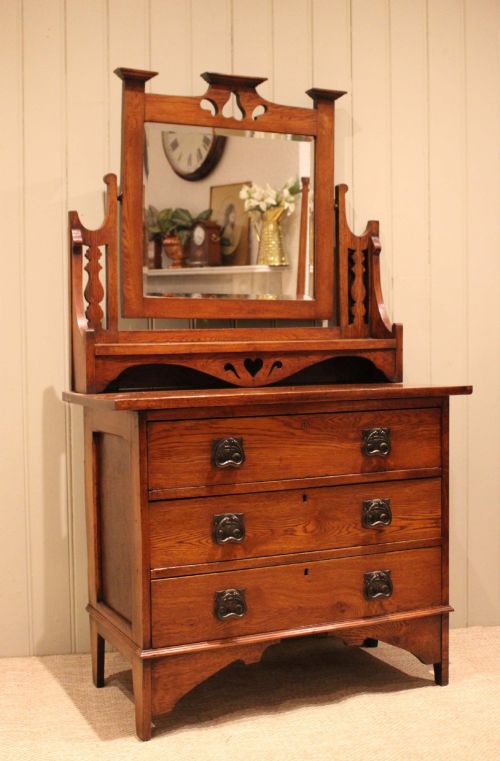
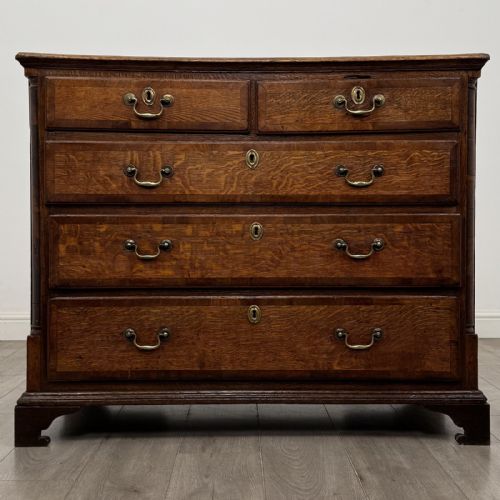
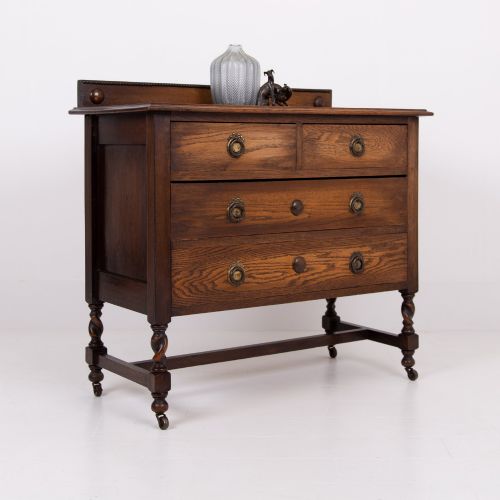
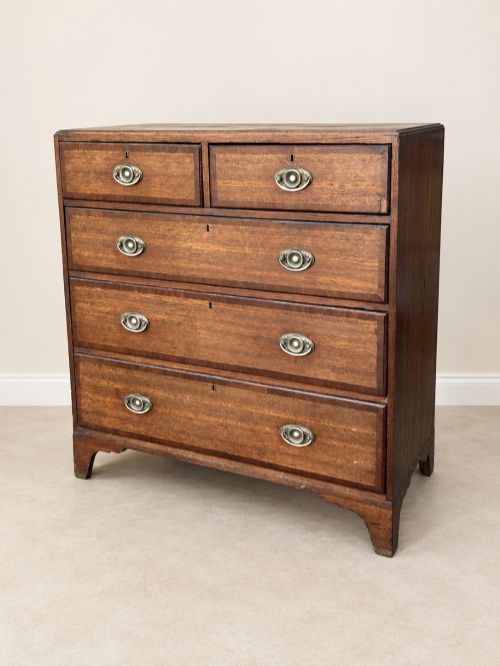
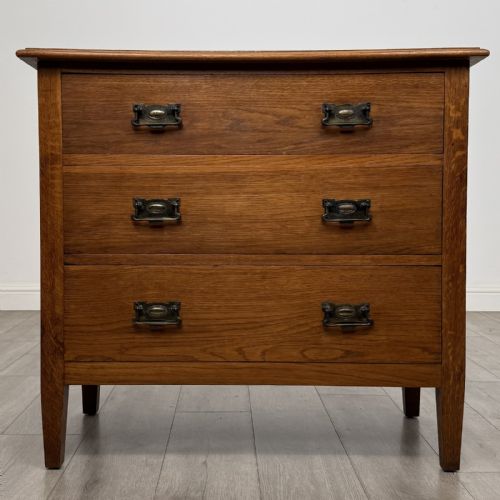
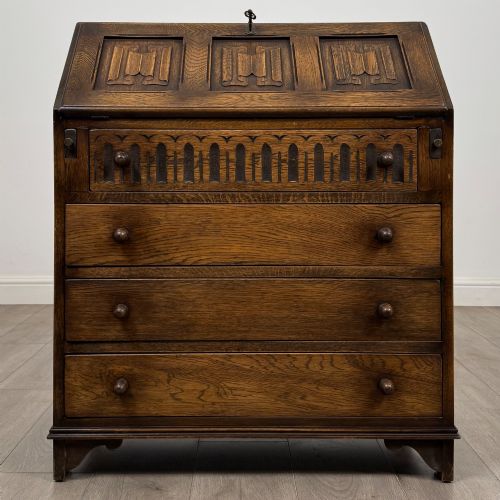
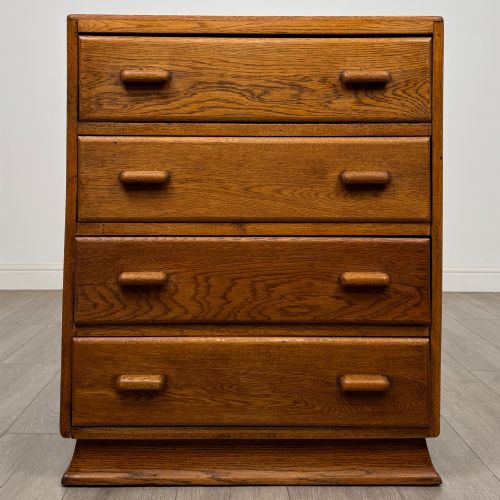
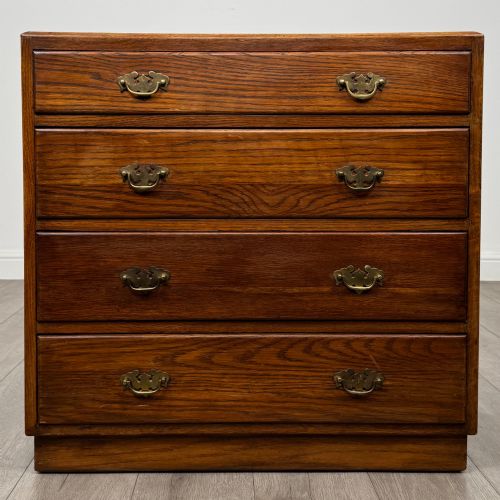
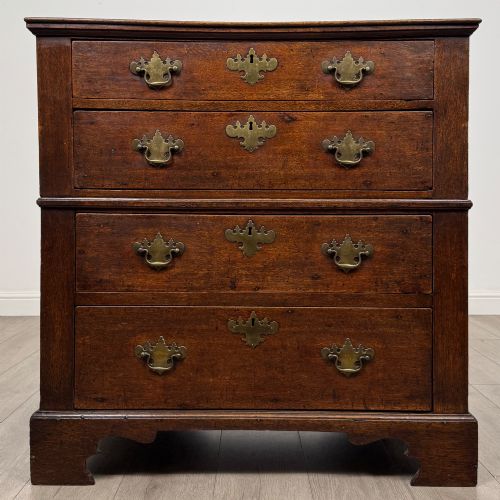


Solid Oak Bureau Chest
A solid oak bureau chest is a sturdy piece designed for writing and storage, built to last generations in heavy timber.
Solid Oak Bureau Chest
When you search for a solid oak bureau chest, you find pieces designed for practical storage and domestic writing, spanning several distinct centuries. The selection ranges from early forms originating in the seventeenth and eighteenth centuries to later Edwardian and early twentieth-century interpretations.
The most common formats on this page are chests of drawers rather than fitted writing desks, though pieces designated as bureaux and linenfold writing desks appear alongside them. These items display styles from simple Georgian utility to Arts and Crafts and Tudor Revival designs.
Makers and craftsmen utilised heavy timber to build carcases that endure, often incorporating brass or copper hardware alongside original wooden handles. The periods represented stretch from the seventeenth century through the Georgian and Edwardian eras up to the nineteen-twenties.
How they were made
The primary material across these listings is solid oak, chosen for its density and durability in domestic furniture. Cabinetmakers constructed these carcases using thick timber boards, often finishing them with brass or copper handles, escutcheons, and occasionally glass elements.
Joinery methods relied on traditional timber framing to support heavy drawer loads and fitted writing compartments without synthetic adhesives. Surfaces were finished to highlight the natural grain and golden tones of the wood, sometimes incorporating linenfold carving or raised galleries.
Solid Oak Bureau Chest Retail Price Guide 2026
Typical asking prices for solid oak bureau chest among the pieces listed under this phrase on Sellingantiques today, from the lower quarter to the upper quarter. They describe what is for sale here now, not the wider market.
Some chests feature secret compartments hidden behind small interior drawers within the bureau writing section.
What varies in quality
Quality in these pieces depends upon the selection of the timber and the integrity of the original construction methods. Plain utility builds differ significantly from pieces featuring refined mouldings, raised galleries, or sophisticated fitted writing interiors.
The retention of original hardware, such as brass pulls or wooden handles, alters the character and historical integrity of a piece. Finer examples display meticulous attention to drawer linings and backboards, whereas simpler iterations rely on straightforward functional assembly.
The Solid Oak Bureau Chest Glossary
- Bureau
- A desk with a sloping lid that opens to reveal a fitted writing surface and small compartments. These often sit atop a chest of drawers.
- Linenfold
- A style of wood carving that resembles folded parchment or linen, popular in Tudor Revival and Arts and Crafts panels.
- Raised gallery
- A low decorative wooden upstand fixed to the top surface or back of a chest or dressing table. It prevents items from sliding off the rear edge.
- Arts and Crafts
- A design movement valuing traditional craftsmanship and simple forms over mass-produced ornamentation, prominent around the turn of the twentieth century.
- William and Mary
- An architectural and furniture style spanning the late seventeenth century, characterised by turning and simple geometric panelling.
Solid Oak Bureau Chest: Frequently Asked Questions
How do I identify a Georgian oak chest?
Georgian pieces generally display hand-cut dovetails, thick oak drawer linings, and proportioned brass drop handles or bail pulls.
Inspect the backboards and drawer bottoms to confirm the use of older pit-sawn timber rather than modern sheet materials.
Can I use a bureau chest for daily writing?
Yes, the sloping lid folds down to create a stable writing surface supported by integrated pulls or hinged ledges.
The internal compartments provide organised storage for stationery and small documents.
What is golden oak furniture?
Golden oak refers to furniture pieces finished to highlight the warm, honey-toned grain characteristic of Edwardian and early twentieth-century production.
This lighter appearance contrasts with the darker, patinated surfaces found on seventeenth and eighteenth-century examples.
How do I care for solid oak furniture?
Keep solid oak pieces away from direct heat sources and sudden humidity changes to prevent the timber from splitting or warping.
Apply a traditional beeswax polish occasionally to nourish the wood and maintain its natural sheen.