


Solid Oak Bookshelves
Solid oak bookshelves bring the warm, honest grain of timber into a room to hold a working library with quiet dignity.
Solid Oak Bookshelves
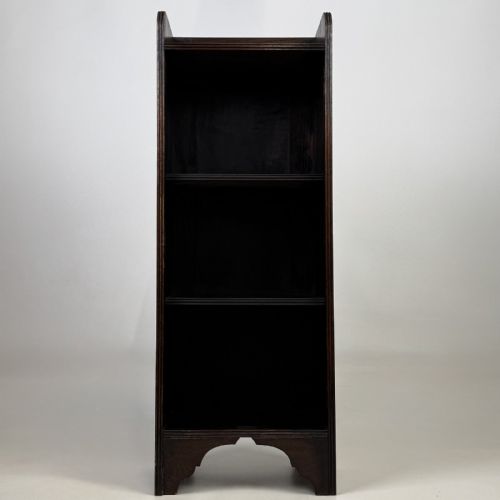
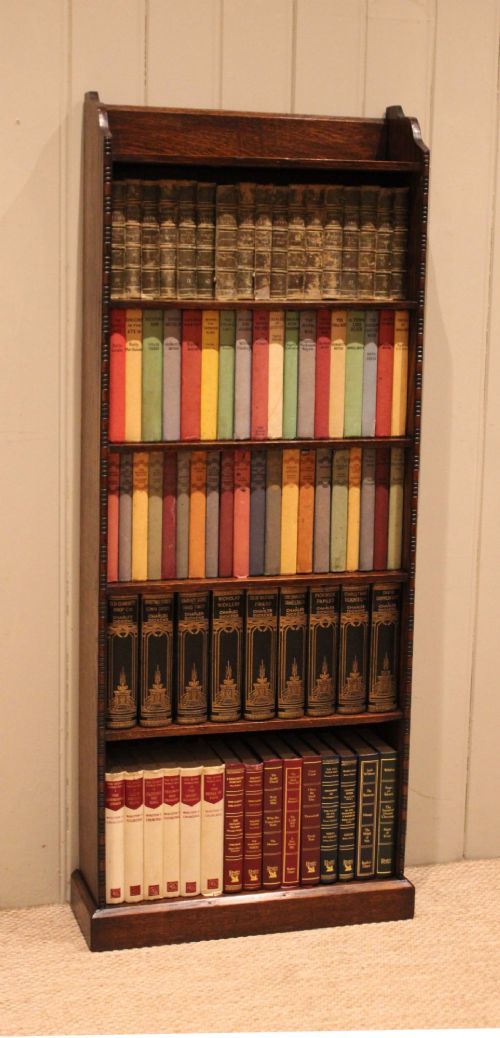
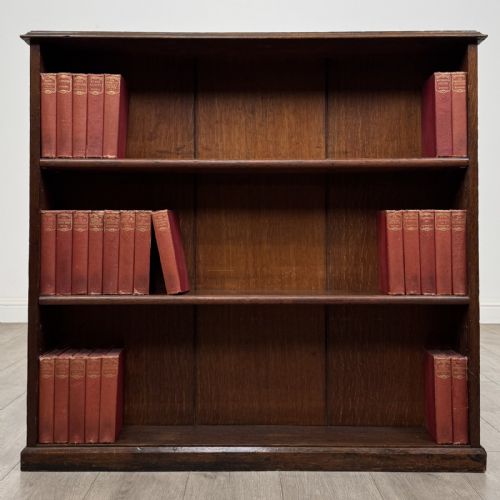
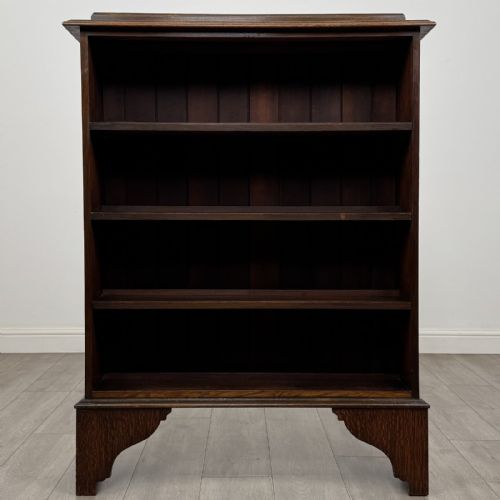
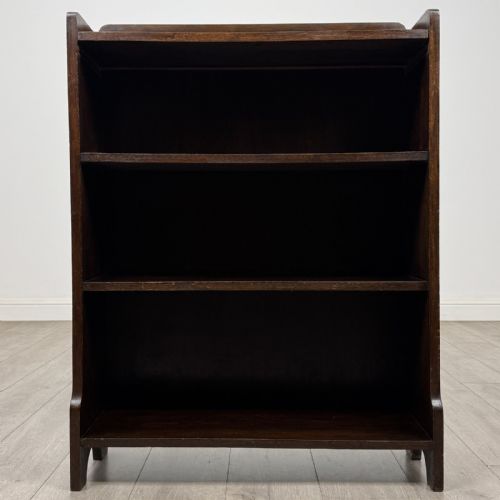
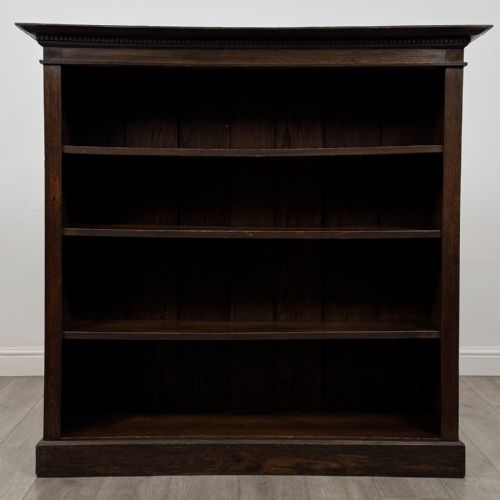
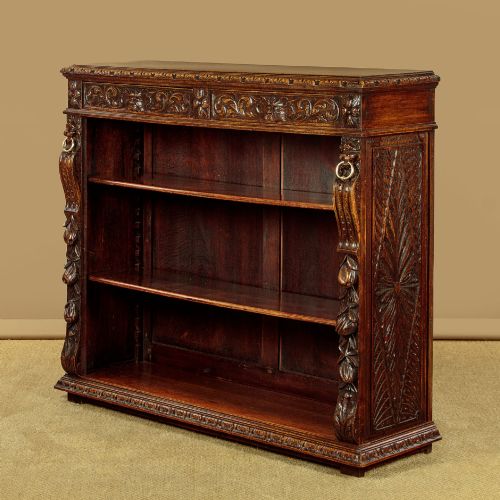
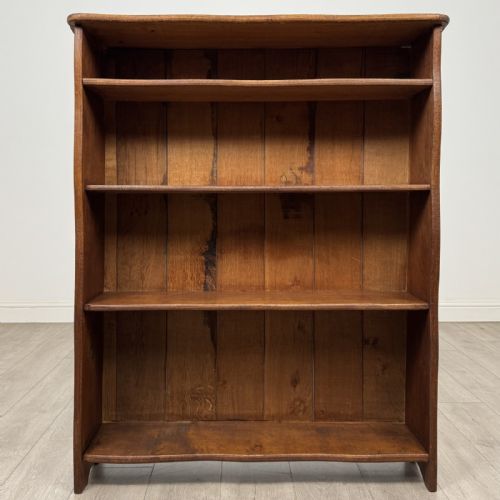
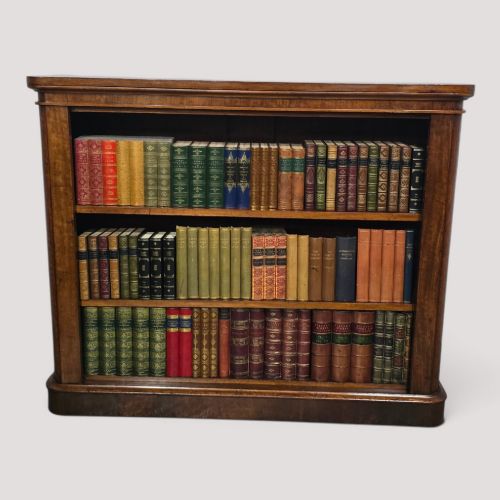
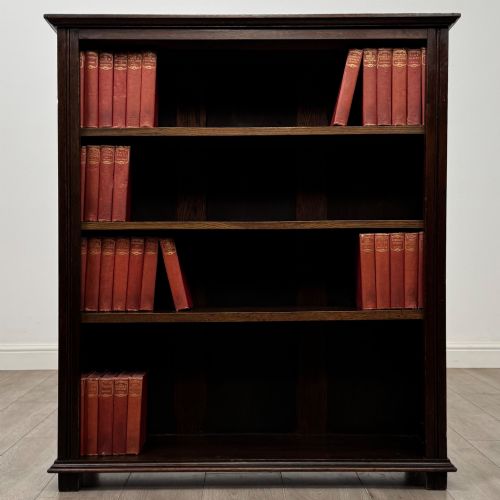
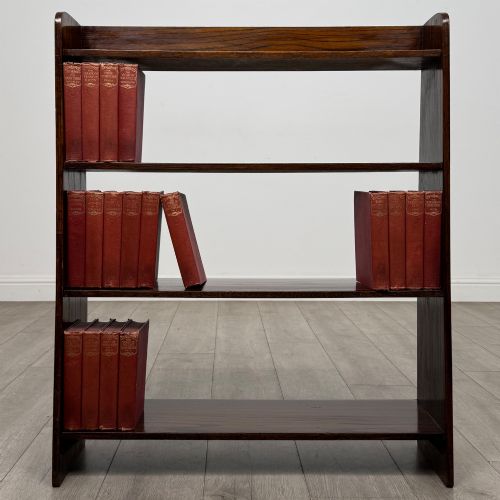
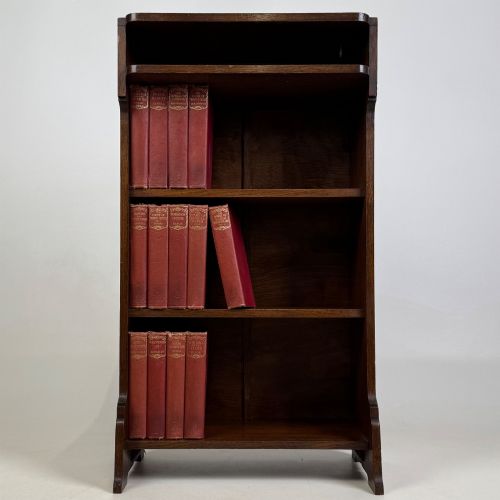
Solid oak bookshelves appear most frequently from the Edwardian period and the early twentieth century, taking the form of open bookcases with fixed or adjustable shelves. These pieces range from neat, small items with carved edges or raised galleries to larger library bookcases built for heavy volumes.
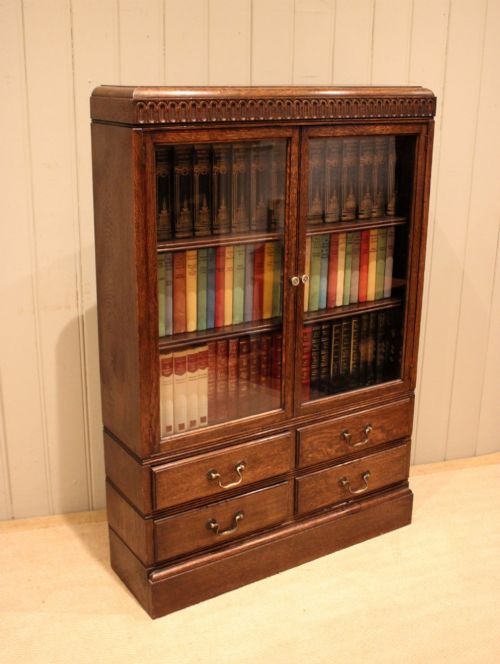
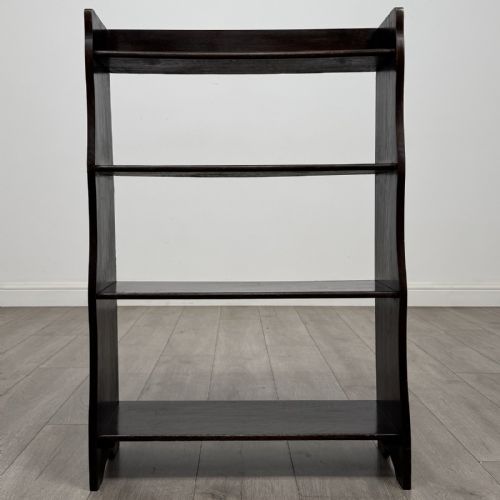
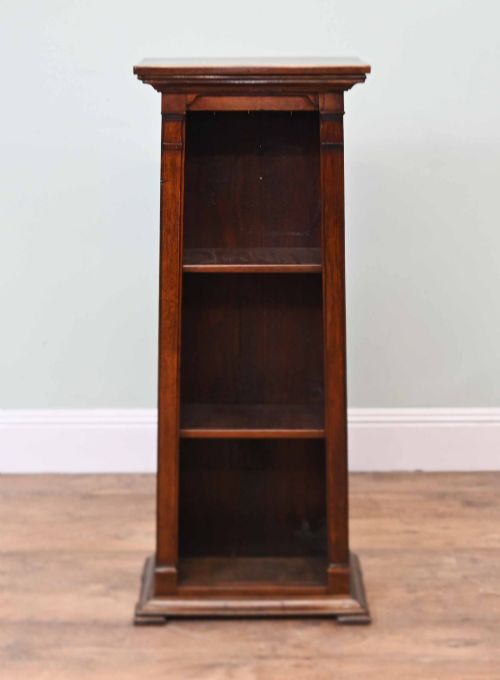
The selection also spans Victorian, Arts and Crafts, and 1920s interwar designs, showing how cabinetmakers adapted the material over decades. Alongside standard upright shelving, buyers encounter variations such as angled bookcases, book stands, and pieces featuring carved details or shaped sides.
Distinctions in quality
Quality in these bookcases rests on the selection of the timber and the depth of the cabinetmaker's hand. Superior pieces display carefully chosen oak grain, crisp carving around edges or cornices, and well-proportioned architectural details like a dentil moulding or a shaped gallery.
Construction methods also separate standard production from finer work. The presence of cleanly fitted adjustable shelving systems, solid backboards, and substantial timber thickness without unnecessary bulk indicates a higher standard of manufacture.
Solid Oak Bookshelves Retail Price Guide 2026
Typical asking prices for solid oak bookshelves among the pieces listed under this phrase on Sellingantiques today, from the lower quarter to the upper quarter. They describe what is for sale here now, not the wider market.
Some Edwardian bookcases include a raised gallery on top, ideal for corralling stray bookmarks and small curiosities.
Heals·Wylie Lochhead of Glasgow·E.A. Taylor
The Solid Oak Bookshelves Glossary
- Dentil cornice
- A decorative moulding featuring a series of small, rectangular blocks that project like teeth along the top edge of a bookcase. This architectural detail appears on formal Edwardian and Victorian pieces.
- Arts and Crafts
- A design movement spanning the late nineteenth and early twentieth centuries that emphasised honest construction, visible joinery, and the natural qualities of materials like oak. Pieces from this style often display simpler, robust forms.
- Adjustable shelves
- Shelving supported by mechanisms that allow the vertical spacing to be altered. This feature provides practical flexibility for libraries holding books of varying heights.
Solid Oak Bookshelves: Frequently Asked Questions
How do I know if a bookcase is solid oak?
Examine the grain patterns on the shelves, sides, and edges to check for consistency and natural growth marks. Solid timber shows continuous grain wrapping around edges, whereas veneered pieces may reveal substrate layers at corners.
Inspect the interior surfaces and underside of the shelves for matching timber characteristics. Weight and construction joints also offer clues, as solid oak pieces feel dense and display traditional joinery rather than modern fasteners.
Are the shelves usually adjustable on these bookcases?
Many period bookcases feature fixed shelving, particularly simpler Edwardian and Arts and Crafts examples designed for standard octavo volumes. However, larger library editions and certain twentieth-century pieces incorporate adjustable shelf mechanisms.
When adjustable shelving is present, it allows the interior space to accommodate oversized folios and mixed collections. Check the listing details to confirm whether the shelves are fixed in place or movable.
How do I care for antique oak furniture?
Protect the wood by keeping the bookcase away from direct heat sources and strong sunlight, which can dry out the timber and fade the finish. Dust regularly with a soft, dry cloth to prevent a buildup of grime.
Apply a traditional beeswax polish sparingly when the wood appears dry to maintain its lustre. Avoid silicone-based sprays, as they can penetrate the pores of the oak and damage the surface over time.