





Snowy Landscape Art
These snowy landscape art pieces capture cold winters through oils and watercolours, offering quiet charm to any room.
Snowy Landscape Art
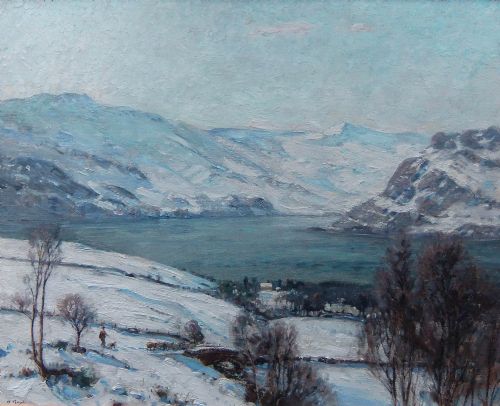
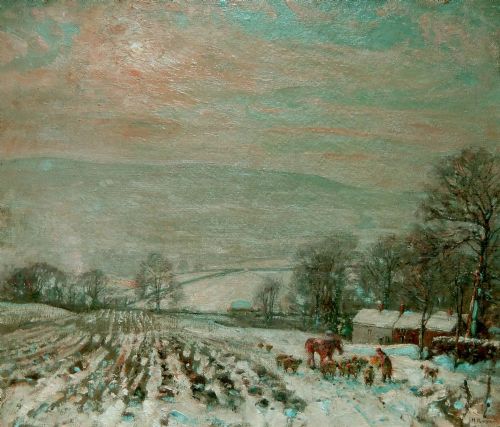
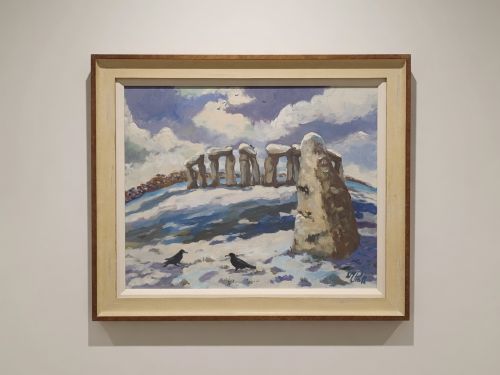
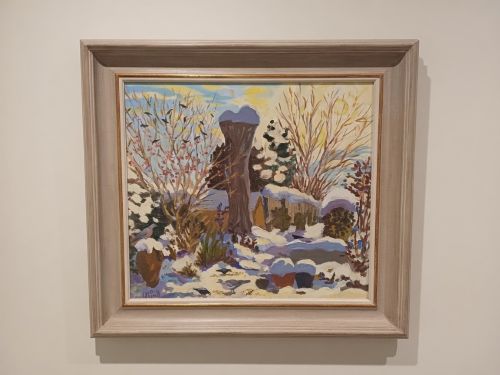
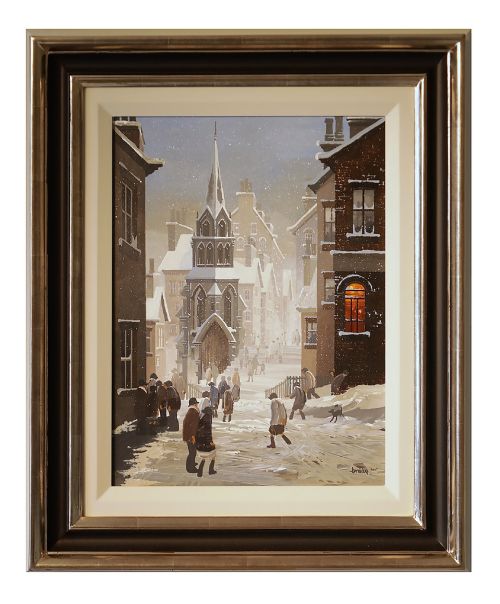
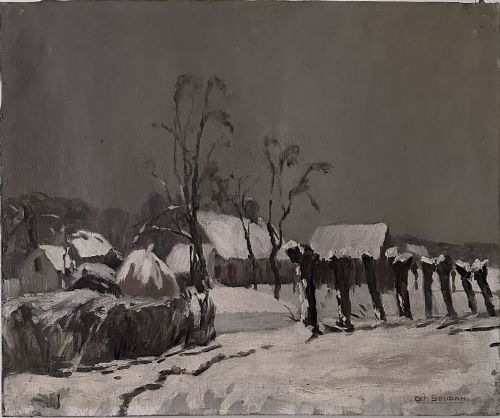
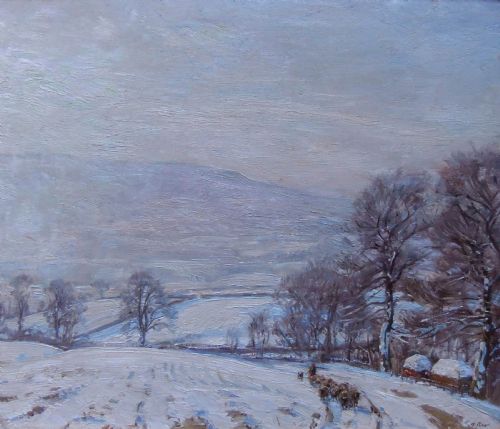
When buyers search for snowy landscape art, they encounter winter scenes rendered across the nineteenth and twentieth centuries. These works record frozen fields, livestock in snow, and rural cottages under grey skies.
The selections available here lean heavily toward British and European paintings from periods such as the eighteen-sixties, nineteen-twenties, and nineteen-thirties. Oils on canvas and watercolours on paper form the primary visual record.
Subjects range from Yorkshire dales and Scottish highlands to Canadian vistas and French villages. Pastoral views involving sheep droving and horses feature prominently alongside stark trees and deep snowdrifts.
Materials and methods
Artists relied primarily on oil paint applied to canvas or wood panels, building texture with thick brushstrokes to suggest heavy winter snow. Watercolours on paper offered a lighter medium for capturing mist, ink, and winter skies.
Most paintings are housed in period wooden frames that complement the muted palettes of white, grey, and deep earth tones. The combination of durable canvas and linseed-based oil paints has preserved these cold-weather pigments across generations.
Snowy Landscape Art Retail Price Guide 2026
Typical asking prices for snowy landscape art among the pieces listed under this phrase on Sellingantiques today, from the lower quarter to the upper quarter. They describe what is for sale here now, not the wider market.
Regional British topography dominates the subjects, particularly Yorkshire dales and Scottish winter pastures.
Distinguishing quality
Quality rests in the artist's handling of light against white snow and the atmospheric depth of the winter sky. Stronger pieces convey the chill of the air and the weight of frost through confident, deliberate brushwork rather than rigid detail.
Provenance and attribution elevate certain works, particularly when signed by established regional painters of the early twentieth century. The preservation of the original wood frame and the stability of the canvas also influence the overall standing of a piece.
Herbert Royle·Lucy Pratt·Brian Shields Braaq·Fred Lawson·Ernest Uden·John Smith Atherton·Charles Jones·George Graham·Ernest Higgins Rigg·John Richard Worsdale·Anthonij Anton Mauve
The Snowy Landscape Art Glossary
- Oil Paint
- A slow-drying paint made from pigment suspended in oil, commonly linseed. It allows artists to build rich, textured surfaces suitable for heavy snow scenes.
- Watercolour
- A paint consisting of pigment suspended in a water-based solution, typically applied to paper. It yields translucent washes ideal for winter mist and pale skies.
- Canvas
- A heavy woven fabric used as a surface for oil paintings. It is stretched over a wooden frame before application.
- Impressionism
- A style of painting that focuses on capturing the visual impression of a moment, paying attention to shifting light and atmosphere rather than fine detail.
- Provenance
- The chronological record of ownership of a work of art. It helps establish authenticity and history.
Snowy Landscape Art: Frequently Asked Questions
What periods do these paintings cover?
The works span from the nineteenth century through the mid-twentieth century, including pieces from the eighteen-sixties and nineteen-twenties.
Later works extend into the post-nineteen-sixties period, showing diverse interpretations of winter scenes.
Are these works painted on canvas?
Many pieces utilise oil paint on canvas or wood supports, capturing texture and depth.
Others are watercolours executed on paper, offering lighter atmospheric effects.
Where do these winter scenes originate?
Subjects include regional British landscapes such as Wharfedale, Swaledale, and Wensleydale in snow.
Other views stretch to Scotland, France, and Canada, depicting rural life and livestock.
How should I hang a winter painting?
These works suit traditional spaces, often arriving in original wood frames that match their period.
Keep them away from direct sunlight and excessive moisture to preserve the canvas and paint.