






Snooker Score Board
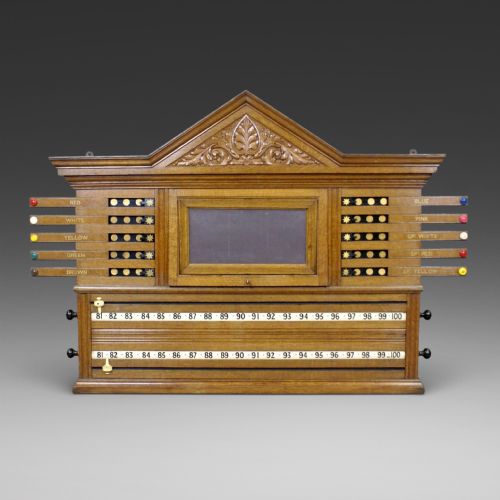
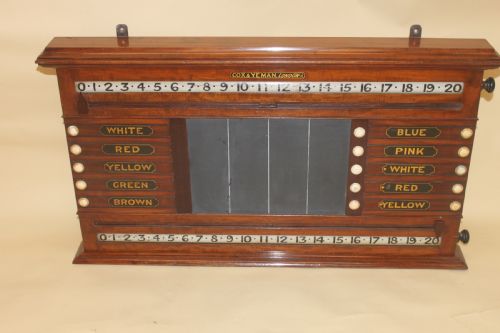
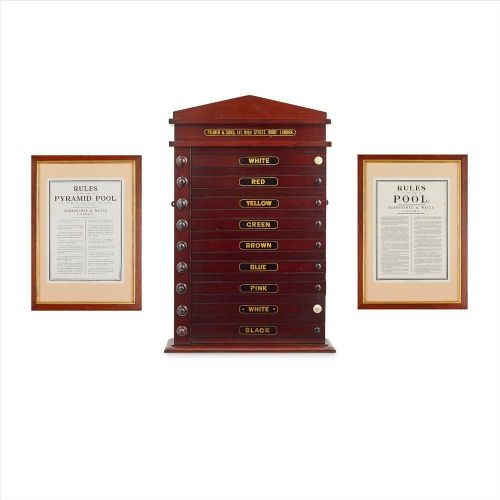
These snooker score board examples are period games room accessories in mahogany, oak and walnut built to keep tally in Victorian and Edwardian billiard rooms.
Snooker Score Board
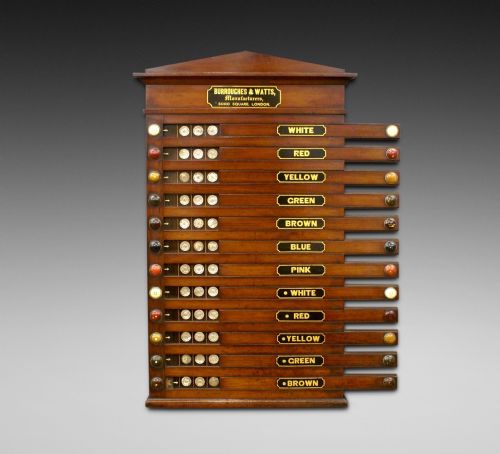
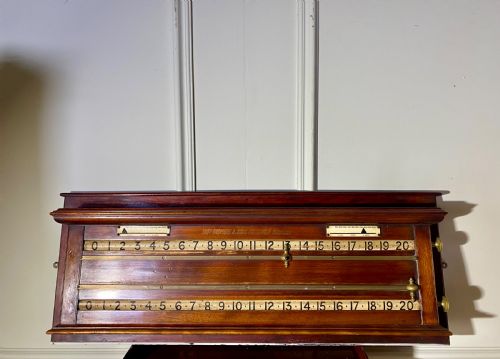
A snooker score board is a dedicated wall-hung or cabinet-mounted apparatus designed for keeping the tally during cue sports such as billiards, pool and snooker. When you search for a snooker score board, you encounter robust timber pieces engineered for domestic and club game rooms during the nineteenth and early twentieth centuries.
The pieces appearing on this page span the Victorian and Edwardian eras, with notable dates ranging from eighteen-sixty through to nineteen hundred. Forms include simple scoring boards alongside large score cabinets that enclose the tally mechanisms behind panelled doors.
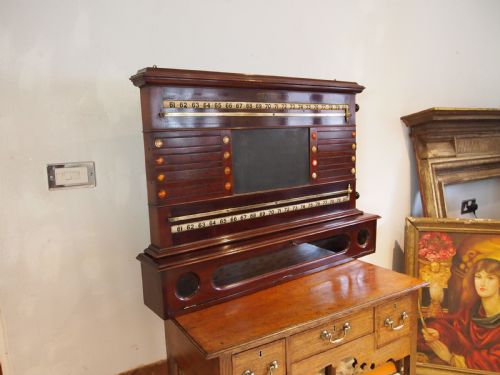
Most examples originate from English workshops and makers, utilising traditional hardwoods suited to the billiard rooms of large country houses and urban clubs. Buyers find everything from straightforward sliding pointer boards to elaborate score cabinets incorporating glass display elements.
Materials and construction
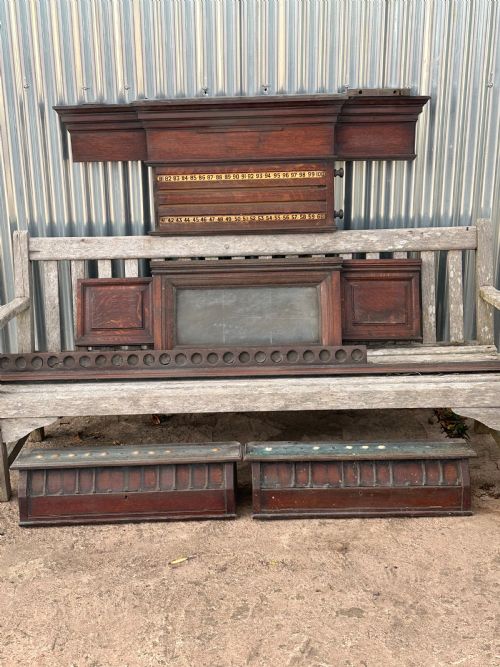
Makers constructed these boards primarily from dense hardwoods like mahogany, oak and English walnut, selecting timbers that matched existing billiard room furniture. These woods were carved, panelled and polished to create durable housings capable of withstanding heavy daily use in gentlemen's clubs and private residences.
Internal mechanisms and sliding pointers relied on contrasting materials such as brass tracks, bone markers, slate panels and early plastics like celluloid. This careful combination of metal, bone and timber ensured smooth operation of the scoring rollers and indicators over decades of play.
Snooker Score Board Retail Price Guide 2026
Typical asking prices for snooker score board among the pieces listed under this phrase on Sellingantiques today, from the lower quarter to the upper quarter. They describe what is for sale here now, not the wider market.
The documented periods span the Victorian and Edwardian eras, with specific dates recorded from eighteen-sixty onwards.
Distinctions in quality
Quality in a snooker score board is evident in the selection of timber, the crispness of the division markings and the presence of maker attribution. Superior examples employ finely figured English walnut or quarter-sawn oak with integrated cabinetry rather than plain surfaces.
The complexity of the scoring system also defines the tier of the piece, with multi-game boards handling billiards, life pool and snooker simultaneously. Maker signatures from established firms elevate the standing of the piece significantly within the market.
Orme & Sons Manchester·Thurston & Co of London·Cox & Yeman London·Burroughes and Watts
The Snooker Score Board Glossary
- Scoreboard
- A wall-mounted timber board featuring sliding pointers or rollers to track points in cue sports. These boards often include specific rows for different games such as snooker and billiards.
- Score cabinet
- An enclosed wall cupboard that houses the scoring mechanism behind doors, frequently featuring decorative woodwork or glass panels. Such cabinets protected the tally from dust and damage.
- Celluloid
- An early semi-synthetic thermoplastic material utilised for scoring markers and indicator numbers. Its smooth texture and pale tone provided clear legibility against dark timber boards.
- Life pool
- A variant of cue sports popular in the nineteenth century requiring specialised scoring rows on the board. Score boards built for this game tracked the lives remaining for each participating player.
Snooker Score Board: Frequently Asked Questions
How do you mount a heavy score board?
These timber boards require secure wall fixings distributed across their main frame to support the considerable weight of hardwood, slate and brass. Professional installation into solid masonry or direct attachment to wall studs is recommended.
Because many examples are substantial cabinets or large boards, checking the hanging brackets on the reverse ensures safe suspension in a modern games room.
Can these score boards still be used for games?
Most antique score boards remain fully functional for active play, with sliding pointers and rollers operating along their original brass tracks. The numbers and scoring lines stay legible for modern matches.
Careful handling of delicate materials like bone and celluloid preserves the integrity of the original sliding mechanisms during everyday use.
What is the difference between a board and a cabinet?
A standard board mounts flat against the wall with exposed sliding markers and scoring numbers on an open timber panel. This format prioritises direct access during fast-paced games.
A score cabinet encloses the working parts behind hinged doors, often incorporating decorative mouldings and glass elements to conceal the tally when the game concludes.
How do I identify a Victorian score board?
Victorian examples typically feature deep mahogany or oak construction with hand-carved details, brass markers and occasionally bone pointers. Stylistic cues align with nineteenth-century interior aesthetics.
Attributions to prominent nineteenth-century makers such as Thurston or Burroughes and Watts frequently appear on brass plates or timber surfaces within this period.