
Small Wooden Sideboard
A small wooden sideboard solves the perennial problem of dining room storage without crowding the floor space.
Small Wooden Sideboard
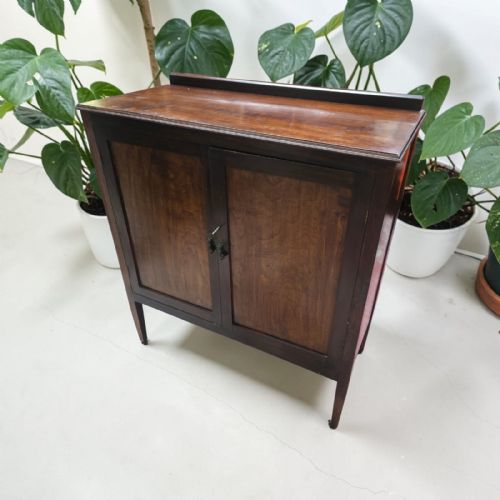
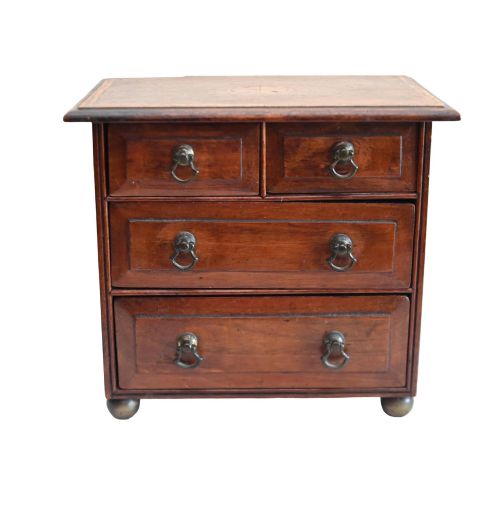
A small wooden sideboard provides compact storage for tableware and linens while anchoring a dining room or hallway with period character. When searching for this phrase, buyers encounter various forms including chiffoniers, low cupboards, and compact cabinets.
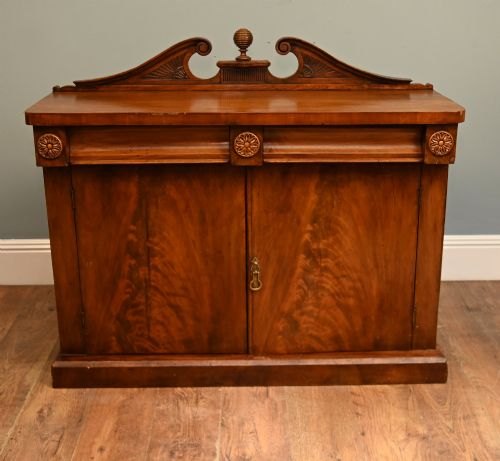
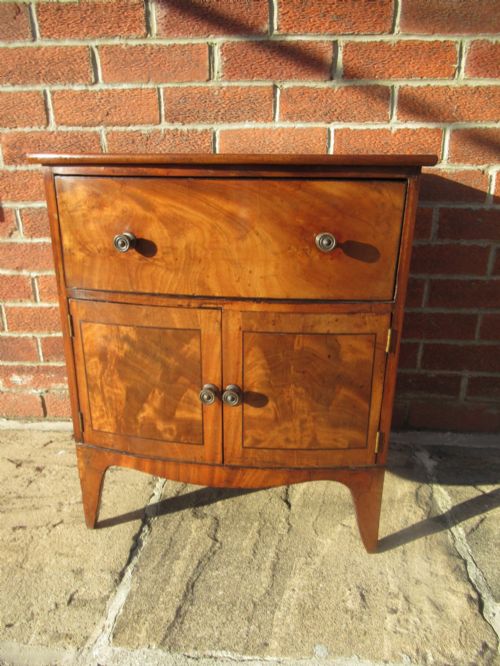
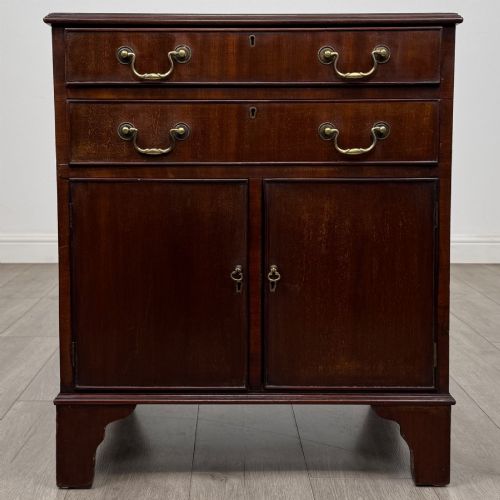
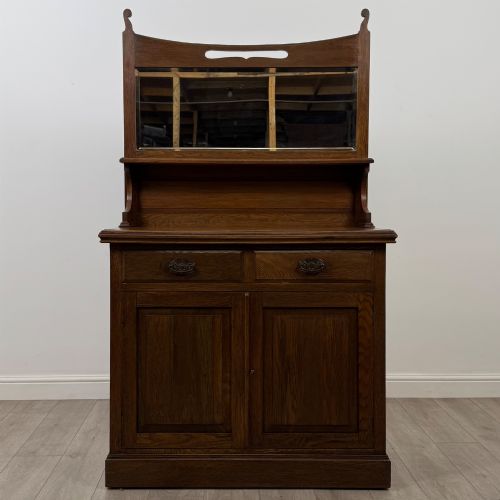
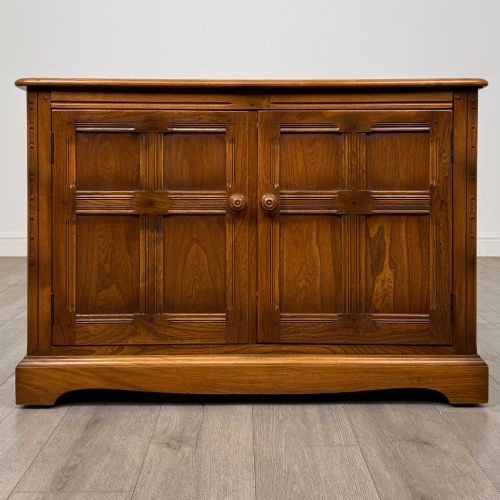
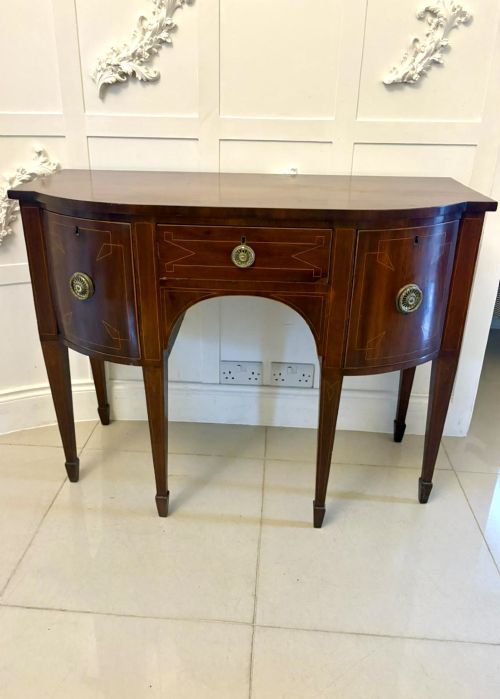
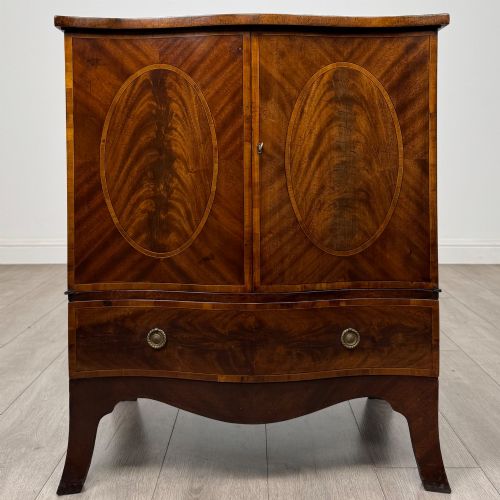
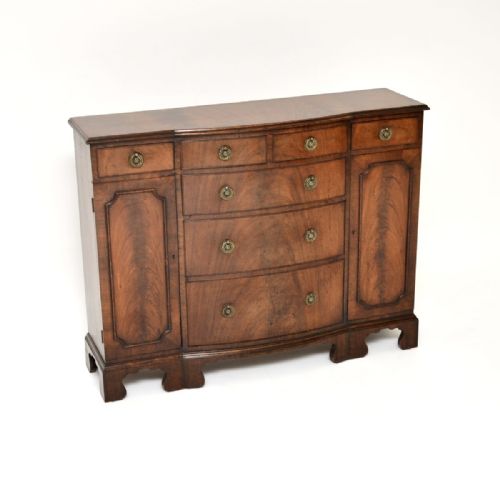
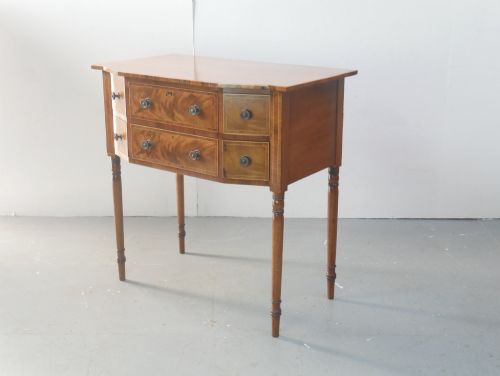
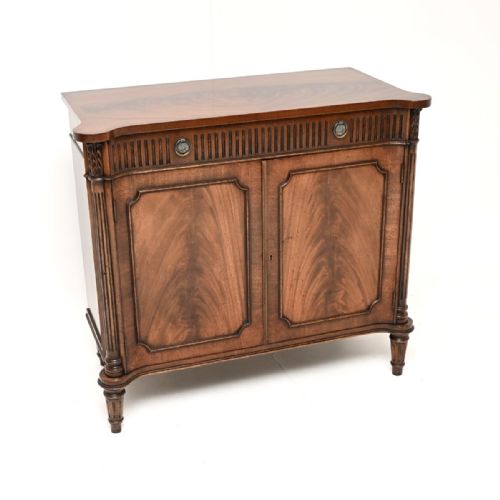
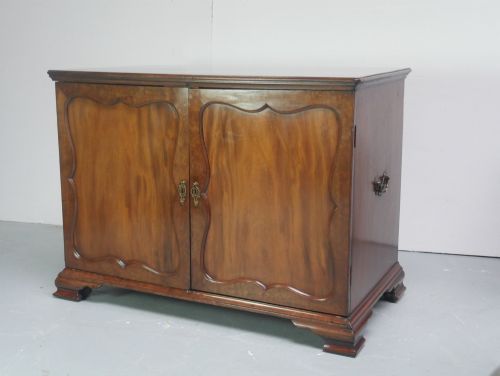
The pieces appearing here span several distinct eras, stretching from George III and Regency designs through Victorian proportions to Edwardian and Art Deco interpretations. Mahogany, oak, and walnut dominate the selection, often taking the shape of bow fronts or breakfronts.
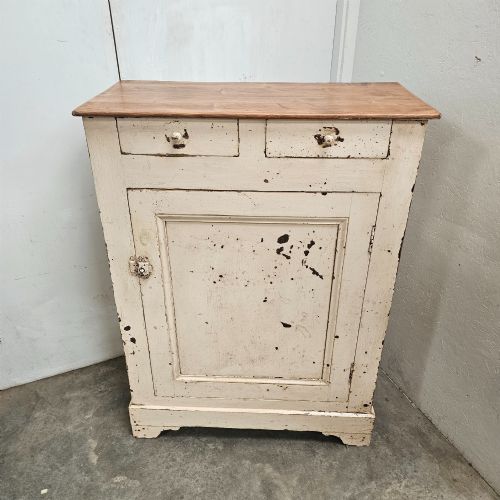
Originating primarily from British workshops alongside continental European and Anglo-Indian makers, these items range from formal dining room servers to informal hallway storage. Selecting the right example depends on matching the timber tone and period style to an existing interior.
How they were made
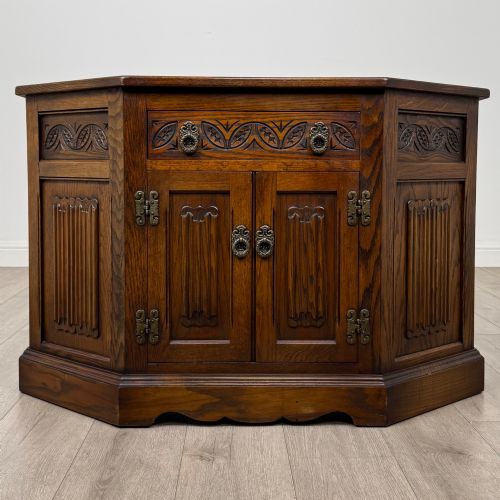
Cabinetmakers constructed these pieces using solid hardwoods like mahogany, oak, and walnut, frequently applying flame mahogany veneer to create striking figured surfaces on drawer fronts and doors. Carved details, brass inlays, and linenfold panels show the high level of joinery skill applied during the Georgian, Victorian, and Edwardian periods.
Secondary timbers such as pine appeared on internal partitions and drawer linings, while specialist finishes included hand-painted motifs and French polishing. Construction techniques relied on traditional dovetail joints for drawers and mortise and tenon joints for frames to ensure long-term stability.
Some cabinets hide sheet music or jams behind their small wooden doors, proving that past generations stored their hobbies in miniature.
What varies in quality
The calibre of a piece rests heavily on the selection of timber and the precision of the veneer work, where symmetrical grain patterns distinguish superior examples from standard utility items. Crispness in hand-carved ornamentation and the retention of original brass hardware further elevate the status of a cabinet.
Structural integrity depends on the tightness of the joints and the smooth action of drawers running within their original housings. Pieces that maintain their proportional balance and authentic period patination command greater appreciation among collectors.
The Small Wooden Sideboard Glossary
- Bow front
- A convex, outwardly curved front section common on Georgian and Regency sideboards. This shape softens the corners of a room and adds visual depth to smaller furniture.
- Breakfront
- A cabinet design where the central section projects forward from the recessed side sections. This architectural arrangement creates shadow and breaks up the linear mass of the timber.
- Flame mahogany veneer
- A thin slice of mahogany timber cut from the fork of the tree where branches meet the trunk. It produces a distinctive flickering flame pattern used on high-end furniture fronts.
- Linenfold
- A style of wood carving resembling folded bolts of fabric, frequently seen on oak panels from earlier revival periods and Edwardian cabinets.
Small Wooden Sideboard: Frequently Asked Questions
Where should I place a small wooden sideboard?
These compact pieces fit naturally into dining rooms, hallways, or living spaces where floor area is restricted. They provide practical surface space and internal storage without dominating the room.
Positioning them against a blank wall or beneath a mirror allows the timber grain and period details to catch the light effectively.
How do I care for a antique wooden sideboard?
Maintain the finish by dusting regularly with a soft, dry cloth and avoiding placement near direct heat sources or strong sunlight. These precautions prevent the timber from drying out and protect the polish.
Applying a traditional beeswax occasionally nourishes the wood and helps preserve the natural sheen built up over decades.
What is the difference between a chiffonier and a sideboard?
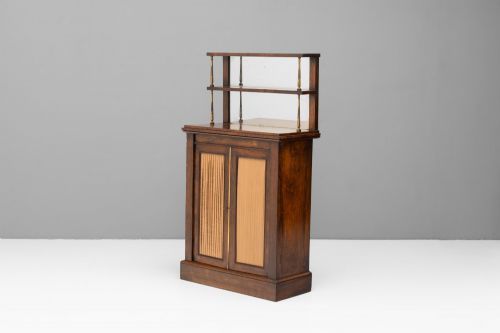
A chiffonier typically represents a smaller, more enclosed variant of the sideboard, often featuring a low superstructure or shelf at the back. Nineteenth-century versions frequently served to store dining silver and linens in tighter drawing rooms.
Standard sideboards generally offer greater length and a wider surface area designed for serving food and displaying decorative objects during formal meals.
How can I tell the period of a wooden cabinet?
Examine the timber selection, construction methods, and hardware style to determine the era of manufacture. Georgian and Regency pieces often feature finely figured flame mahogany and subtle brass inlays, while Victorian examples tend towards heavier proportions and darker walnut or mahogany.
Edwardian and later pieces frequently display lighter oak construction, sometimes incorporating revival motifs like linenfold carving or clean-lined Art Deco geometry.