
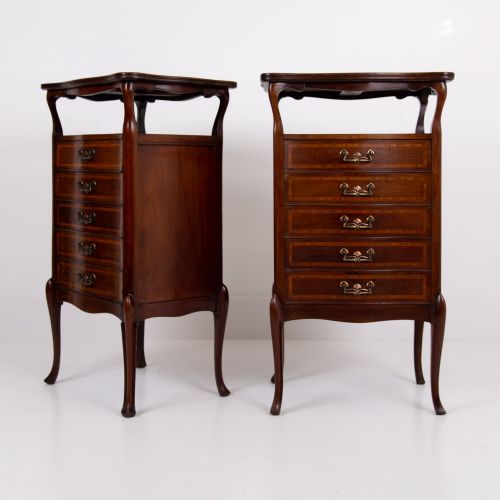


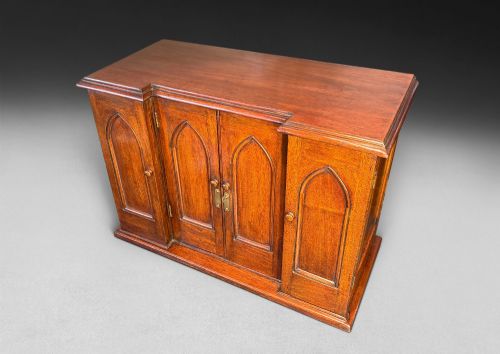
Small Wood Chest
A small wood chest brings tangible history into a room, offering compact storage shaped by centuries of cabinet-making skill.
Small Wood Chest
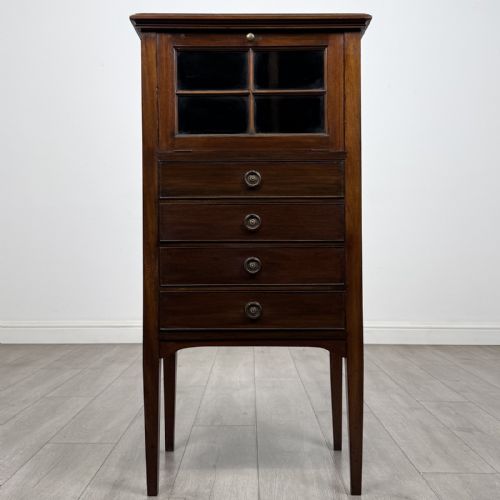
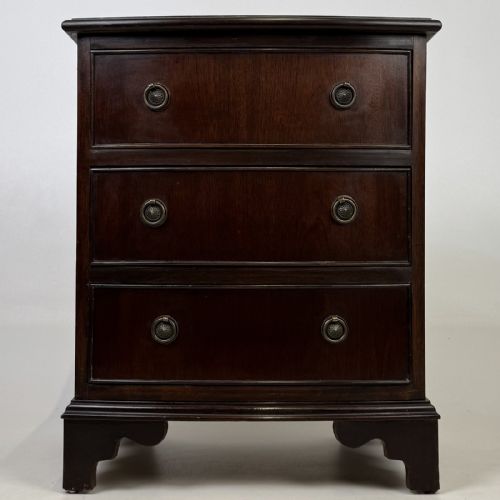
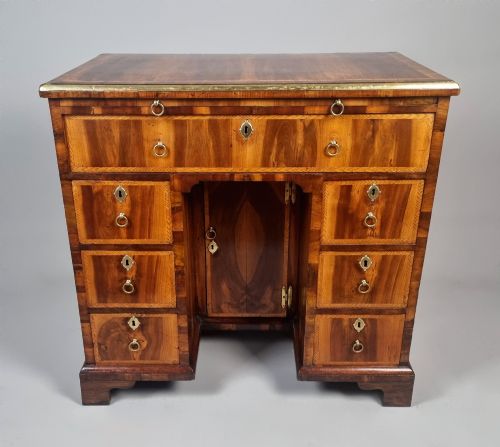
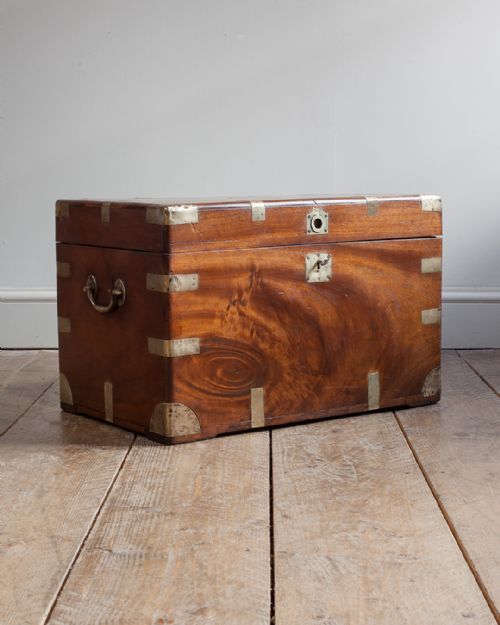
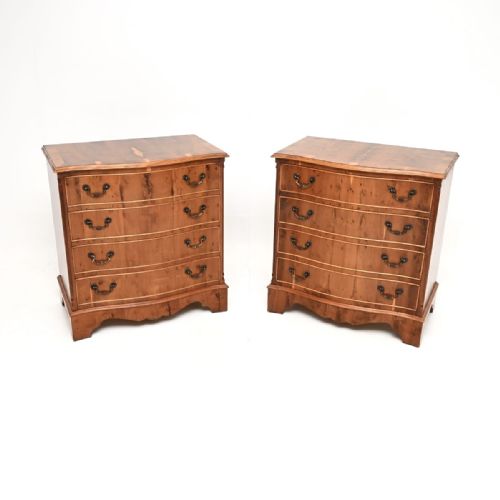
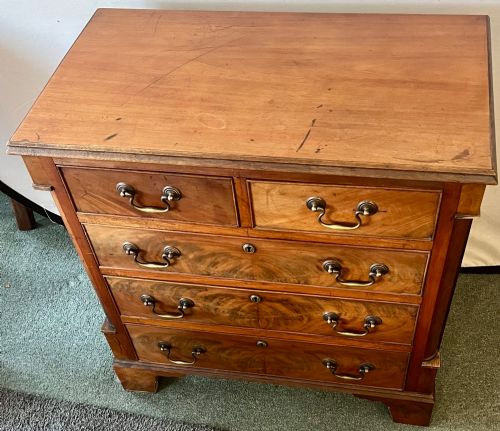
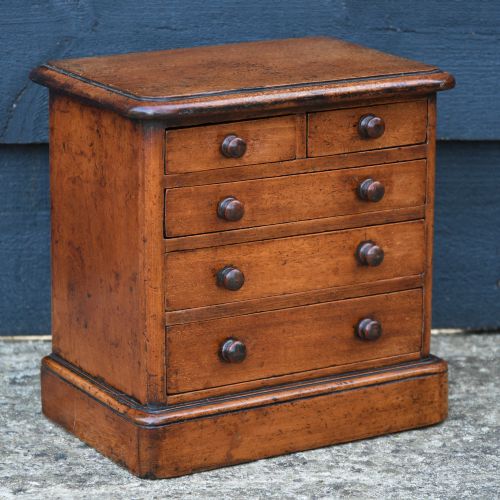
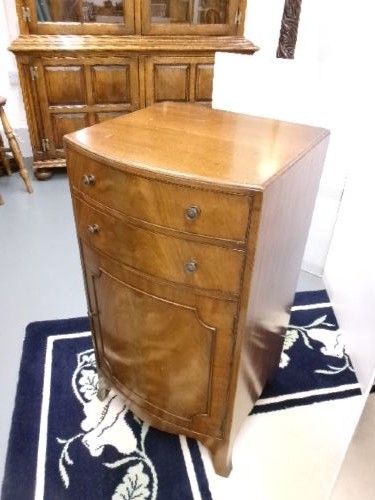
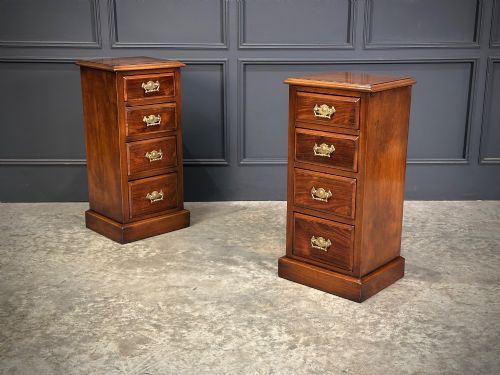
A small wood chest encompasses compact storage forms ranging from Georgian and Victorian chests of drawers to bedside cabinets, miniature apprentice pieces, and panelled coffers. Buyers searching for a small wood chest encounter pieces built for practical utility in domestic spaces, adapted over generations to serve as bedside tables, jewellery boxes, or desktop collectors' cabinets.
The selections span centuries, including 17th-century oak coffer boxes alongside 18th-century George III mahogany designs, Edwardian inlaid items, and 1930s burr walnut lowboys. Mahogany, walnut, and oak dominate the forms, supplemented by ash, yew wood, camphor wood, and rosewood across various regional and revival styles.
How They Were Made
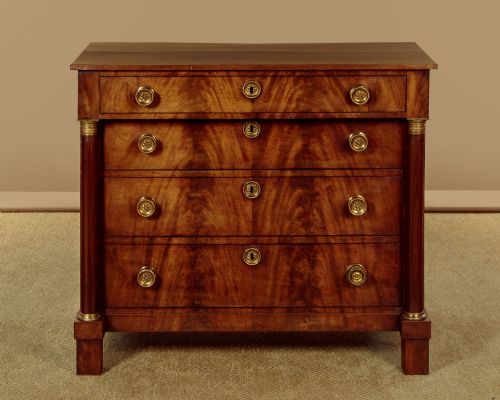
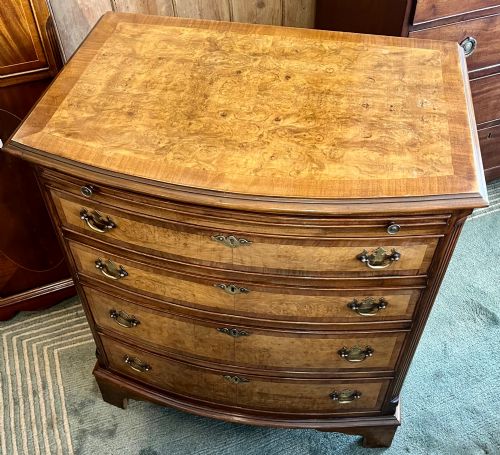
Cabinet-makers relied on solid timbers andveneers, utilising dense hardwoods like mahogany, walnut, and oak for structural integrity and surface figure. Burr walnut and figured walnut veneers were applied to primary panels to catch the light, supported by secondary softwoods in drawer linings and carcases.
Joinery techniques involved dovetail joints on drawers, panel-and-frame construction for coffers, and turned wooden feet or bracket bases to elevate the carcase. Brass handles, escutcheons, and occasional iron fittings provided mechanical function and visual contrast against the dark polished or waxed wood surfaces.
Period origins span from the seventeenth-century oak coffer era through Georgian, Victorian, and Edwardian epochs up to 1930s walnut cabinets.
What Varies in Quality
Construction fidelity dictates the distinction between standard utilitarian production and superior cabinet-making, visible in the tightness of dovetail joints and the symmetry of timber grain. Superior examples display carefully selected veneers that wrap continuously across drawer fronts, alongside original brass hardware and well-fitted interior partitions.
Proportion and surface finish further separate the tiers, as master makers balanced drawer depths and cornice profiles with exact precision. Retained original patination from period waxing contributes to the depth of the timber, whereas heavy modern intervention diminishes the tactile honesty of the piece.
Reprodux
The Small Wood Chest Glossary
- Apprentice piece
- A miniature furniture item created by a trainee to demonstrate mastery of joinery skills to a guild. These small chests replicate full-sized proportions in reduced scale.
- Brushing slide
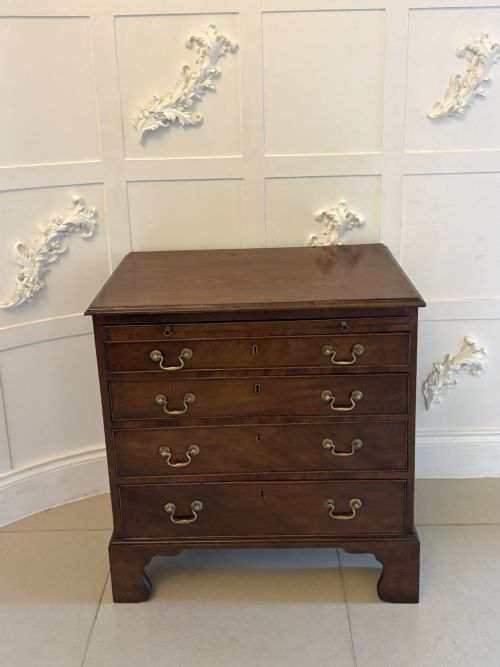
- A pull-out wooden shelf positioned above the top drawer of a chest. It served as a temporary writing surface or clothes-brushing deck in Georgian bedchambers.
- Coffer
- A heavy wooden storage chest constructed with panel-and-frame joinery. Early examples from the seventeenth century often feature carved panels and robust oak construction.
- Dovetail joint
- An interlocking wood joint formed by trapezoidal pins and tails. It provides exceptional tensile strength for drawer construction.
- Lowboy
- A small low table with drawers, functioning as a dressing table or side table. They frequently appear in walnut or mahogany from the eighteenth and early twentieth centuries.
Small Wood Chest: Frequently Asked Questions
What were small wood chests used for originally?
These compact chests served multiple household functions, from storing linens and personal documents to holding valuable jewellery and apothecary items. Miniature versions functioned as scale models for tradesmen or display pieces.
Bedside variants provided enclosed storage for night-time essentials before fitted bedroom suites became standard. Their modest footprints allowed them to fit easily into smaller chambers and dressing rooms.
How can I tell a Georgian chest from an Edwardian copy?
Georgian chests rely on heavy structural timbers, hand-cut dovetails with slight irregularities, and primary wood species like solid mahogany or oak. Their drawer linings often consist of oak or pine with visible tool marks.
Edwardian reproductions and Georgian style pieces frequently utilise machine-sawn components, standardised hardware, and lighter secondary woods beneath decorative veneers. Examining the interior construction and timber shrinkage reveals the true age of the piece.
Where is the best place to put a small chest at home?
A small wood chest adapts readily to compact modern rooms, serving effectively as a bedside table, lamp table, or hallway surface. Their limited depth allows placement in narrow corridors where full-sized furniture obstructs movement.
Drawer and cupboard variants provide practical concealment for modern clutter while introducing rich timber tones to living spaces. Placing them away from direct heat sources protects the antique wood and polished finishes.
What is a brushing slide and how does it work?
A brushing slide is a pull-out shelf integrated directly above the top drawer of Georgian chests. It operates on wooden runners, gliding out smoothly when pulled by small brass knobs or recessed grips.
In period interiors, users pulled the slide forward to brush garments or write brief notes without opening the main drawers. This clever feature maximised functionality within a limited vertical space.