



Small Wall Sconces
Small wall sconces bring focused light and decorative polish to tight spaces, making them essential for period interiors.
Small Wall Sconces
Small wall sconces encompass decorative wall lights and hanging mirrors dating from the eighteenth century to the early twentieth century. These compact fixtures serve to illuminate dark corners while adding architectural interest to modest wall spaces.
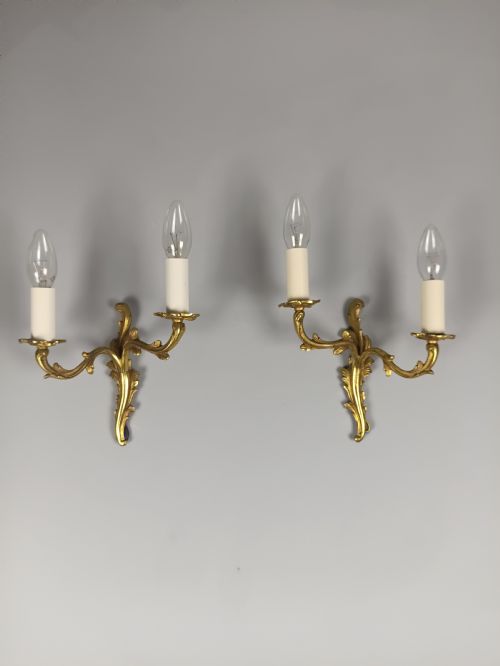
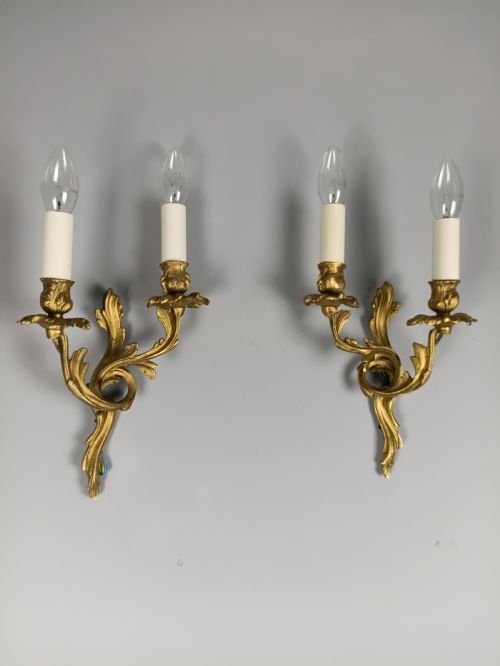
The selections on this page lean heavily towards matched pairs of French and English wall lights in gilt brass, alongside nineteenth-century girandoles and small Italian rococo mirrors. Buyers seeking symmetrical arrangement or intimate accent lighting will find numerous period examples here.
The styles range from elaborate French rococo and neoclassical designs to simpler Victorian brass frames and Edwardian mahogany pieces. Each period brings distinct characteristics to these small fixtures, from exuberant gilded carving to restrained linear metalwork.
How they were made
Makers of small wall sconces utilised cast and gilt brass for durable structural arms, candle branches and decorative metal frames. These metallic elements often received a gilt finish to catch and reflect the candlelight in dim rooms.
Carved wood elements, including gesso and giltwood, required skilled handwork to create intricate frames and decorative cartouches. Artisans incorporated mirror glass, sometimes featuring foxed plates, to enhance the perceived depth and brightness of smaller chambers.
Small Wall Sconces Retail Price Guide 2026
Typical asking prices for small wall sconces among the pieces listed under this phrase on Sellingantiques today, from the lower quarter to the upper quarter. They describe what is for sale here now, not the wider market.
Listings feature brass, giltwood, and mirror glass across Victorian, Regency, and eighteenth-century periods.
What varies in quality
Quality in small wall sconces rests upon the crispness of the chasing on brass elements and the depth of hand-carved detail on wooden frames. Superior pieces display fluid lines and precise ornamentation rather than soft or repetitive casting.
The integrity of the original gilding and the preservation of early mirror plates dictate the standing of individual pieces. Fine examples retain their original surface treatments without heavy over-gilding or modern replacement parts masking the age of the object.
Cottier and Company
The Small Wall Sconces Glossary
- Girandole
- A branched wall light incorporating a mirror backplate. This combination maximises illumination by reflecting the candle flame across the room.
- Gilt Brass
- Metal treated with a gold-coloured finish or plating. It provides the luxurious appearance of solid gold while offering structural strength for supporting arms.
- Cartouche
- An ornamental frame resembling a scroll or rolled-up piece of paper. It frequently forms the central decorative motif on eighteenth-century Italian rococo mirrors.
- Foxed Plate
- Mirror glass showing age-related spots and oxidation. This natural degradation creates a mottled appearance prized by collectors for its authentic antique character.
- Gesso
- A plaster-based mixture applied to wood surfaces as a preparation for gilding. Skilled craftsmen carve intricate details into this layer before applying gold leaf.
Small Wall Sconces: Frequently Asked Questions
What are small wall sconces?
Small wall sconces are compact antique lighting fixtures and hanging mirrors designed to mount directly onto walls. They provide localized illumination and decorative detail without occupying floor or table space.
These pieces typically date from the eighteenth to the early twentieth century and appear in materials such as brass, giltwood, and mirror glass. Their smaller scale makes them well-suited for hallways, alcoves, and intimate rooms.
How were small wall sconces used?
Historically, small wall sconces held candles to illuminate specific zones within a room, often flanking doorways, fireplaces, or larger artworks. The reflective backplates helped to multiply the available light from a single flame.
Today, many examples are wired for electricity while retaining their original aesthetic function as decorative wall ornaments. They continue to provide ambient accent lighting in contemporary interiors.
How do I tell periods apart?
Distinguishing periods involves examining the stylistic details, construction techniques, and materials characteristic of each era. Eighteenth-century pieces often display hand-carved rococo cartouches, while Victorian items lean towards heavier brass framing and simpler utility.
Later Edwardian and 1930s examples introduce refined mahogany woodwork and streamlined gilt brass forms. Comparing the surface wear and manufacturing marks helps confirm the chronological placement of each item.