


Small Wall Mirror Shelves
Small wall mirror shelves combine reflective glass and handy ledges, bringing practical display space and light into compact rooms.
Small Wall Mirror Shelves
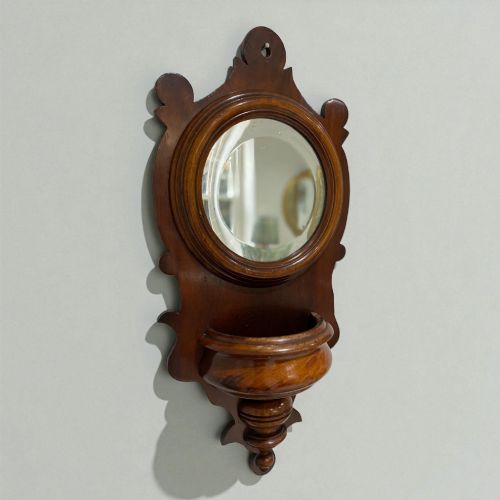
Small wall mirror shelves are dual-purpose decorative pieces designed to hang on walls, offering both a looking glass and a miniature platform for small ornaments. When you search for small wall mirror shelves, you encounter wall mirrors, overmantel mirrors, and wall shelves spanning several distinct periods.
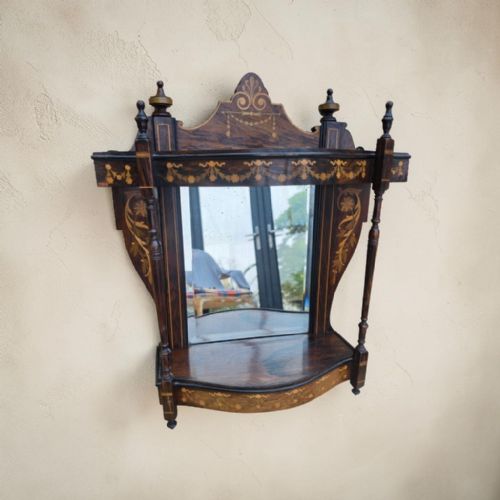
The pieces on this page lean heavily towards the nineteenth and early twentieth centuries, capturing Victorian, Edwardian, and Art Deco sensibilities. You meet items ranging from inlaid hall mirrors to painted and gilt wall étagères and small overmantel formats.
Materials and construction
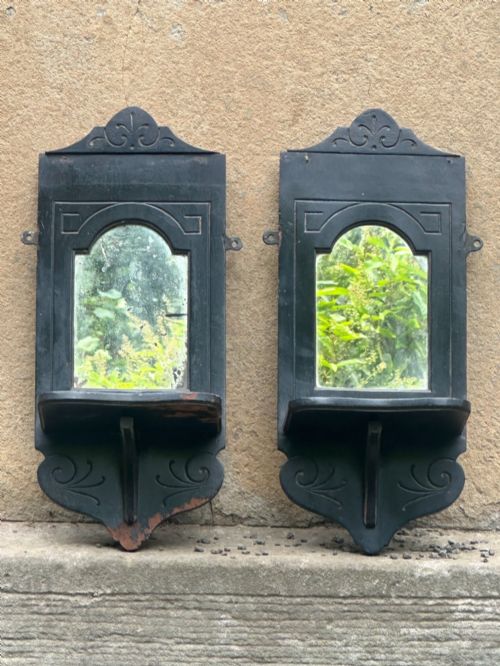
These items rely on a combination of timber frames and mirror glass, utilising woods such as mahogany, oak, pine, ebonised wood, and painted wood. Artisans often enhanced these wooden structures with boxwood inlay, giltwood finishes, and velvet coverings to create distinct textures and visual depth.
The integration of a shelf beneath or alongside the mirror plate requires sturdy joinery to support small displayed items while keeping the overall hanging weight manageable. Frame styles draw on French Rococo Revival, Aesthetic Movement, and classical decorative traditions executed by period joiners and gilders.
One unexpected survivor on the list is wrapped entirely in velvet, proving the Victorians would put fabric on literally anything if given half a chance.
Assessing quality and finish
Quality in these pieces rests on the crispness of the framing details, whether that involves fine boxwood inlay, carved giltwood ornamentation, or smooth ebonised finishes. Superior examples show careful proportion between the glass plate and the integral shelf, ensuring the ledge feels balanced rather than clumsy.
The choice of timber and the execution of surface treatments further separate standard utility items from finer decorative pieces. Original glass surfaces, harmonious gilding, and intact structural joints elevate a piece significantly.
The Small Wall Mirror Shelves Glossary
- Étagere
- A piece of furniture with shelves for small objects, appearing here in a wall-mounted mirror format. This French form provides tiered display space.
- Overmantel mirror
- A mirror designed specifically to hang above a fireplace mantel, though smaller antique examples frequently transition to general wall placement. They often feature integrated shelves for small ornaments.
- Giltwood
- Wood that has been coated with gold leaf or a gold-coloured finish. This technique creates a bright, reflective surface characteristic of revival styles.
- Aesthetic Movement
- A late nineteenth-century design style emphasising visual beauty over narrative or moral content. Pieces from this movement often incorporate ebonised wood and subtle decorative motifs.
- Girandole
- A branched wall-bracket or sconce, often incorporating a mirror. These pieces reflect candlelight while providing decorative presence on the wall.
Small Wall Mirror Shelves: Frequently Asked Questions
Where should I hang a mirror shelf?
These pieces suit narrow hallways, bedrooms, or compact living spaces where floor area is limited. They provide a quick spot for keys, small letters, or delicate ornaments while bouncing light around the room.
Ensure the wall fixings match the weight of the timber frame and the items you intend to place on the shelf. Avoid damp walls to protect antique wooden frames and mirror silvering.
How do I clean an antique mirror shelf?
Dust the wooden frame gently with a dry, soft cloth, avoiding commercial polishes that can build up on old finishes. For the glass, use a minimal amount of cleaner applied to a cloth rather than sprayed directly, preventing liquid from seeping behind the mirror plate.
Take care around delicate elements like boxwood inlay, gilt surfaces, or velvet coverings. Gentle maintenance preserves the original patination and materials of the piece.
Are these mirrors meant for heavy objects?
The integrated shelves on these small mirrors are strictly designed for lightweight display items such as small figurines, cards, or miniature vases. Overloading the ledge can strain the structural joints connecting it to the mirror frame.
Consider the scale of the object relative to the shelf depth before placing anything on display. Balance ensures the piece remains secure on the wall.
How do I identify the period of a mirror shelf?
Dating relies on stylistic clues such as the carved motifs of Rococo Revival, the dark ebonised tones of the Aesthetic Movement, or the clean lines of Edwardian oak and mahogany. Examining the backboards, fixings, and glass bevelling also helps determine age.
Cross-referencing the materials used, like boxwood inlay or velvet backing, points toward specific manufacturing decades between the late nineteenth and early twentieth centuries.