

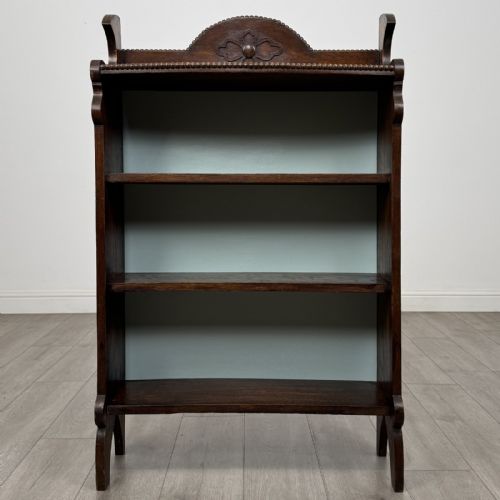
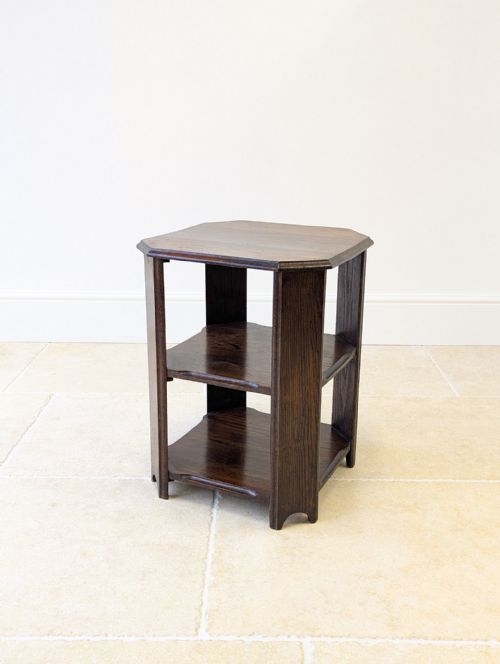
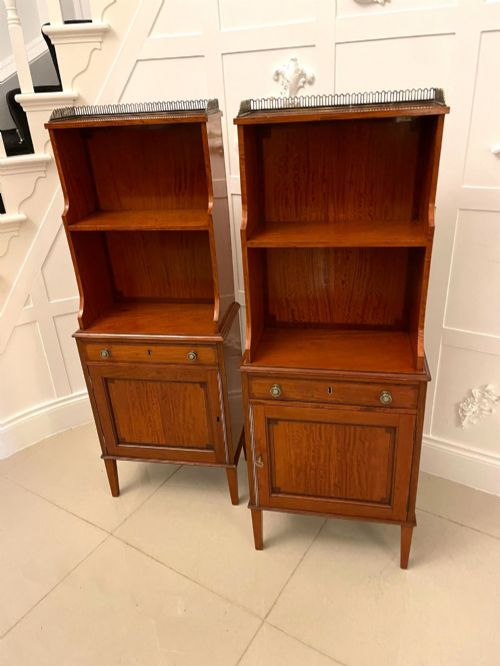
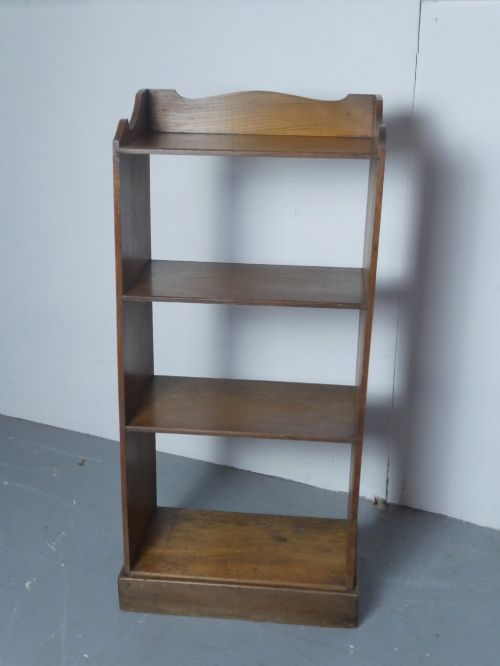
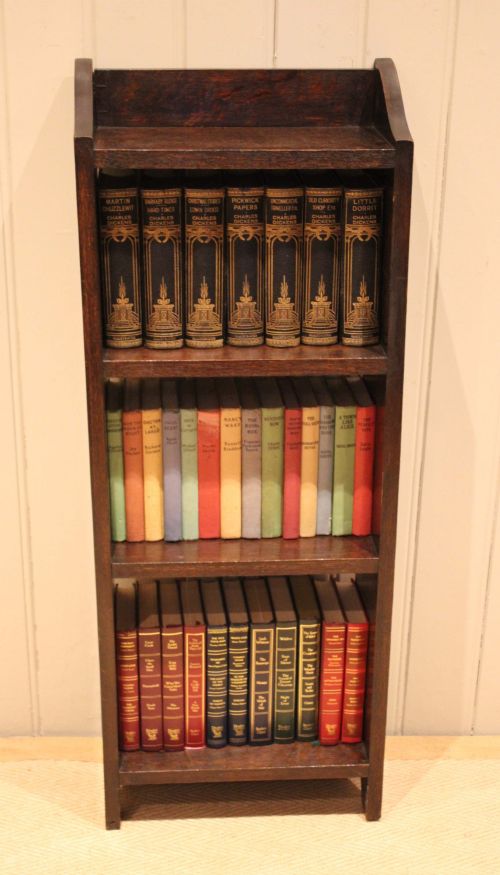
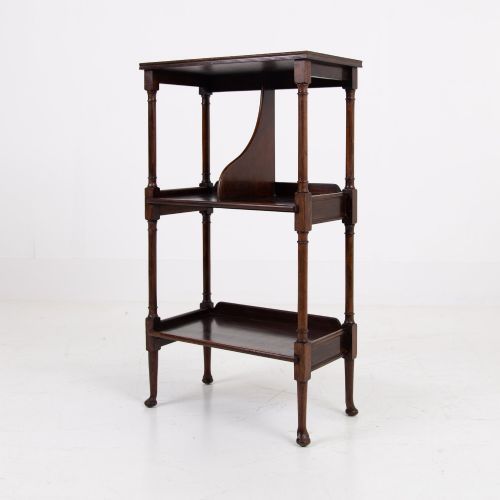
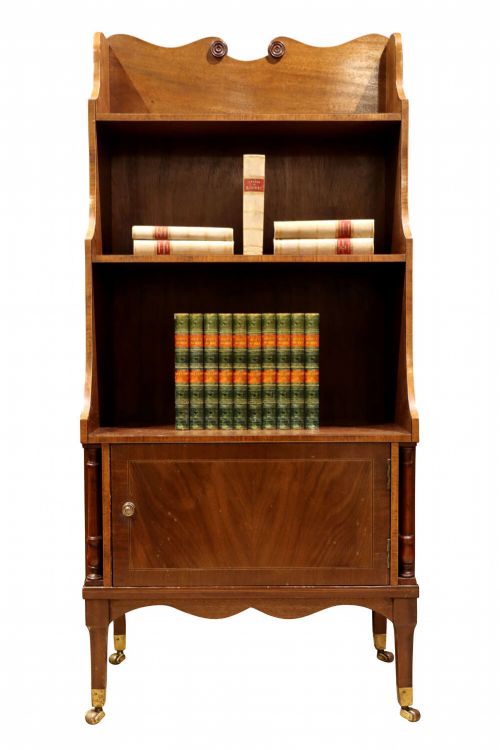


Small Tier Bookshelf
These small tier bookshelves offer compact, tiered storage across periods from the nineteenth century to the twentieth.
Small Tier Bookshelf
A small tier bookshelf provides tiered surfaces for books and display, appearing across various forms including open bookcases, whatnots, wall shelves, and side tables. Buyers seeking a small tier bookshelf will most frequently encounter oak and mahogany examples from the Victorian period up to 1920.
The evidence shows these pieces span distinct styles such as Arts and Crafts, Regency Revival, and Victorian Gothic Revival, alongside simpler freestanding and wall-hanging formats. Makers and manufacturers produced both utilitarian oak bookshelves and finer satinwood or rosewood display pieces with brass castors.
Materials and construction
Makers utilised solid hardwoods like oak, mahogany, and rosewood, alongside decorative veneers such as satinwood and satin birch, applying wood paint for alternative finishes. Construction methods included tiered shelving arrangements, raised galleries, and integrated brass castors on freestanding floor models.
Inlaid details and tiered waterfall profiles appear across the nineteenth-century and early twentieth-century examples, while smaller wall-hanging units relied on secure mounting brackets and simpler open shelf partitions.
Small Tier Bookshelf Retail Price Guide 2026
Typical asking prices for small tier bookshelf among the pieces listed under this phrase on Sellingantiques today, from the lower quarter to the upper quarter. They describe what is for sale here now, not the wider market.
Listings feature oak, mahogany, rosewood, satinwood, and paint across Victorian, Regency, and Arts and Crafts styles.
What distinguishes finer examples
Quality separates utilitarian shelving units from pieces built with select timbers and refined detailing, such as finely figured mahogany, satinwood veneers, or deliberate inlay work. The use of robust framing materials and original brass hardware indicates superior workshop origin.
Finer construction shows in the balance of tiered waterfalls and the precision of raised galleries, whereas simpler pieces rely on straightforward open oak planks designed strictly for utility.
Gillows
The Small Tier Bookshelf Glossary
- Whatnot
- A piece of furniture with multiple open shelves for displaying small objects or books. These typically feature three or more tiers supported by slender uprights.
- Waterfall bookcase
- A set of open shelves where each upper tier is recessed behind the one below it, creating a stepped profile resembling a cascading waterfall.
- Satinwood
- A hard, yellowish wood capable of taking a fine polish, frequently utilised for veneers and decorative highlights on nineteenth-century furniture.
- Raised gallery
- A low decorative railing or border running along the top edge or shelf back of a piece to prevent items from sliding off.
- Brass castors
- Small swivel wheels made of brass fitted to the legs of furniture to ease movement across floors.
Small Tier Bookshelf: Frequently Asked Questions
What is a small tier bookshelf used for?
These pieces provide accessible tiered storage for books and display items in compact spaces. They function both as floor-standing bookcases and wall-hanging shelves.
Historically, varied forms like whatnots and side tables accommodated the reading habits and decorative displays of Victorian and Edwardian households.
How do I identify the period of a bookshelf?
Dating relies on observing the timber choice, construction methods, and stylistic revival cues. Oak and Arts and Crafts pieces often point towards the early twentieth century.
Earlier nineteenth-century examples frequently feature rosewood, mahogany, or satin birch, alongside specific hardware like brass castors and inlaid surfaces.
Are these bookshelves sturdy enough for heavy books?
Many solid oak and mahogany standing units handle substantial book collections securely. Wall-hanging variants require proper wall fixings to bear heavy loads safely.
Lighter tiered waterfall structures and revolving bookcases suit moderate volumes and display pieces rather than heavy folio volumes.
Where should I place a waterfall bookcase?
Freestanding waterfall bookcases suit living rooms, studies, or hallways where their stepped shelves remain visible from multiple angles. Their compact footprints fit neatly against blank wall spaces.
Placing them away from direct heat sources protects the timber veneers and solid wood panels from splitting over time.