
Small Sideboard
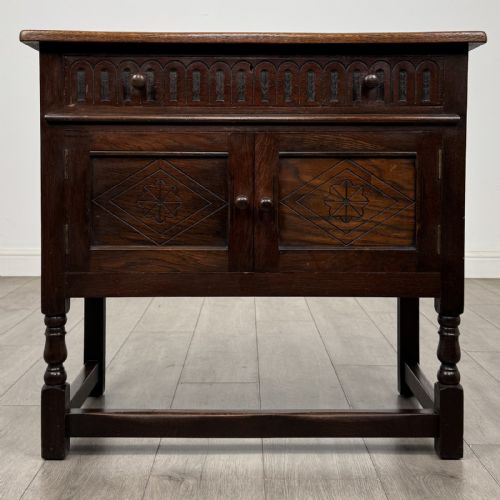
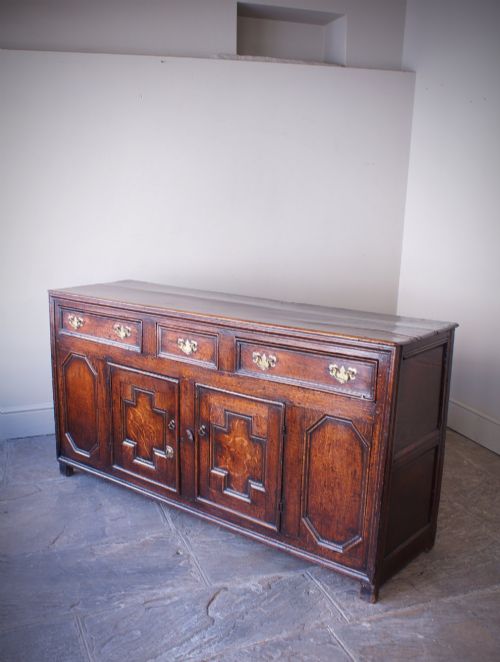
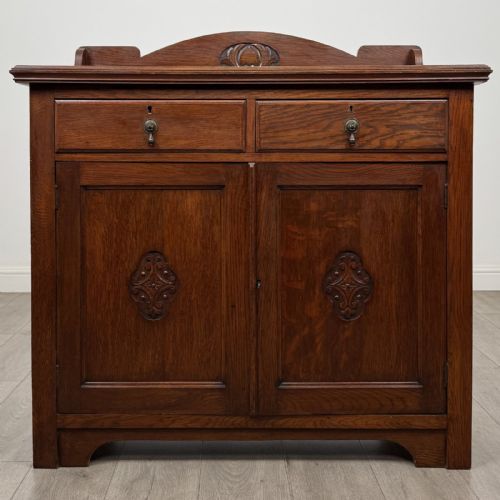
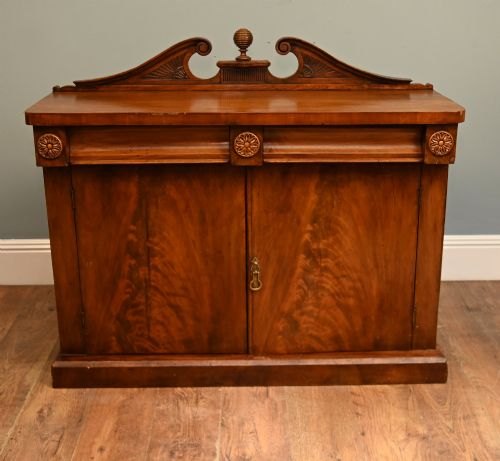
A small sideboard offers useful dining room storage in compact footprints, combining timbers like oak and mahogany across periods from the seventeenth century to the twentieth.
Small Sideboard
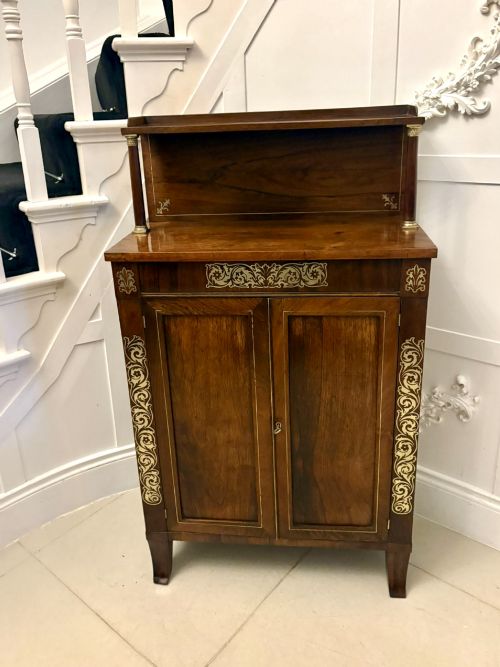
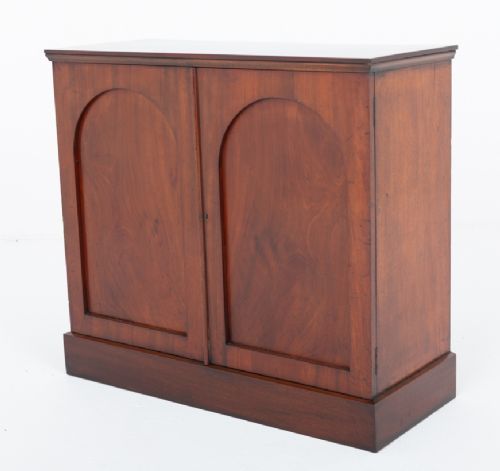
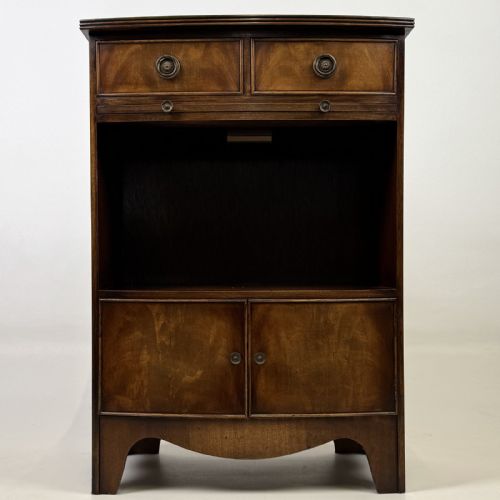
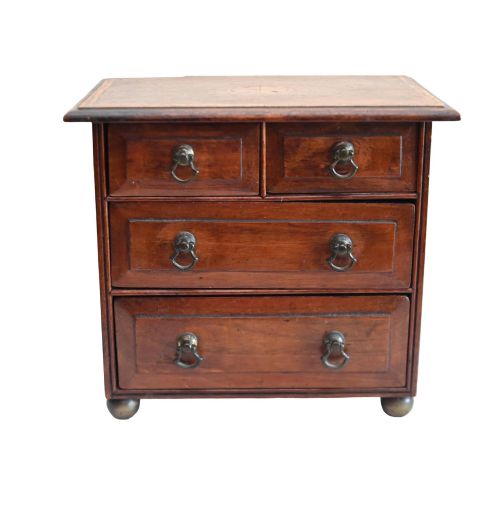
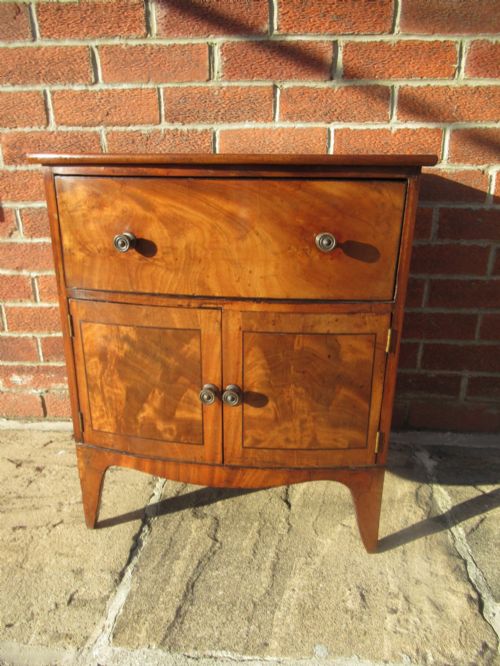
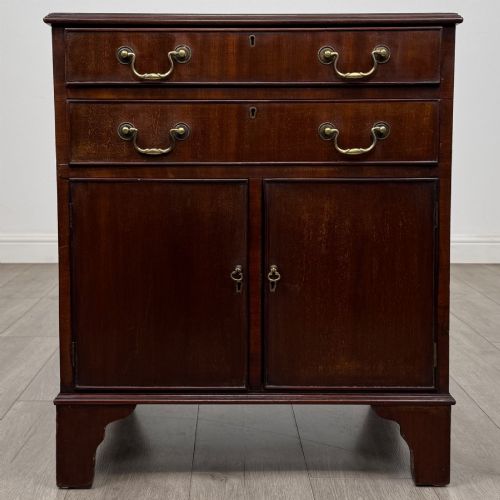
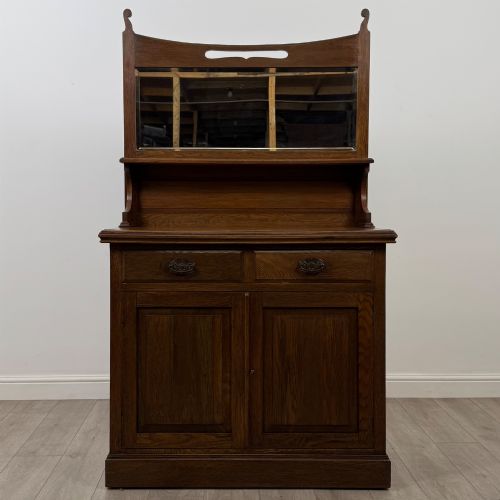
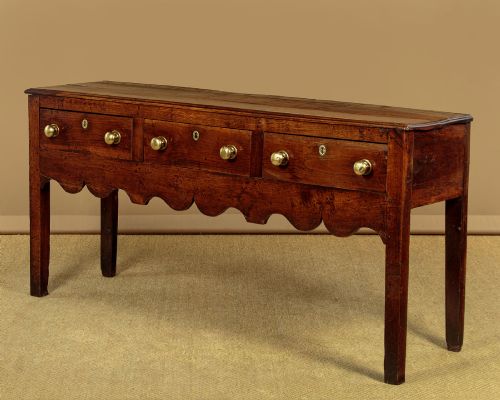
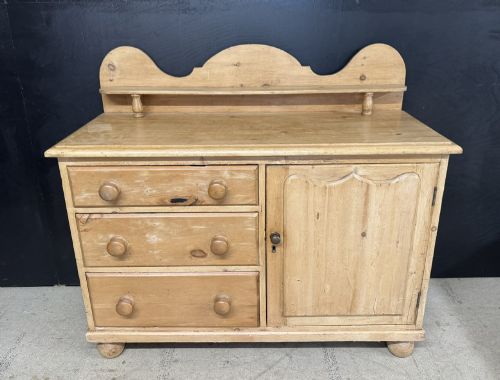
A small sideboard functions primarily as a compact storage unit for dining spaces, taking forms such as side cabinets, dresser bases, cupboards, and chiffoniers. These pieces emerge across the seventeenth, eighteenth, nineteenth, and twentieth centuries, reflecting changing domestic requirements for storing tableware and linens.
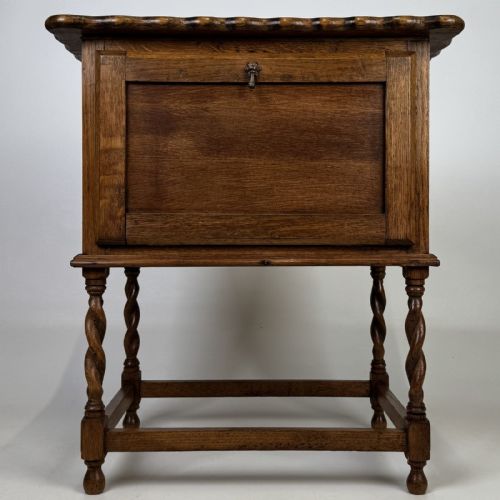
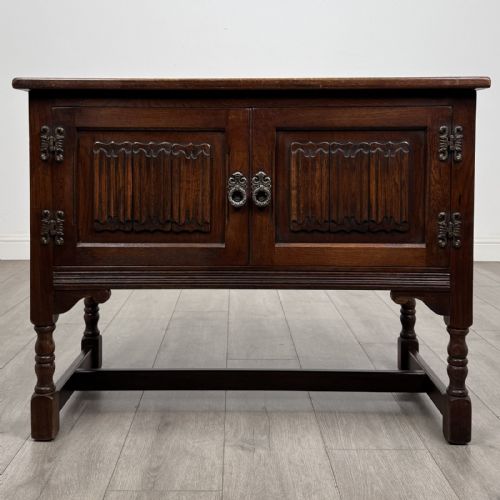
Buyers meet Edwardian and 1920s oak or mahogany versions most frequently on this page, often featuring barley twist legs, linenfold carving, or tambour doors. Earlier Georgian and seventeenth-century dresser bases appear alongside Victorian mahogany and pine side cabinets, offering varied proportions for modern interiors.
Makers and designers utilise styles ranging from Georgian and Regency to Jacobean Revival and Art Deco. Regional variations include Welsh dresser bases and French painted pine jam cupboards, each serving the fundamental purpose of compact storage.
Materials and construction
Cabinet makers construct these units using hardwoods and softwoods, principally oak and mahogany, alongside walnut, rosewood, yew, pine, and bamboo. Timber selection dictates the structural integrity and surface appearance, whether finished with a waxed polish or lacquer.
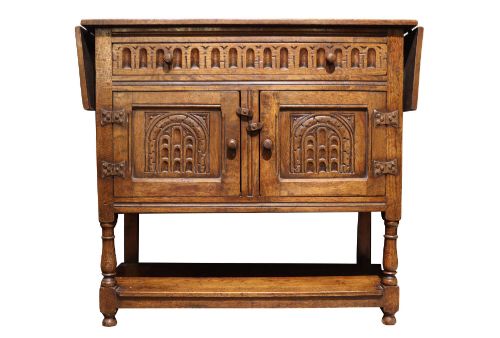
Joinery techniques involve fitted drawers, pull-out slides, bracket feet, and raised galleries, complemented by hardware in brass and iron. Decorative elements incorporate hand-carved linenfold panels, applied veneers, and glazed doors, binding function to aesthetic design.
Period styles represented range from George III and Regency to Victorian, Edwardian, Art Deco, and Jacobean Revival.
Judging quality in a small sideboard
Quality rests in the precision of the timber selection, such as figured mahogany or golden oak, and the integrity of the underlying construction. Pieces exhibiting crisp hand-carving, such as Jacobean Revival motifs, stand apart from simpler production items.
The sophistication of internal fittings, including fitted drawers and pull-out slides, separates standard utility pieces from finer examples. Original hardware like brass handles and authentic period finishes further distinguish superior specimens.
Peter Waals
The Small Sideboard Glossary
- Dresser base
- A low wooden storage unit with drawers and cupboards, historically used in kitchens and dining rooms for serving food and storing tableware.
- Chiffonier
- A small sideboard or cabinet featuring enclosed shelving below, popular during the Regency and Victorian periods.
- Linenfold
- A style of wood carving that resembles folded parchment or linen, frequently seen on Tudor and revival oak panels.
- Tambour door
- A flexible door constructed from narrow vertical strips of wood glued to a canvas backing, sliding along a track to enclose cabinet space.
- Demi-lune
- Half-moon shaped furniture designed to stand flush against a wall, often utilised for tables and small cabinets.
- Confiturier
- A traditional French cupboard originally intended for storing confit and preserves.
Small Sideboard: Frequently Asked Questions
What is a small sideboard used for?
These compact units provide practical storage for dining rooms and hallways, holding cutlery, linen, and tableware while occupying minimal floor space. Their flat tops also serve as display surfaces for lamps, mirrors, or decorative objects.
Historically, variations like dresser bases and chiffoniers evolved to meet specific household storage needs. Today, they integrate easily into modern living spaces where full-sized dining furniture proves too large.
Where should I place a small sideboard?
These pieces suit dining rooms, living areas, and narrow hallways due to their restricted depth. Placing them against an empty wall creates a focal point, especially when paired with a mirror or painting above.
Ensure the dimensions match the available wall space, allowing cabinet doors and drawers to open fully. Their modest footprint also makes them effective alternatives to bedside tables or entry consoles.
What is the difference between a sideboard and a chiffonier?
A sideboard is generally a longer, lower piece designed primarily for dining room storage and serving. A chiffonier is typically smaller and more enclosed, featuring a combination of lower cupboards and sometimes a raised shelf or back panel.
Chiffoniers gained popularity during the Regency and Victorian eras as versatile sitting room cabinets. Sideboards focus more heavily on flat surface space and multi-drawer arrangements.