



Small Round Painting
A small round painting delivers intense visual focus in a compact format, bringing centuries of portraiture and landscape work directly into intimate domestic spaces.
Small Round Painting
A small round painting presents compressed compositions, most frequently seen here as 19th century watercolours depicting coastal scenes with fishing boats and cliffs. These circular formats demand tight framing and careful balance from the artist to draw the eye inward towards the subject.
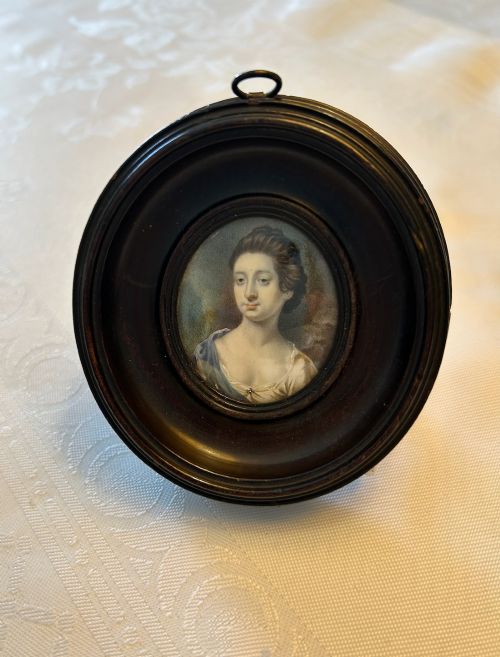
The evidence also captures portrait miniatures, such as the mid 18th century oval portrait miniature of a lady in an ebonised frame. Though technically oval rather than strictly circular, these works share the same intimate scale and portable nature designed for close personal viewing.
Buyers seeking a small round painting will encounter works framed by historical periods ranging from the 18th century through to the Victorian era. The surviving pieces demonstrate how artists adapted landscapes and portrait subjects to fit unconventional circular boundaries.
Materials and techniques
These works rely upon traditional watercolours applied to paper surfaces, framed securely to protect the delicate pigment from moisture and handling. Ebonised timber frames provide a stark, dark contrast that isolates the painted scene and emphasises the curved edge of the artwork.
The physical construction of the surrounding frames involves dense hardwoods finished with specialist dark coatings or simple mouldings. Precision joinery ensures the circular or curved aperture holds the painted work firmly without placing undue pressure on the paper.
Small Round Painting Retail Price Guide 2026
Typical asking prices for small round painting among the pieces listed under this phrase on Sellingantiques today, from the lower quarter to the upper quarter. They describe what is for sale here now, not the wider market.
Listings featuring a small round painting span from the mid 18th century through the 19th century, combining watercolour on paper with ebonised wooden frames.
Quality variations
The integrity and originality of the surrounding frame heavily influence the standing of the piece. Period frames that match the exact age of the painting preserve the historic context far better than later replacements.
The Small Round Painting Glossary
- Portrait Miniature
- A small, highly detailed painting, typically executed on vellum, card, or ivory during the 18th and 19th centuries. These works were often housed in protective travel cases or hung in private chambers.
- Ebonised
- Wood that has been treated chemically or stained intensely black to imitate genuine ebony. This finish is frequently found on 18th and 19th century frames.
- Watercolour
- A paint medium consisting of coloured pigments suspended in a water-soluble vehicle, applied here to create delicate coastal views. It requires exceptional control when working on small circular formats.
- Oval
- A curved geometric shape resembling an egg, sharing the rounded characteristic often associated with miniature portrait framing. It provides a softer alternative to rigid rectangular borders.
Small Round Painting: Frequently Asked Questions
How were portrait miniatures displayed?
These small works were generally hung in private rooms or kept in protective travel cases for personal contemplation. Their compact dimensions allowed owners to move them easily between chambers.
Over time, display traditions shifted toward wall mounting in tight clusters alongside larger framed artworks. Their dark ebonised frames helped them stand out against patterned wallpaper.
Why use a circular frame?
Circular framing forces the viewer to concentrate entirely on the central subject without distractions from corner details. Artists used this constraint to create balanced, self-contained compositions.
This format was particularly popular for landscape vignettes and portrait work where intimacy was desired. It broke away from the standard rectangular dominance of larger canvas paintings.
How do I date an antique miniature?
Dating relies heavily on the style of clothing worn by portrait subjects and the construction methods of the frame. Costume details provide a reliable terminus a quo for portrait works.
Secondary clues include the type of glass, backing boards, and fastening materials used behind the frame. Examining these components reveals the original period of assembly.
Where should I hang a small painting?
Small paintings work best in compact spaces such as narrow hallways, small studies, or grouped in arrangements on larger walls. They reward close inspection rather than distant viewing.
Avoid placing delicate watercolours in direct sunlight to prevent the pigments from fading over time. Stable indoor humidity protects both the paper support and the timber frame.