


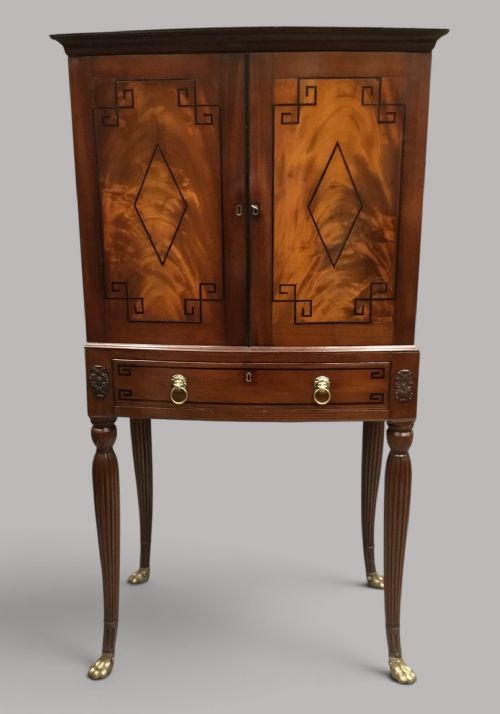


Small Proportions Cupboard
These small proportions cupboard pieces offer compact storage solutions crafted for intimate spaces across multiple centuries.
Small Proportions Cupboard
A small proportions cupboard brings versatile storage within compact dimensions, satisfying the need for furniture that fits smaller rooms without dominating the floor plan. These pieces span bookcases, side cabinets, chiffoniers, and sideboards designed to maximise utility in restricted spaces.
Cabinets on stands and bookcase hybrids dominate the offerings, showcasing how makers adapted larger furniture types for neat proportions. Each piece demonstrates historical ingenuity in scaling down grand architectural forms for domestic use.
How they were made
Cabinetmakers utilised dense timbers such as mahogany, oak, walnut, and rosewood, often enhancing plain surfaces with figured veneers or contrasting satinwood inlays. Brass hardware provides functional closure and subtle visual punctuation against the dark woods.
Surface ornamentation ranges from carved oak details to delicate painted finishes and porcelain plaques mounted in gilt bronze mounts. Construction techniques rely on traditional joinery to ensure stability despite the reduced physical scale of each cabinet.
Small Proportions Cupboard Retail Price Guide 2026
Typical asking prices for small proportions cupboard among the pieces listed under this phrase on Sellingantiques today, from the lower quarter to the upper quarter. They describe what is for sale here now, not the wider market.
What varies in quality
Quality rests upon the choice of timber and the precision of the veneer work, where figured grains and seamless inlay elevate a standard cabinet into an accomplished piece. The subtlety of carved details or the integration of specialist elements like Sevres porcelain plaques distinguishes finer workshop output.
Proportion and visual balance dictate the success of these scaled-down designs, separating harmonious compositions from awkward reductions. Original surface patination and untouched brass fittings further preserve the integrity of the piece.
The Small Proportions Cupboard Glossary
- Bow front
- A convex curved cabinet front that softens the angles of a room. This shape became popular during the Georgian and Regency periods.
- Secretaire
- A desk form incorporating a writing drawer or fold-down flap enclosing small drawers and pigeonholes. It combines storage with a writing surface.
- Chiffonier
- A low sideboard or cabinet featuring shelves or enclosed storage below. These pieces emerged as functional additions to nineteenth-century drawing rooms.
- Cabinet on stand
- A freestanding storage box elevated on a distinct supporting framework or legs. This form lightens the visual weight of heavy timber furniture.
- Veneer
- A thin layer of finely figured wood applied to a secondary timber base. This technique allows makers to display decorative grain patterns economically.
Small Proportions Cupboard: Frequently Asked Questions
What periods do these cupboards come from?
The available pieces span the eighteenth century, the Regency and George IV eras, and extend into twentieth-century revivals. Each period brings distinct stylistic traits to the compact storage form.
Buyers find eighteenth-century walnut and painted surfaces alongside nineteenth-century mahogany bookcases and Edwardian or later oak sideboards.
How were these small cupboards used historically?
These compact pieces served versatile storage functions in principal rooms where full-sized furniture would prove too obtrusive. They held books, porcelain, papers, and personal valuables.
Their restricted scale suited dressing rooms, parlours, and smaller chambers of grand houses, providing practical utility alongside decorative presence.
How do I style a small cupboard today?
A compact cabinet fits easily into hallways, alcoves, or modern dining rooms where floor space is limited. Use the top surface for displaying lamps or ceramics while utilising the internal storage for everyday items.
Pairing period wood tones with contemporary interiors creates a striking contrast that highlights the craftsmanship of the piece.
How do I tell different periods apart?
Stylistic markers such as brass hardware, leg shapes, and timber choices help identify the manufacturing era. Regency pieces often display neat proportions and rosewood, while eighteenth-century examples favour walnut or figured mahogany.
Revival pieces from the twentieth century often adopt earlier Jacobean or Georgian motifs while maintaining the reduced scale buyers seek.