

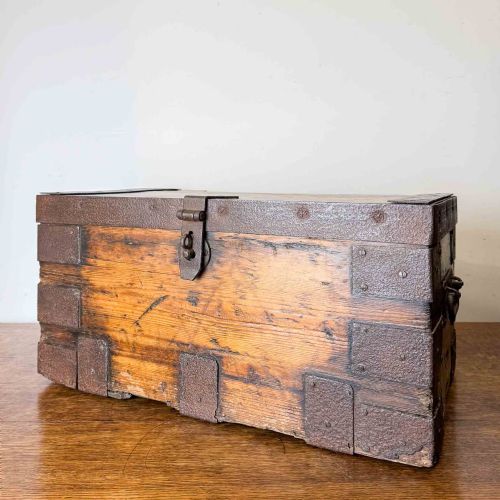


Small Pine Coffer
A small pine coffer offers compact, rustic storage built for vernacular interiors, combining simple timber construction with regional folk character.
Small Pine Coffer
When you search for a small pine coffer, you encounter sturdy timber storage chests and boxes originating from regional workshops across Britain and Europe. These pieces include dome top boxes, strongboxes, artisan chests, and simple blanket boxes designed for domestic utility.
The versions most commonly met on this page date from the nineteenth century, including pieces reflecting Scandinavian folk art, Welsh vernacular traditions, and Central European styles. Elm appears alongside pine in several pieces, often paired with iron or brass mountings.
Many examples retain their original painted surfaces, showing pigment finishes that range from simple country decoration to weathered patination. Forms vary from low storage bins and log bins to lidded coffers raised on stands.
How they were made
Makers built these pieces using solid pine and elm boards joined for everyday domestic strength. Workshops relied on simple carpentry techniques, utilising hand-planed timber secured with peg joints or iron fastenings.
Iron and wrought iron hardware, including strap hinges, brackets, and metal bindings, reinforced the corners and lids of strongboxes and trunks. Surfaces were frequently treated with paint or pigment, leaving layered finishes that record decades of handling.
Listings feature regional styles spanning Scandinavian folk art, Welsh vernacular, and Central European traditions.
What varies in quality
Quality in these pieces rests primarily on the integrity of the timber and the survival of original surface treatments. Unaltered painted finishes and early ironwork distinguish superior examples from plain or later-decorated boxes.
Proportion and structural survival also set pieces apart, as well-balanced proportions and intact internal tills reflect the care taken by regional makers during construction.
The Small Pine Coffer Glossary
- Coffer
- A heavy wooden chest traditionally used for storing valuables or household goods. These lidded boxes often feature reinforced corners and sturdy iron hinges.
- Vernacular
- Architecture and objects created by local craftsmen using traditional methods and native materials, rather than following formal academic styles. Welsh and Scandinavian pieces on this page reflect distinct regional versions of this approach.
- Dome top
- A lid construction featuring a rounded, curved upper profile rather than a flat surface. This shape helped shed water and provided extra interior clearance for bulky textiles.
- Strongbox
- A heavily reinforced storage box designed for secure transport or safekeeping of documents and valuables. These examples typically incorporate robust iron bindings and secure locking mechanisms.
- Pigment
- Natural or synthetic colouring matter applied to timber surfaces to create painted finishes. In folk art traditions, these layers weather over time to show complex patination.
Small Pine Coffer: Frequently Asked Questions
What is a small pine coffer?
A small pine coffer is a compact wooden storage chest made by regional craftsmen for domestic use. These pieces include blanket boxes, strongboxes, and lidded bins built from pine and elm.
They appear across various nineteenth-century folk traditions, often featuring original painted finishes, iron bindings, or dome-topped lids.
How were these coffers used?
Historically, households utilised these small chests to store textiles, valuable documents, and personal belongings. Their sturdy construction allowed them to double as seating or transport containers.
Strongboxes with iron bindings served to secure more precious items, while log bins and artisan chests held fuel or specialised tools.
How do I style a small pine coffer at home?
A small pine coffer functions naturally as a side table, a bedside chest, or a subtle focal point in a hallway. Their compact footprints allow them to fit easily into smaller rooms while providing concealed storage.
Pairing them with neutral interiors lets the natural grain, painted pigment, and patinated ironwork stand out without overwhelming the space.
How can I tell the period of a pine coffer?
Dating relies on examining construction marks, timber selection, hardware, and surface wear. Early examples from the seventeenth and eighteenth centuries often display hand-split boards and simpler joinery.
Nineteenth-century pieces frequently show machine-sawn timber elements combined with regional folk paintwork, iron strapwork, or specific vernacular forms like Welsh artisan chests.