

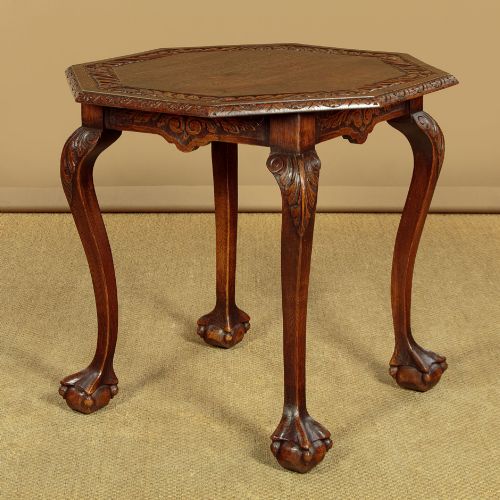
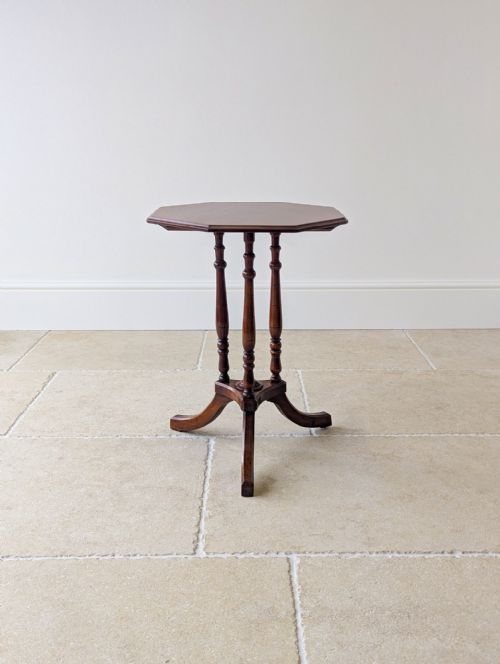
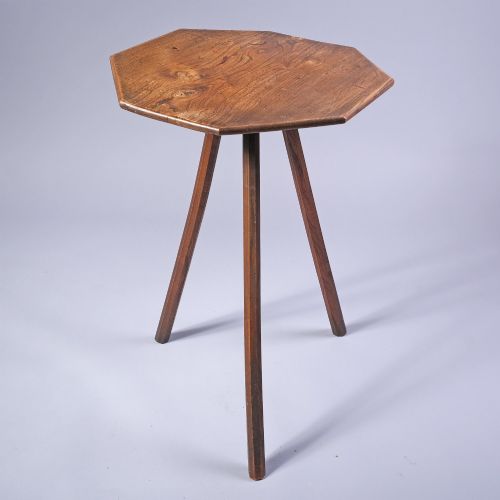
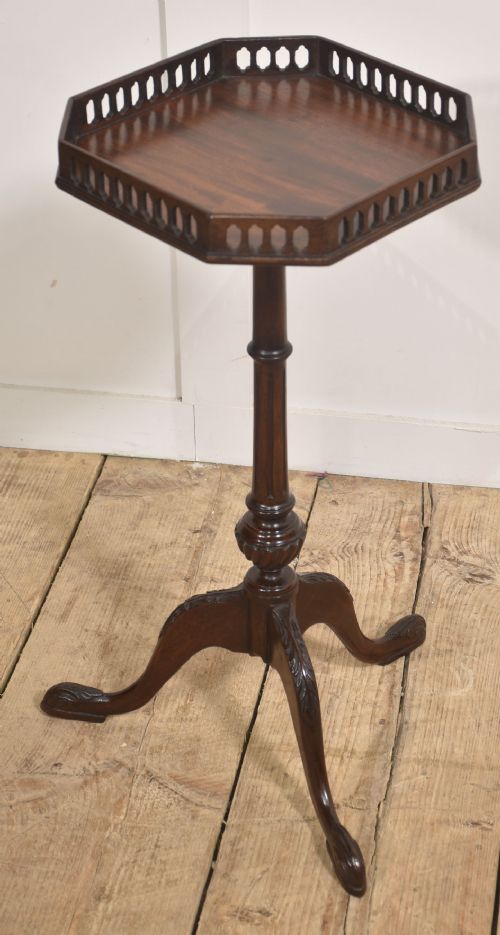

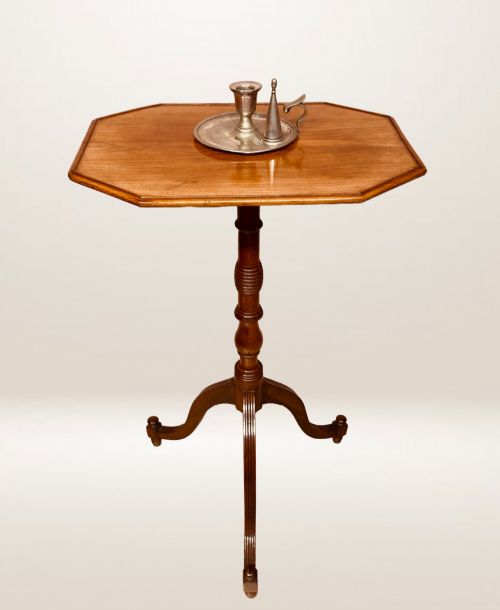


Small Octagonal Wood Table
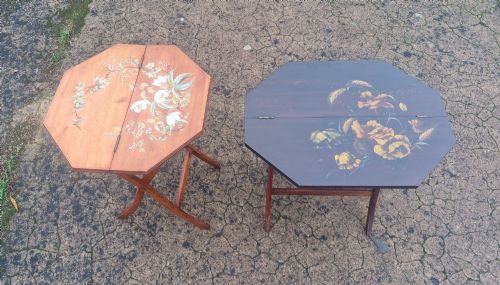
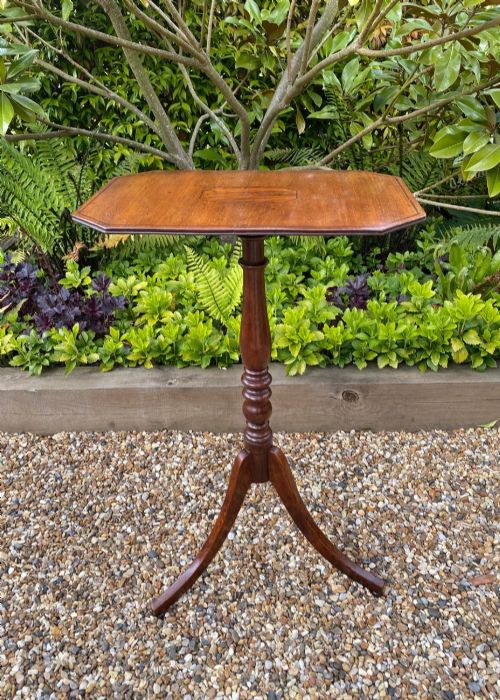
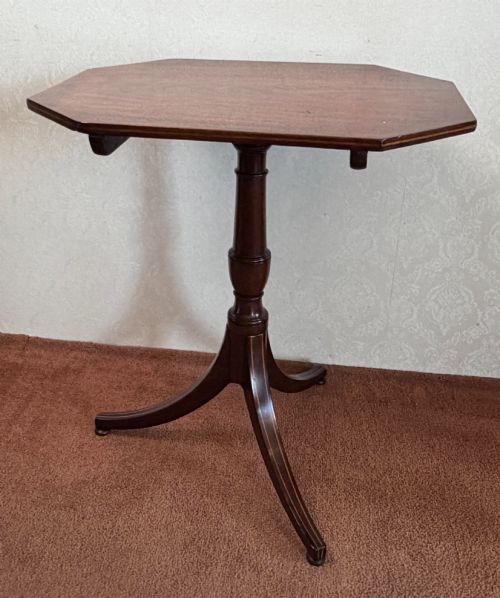
A small octagonal wood table brings geometric interest and surface utility to an interior, combining compact proportions with varied timber grains.
Small Octagonal Wood Table
A small octagonal wood table serves primarily as an occasional, side, or wine table, offering a compact surface suited for tight spaces or corners. These pieces appear across multiple historical periods, ranging from the Georgian and Regency eras through the Victorian and Edwardian periods.
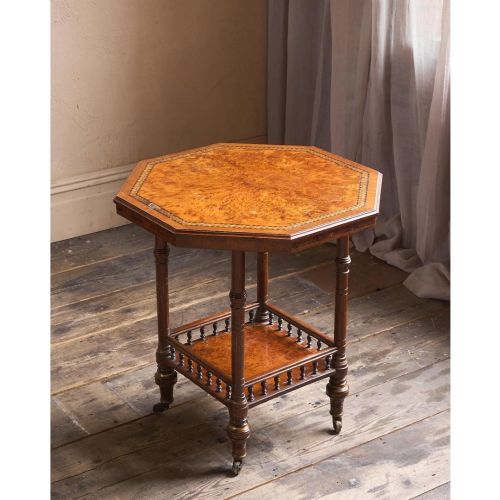
The selection includes specific regional variants and stylistic revivals, such as William & Mary style, Arts & Crafts, and Aesthetic Movement designs. Alongside standard occasional tables, related forms like kettle stands, candle stands, and low display surfaces frequently emerge in timber.
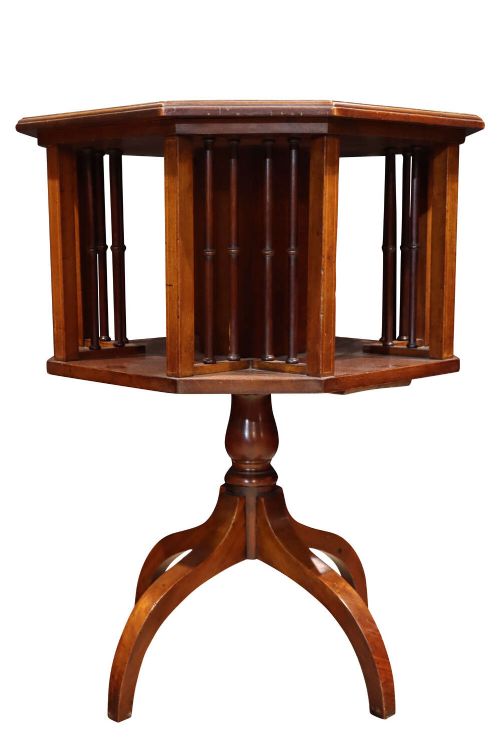
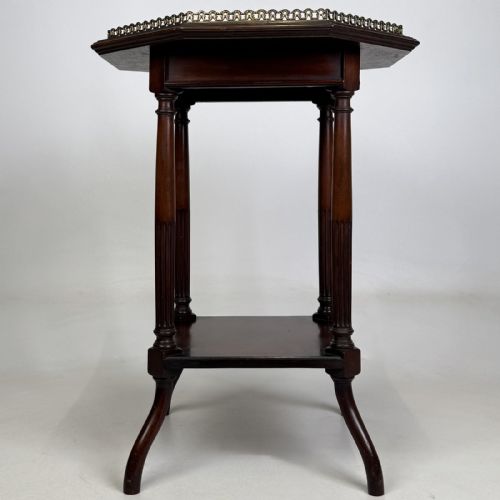
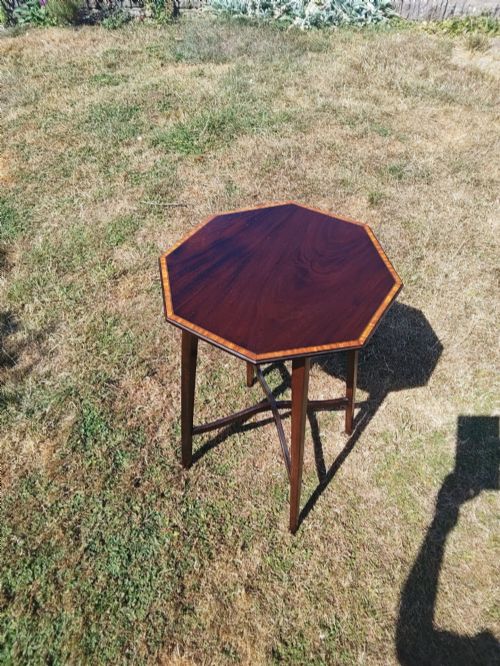
Construction encompasses varied timber selections shaped into distinct multi-sided tops, supported either by central pedestals or standard legs. Buyers encounter both simple vernacular examples and highly refined parlour pieces reflecting changing domestic habits.
Materials and Technique
Cabinetmakers utilised dense and figured timbers such as mahogany, walnut, oak, satinwood, amboyna veneer, and yew wood to construct these multi-sided surfaces. Solid hardwoods provide structural integrity, while exotic veneers create decorative visual patterns across the table tops.
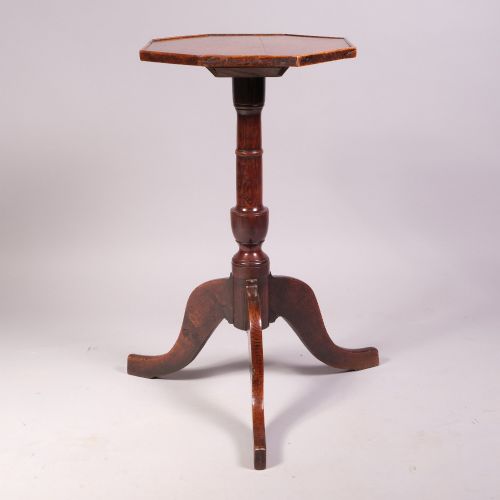
Techniques often include boxwood inlay, contrasting stringing, and parquetry to define the geometric angles of the octagonal form. Pedestal examples typically rely on turned columns supported by tripod legs, whilst four-legged variants utilise mortise and tenon joinery.
Small Octagonal Wood Table Retail Price Guide 2026
Typical asking prices for small octagonal wood table among the pieces listed under this phrase on Sellingantiques today, from the lower quarter to the upper quarter. They describe what is for sale here now, not the wider market.
Quality and Construction
The division between standard and superior pieces rests upon timber selection and the precision of the geometric top. Finer examples display carefully matched veneer grains and crisp, unrubbed boxwood inlay that follows the eight-sided perimeter accurately.
Structural stability in pedestal variants depends on the tight fit of the central column into the tripod base, whereas four-legged tables require firm joints without lateral movement. Original surface patination and minimal timber shrinkage indicate better preservation over time.
Gillows·John Taylor Edinburgh
The Small Octagonal Wood Table Glossary
- Occasional table
- A small, movable table designed for light, intermittent use in a principal room. These pieces provide convenient surface space without dominating a room's layout.
- Wine table
- A small stand traditionally used for holding glassware or decanters during evening gatherings. They frequently feature circular or multi-sided tops supported by a single central pedestal.
- Tripod table
- A piece supported by a three-legged base radiating from a central pillar. This configuration ensures stability on uneven historical floorboards.
- Amboyna veneer
- A highly decorative timber veneer sourced from tropical trees, known for its rich colour and intricate swirling grain patterns. Cabinetmakers applied it to high-status surfaces during the nineteenth century.
- Kettle stand
- A diminutive table designed to support a hot water urn or kettle beside a fireplace. They stand lower than standard dining tables to allow easy access from a seated position.
Small Octagonal Wood Table: Frequently Asked Questions
What rooms suit a small octagonal wood table best?
These tables fit easily beside armchairs in a drawing room or study, functioning as a practical surface for books or lamps. Their compact footprint also makes them effective in narrow hallways or landings.
Because the multi-sided top softens sharp corners in tight spaces, they integrate smoothly into various interior layouts without overwhelming the floor area.
How do I distinguish a Georgian table from a Victorian one?
Georgian examples generally display restrained lines and heavier reliance on solid mahogany or oak, reflecting earlier architectural proportions. Victorian and Edwardian pieces often incorporate decorative veneers, intricate boxwood inlay, and diverse stylistic revivals.
Examining the underside construction and timber ageing helps clarify the period of manufacture when stylistic details overlap.
Are pedestal bases less stable than four legs?
A well-fitted tripod pedestal base provides reliable balance on level floors, designed specifically to prevent rocking through three-point contact. Four-legged variants offer broader structural support but can wobble if historical joints loosen.
Checking the junction where the central pillar meets the legs reveals whether the structure remains sound.
How should I care for timber surfaces with inlay?
Maintenance requires gentle dusting with a dry, soft cloth to protect delicate boxwood stringing and surface veneers from abrasion. Avoid placing these pieces in direct sunlight or near heat sources to prevent the timber from drying out.
Occasional application of appropriate microcrystalline wax helps preserve the natural sheen of the wood without building up heavy residues.