





Small Octagonal Tea Table
A small octagonal tea table brings compact geometry and rich timber grain to a corner, offering a sturdy surface for a cup or a lamp.
Small Octagonal Tea Table
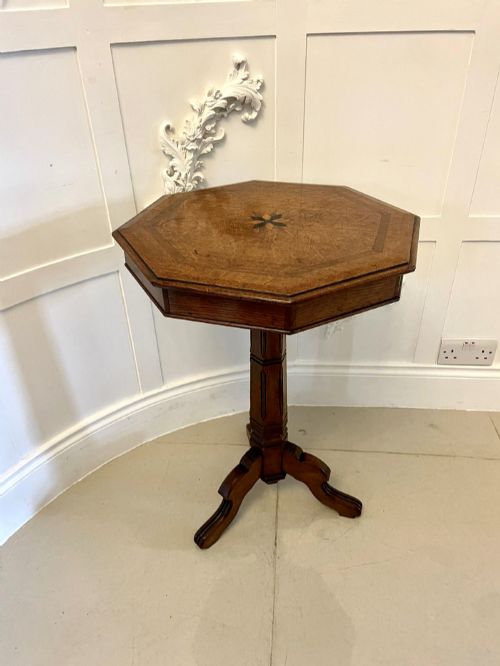
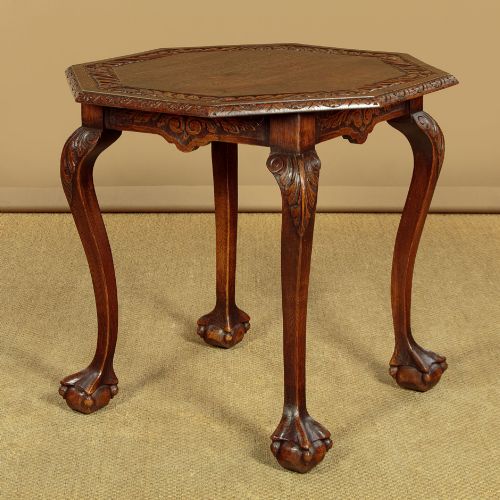
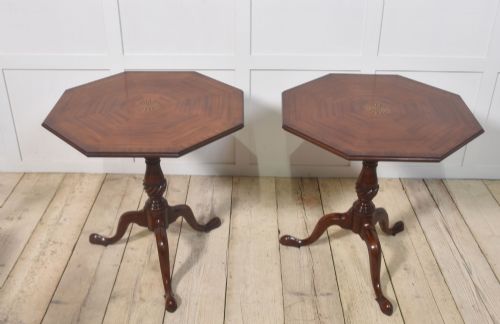
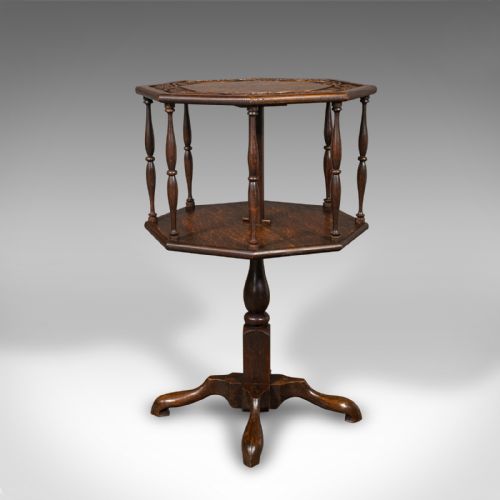
A small octagonal tea table takes many forms across the centuries, appearing as a side table, an occasional table, or a low kettle stand. These pieces serve as versatile accents in a room, offering eight-sided tops that break the monotony of square and round furniture.
The versions most commonly met on this page span the Georgian, Victorian, and Edwardian eras, alongside Anglo-Indian and Arts and Crafts examples. They arrive in timber varieties ranging from rich mahogany and walnut to sturdy oak and exotic teak.
How they were made
Cabinet makers utilised dense hardwoods such as mahogany, oak, and walnut, often shaping them with turned pedestals, tripod bases, or fixed shelves. Timber selection dictated the weight and stability of the frame, ensuring a firm footing for serving tea or displaying ornaments.
Surface ornamentation involved intricate techniques, including satinwood inlay, brass wirework, and bone inlay set into teak or rosewood grounds. These decorative methods required precise hand-cutting to secure the contrasting materials flush into the wood.
Small Octagonal Tea Table Retail Price Guide 2026
Typical asking prices for small octagonal tea table among the pieces listed under this phrase on Sellingantiques today, from the lower quarter to the upper quarter. They describe what is for sale here now, not the wider market.
Listings feature mahogany, teak, oak, walnut, and satinwood inlay across Georgian, Victorian, and Arts and Crafts styles.
What varies in quality
The distinction between ordinary and exceptional work rests on the crispness of the carving and the precision of the timber joints. Superior examples display tight dovetailing, well-balanced pedestals, and harmonious grain alignment across the eight-sided top.
Decorative embellishment also separates standard items from finer pieces, particularly where bone, brass, or satinwood inlay remains entirely intact and flush with the surrounding wood. Finer tables maintain structural integrity without excessive past restoration or loose joints.
The Small Octagonal Tea Table Glossary
- Kettle stand
- A small, often tall table specifically designed to hold a heavy tea kettle near the fireplace. These pieces generally feature compact tops to keep the kettle within easy reach.
- Occasional table
- A light, moveable table used for various transient purposes around a room. They appear in numerous shapes, including the eight-sided formats found here.
- Tripod base
- A support structure consisting of three legs branching out from a central column. This design ensures stability on uneven historical floors.
- Satinwood inlay
- Contrasting light wood inserted into recesses cut into a darker primary timber to form decorative patterns. It creates a bright, shimmering visual effect.
- Anglo-Indian
- Furniture made in India by native craftsmen using traditional techniques for British or European markets. These often incorporate dense teak and intricate bone or brass work.
Small Octagonal Tea Table: Frequently Asked Questions
What is a small octagonal tea table used for?
These tables provide a convenient surface for holding tea wares, books, or small lamps in tight spaces. Their distinct eight-sided tops allow them to fit snugly into corners or beside seating.
Historically, they supported portable tea equipment before tea became a fixed dining room ritual. Today, they function primarily as decorative side tables in living rooms and studies.
How do I tell a Victorian piece from a Georgian one?
Georgian examples generally display restrained proportions, simpler classical lines, and denser, heavier timber such as early mahogany. Their construction reflects eighteenth-century cabinet-making priorities.
Victorian and later pieces often incorporate eclectic revival styles, darker finishes, or more elaborate carving and inlay work. Examining the underside and joint construction helps reveal the manufacturing period.
Are Anglo-Indian tables difficult to maintain?
They require simple, regular dusting with a dry or slightly damp cloth to keep the intricate bone and brass inlay clean. Avoid excessive moisture or direct sunlight to protect the aged teak.
Applying a gentle beeswax occasionally nourishes the timber without harming the metallic or organic inlays. Care should be taken not to catch cleaning cloths on raised inlay elements.
Where should I place a tripod tea table?
A tripod base works well in corners or beside armchairs where four-legged tables might crowd the floor. Their central pedestal design makes them easy to angle into small gaps.
Because of their three-legged construction, they suit placement against walls or in low-traffic zones rather than heavy central floor spaces.