

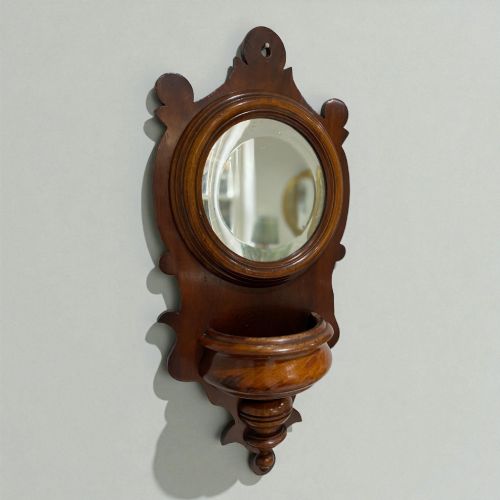
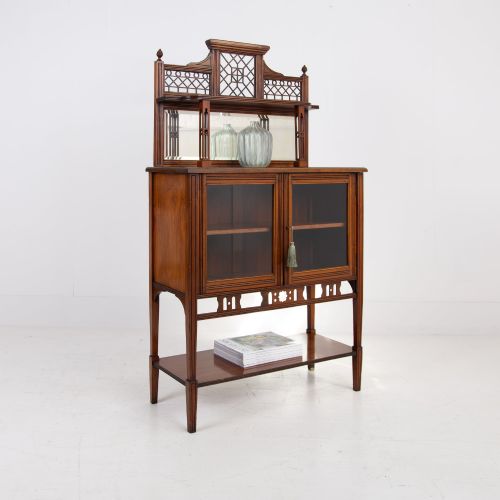
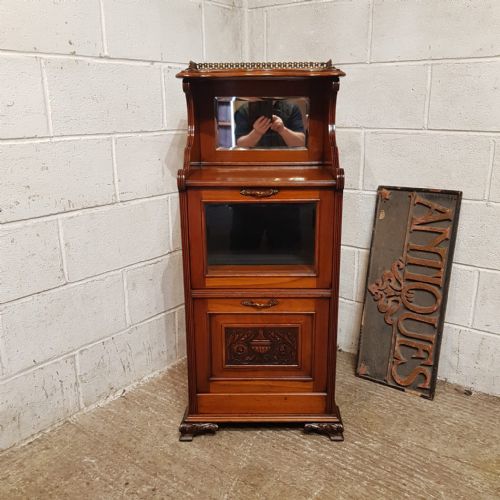


Small Mahogany Mirror
A small mahogany mirror brings warmth and compact reflection to a room, ranging from Georgian dressing plates to Regency pier glasses.
Small Mahogany Mirror
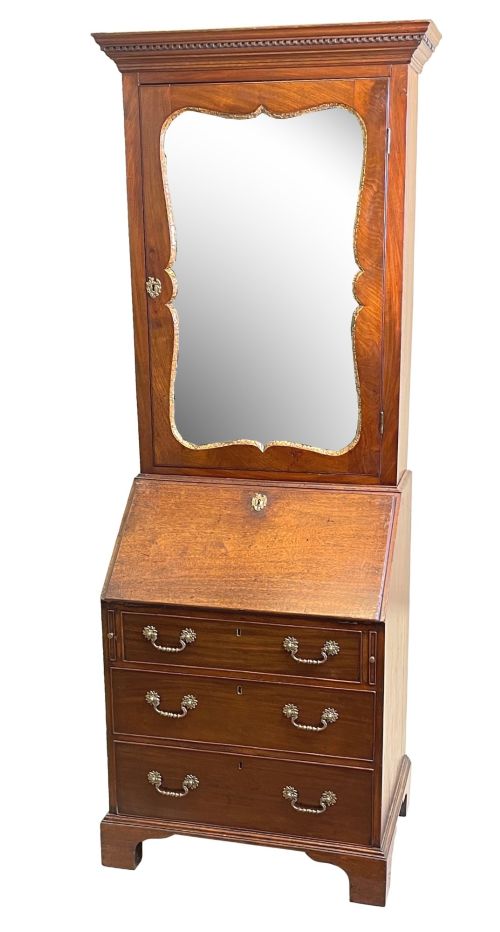
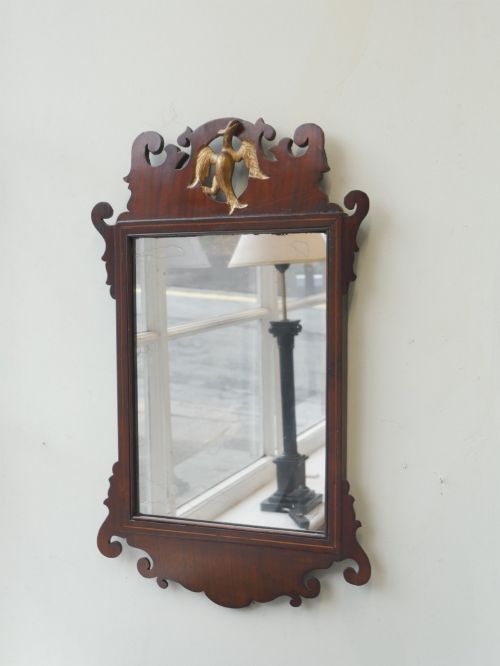
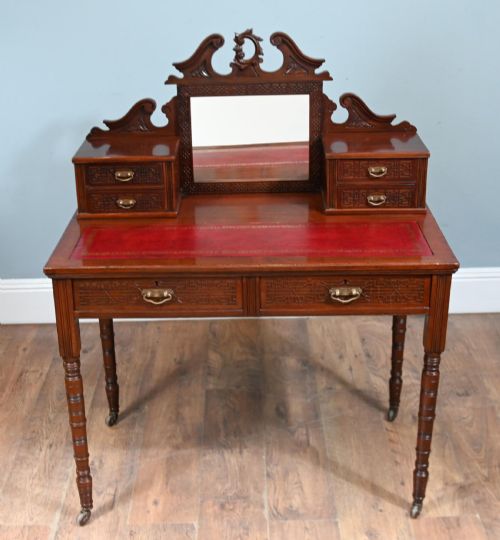
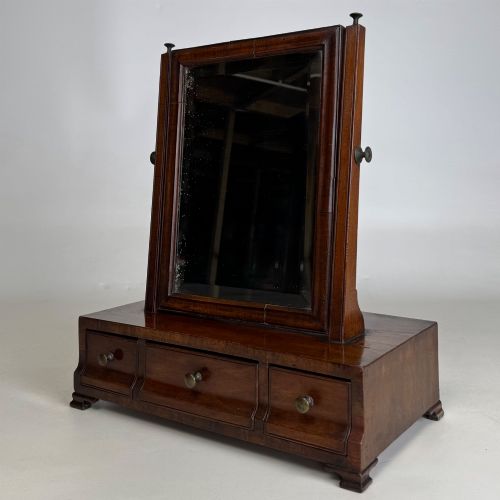
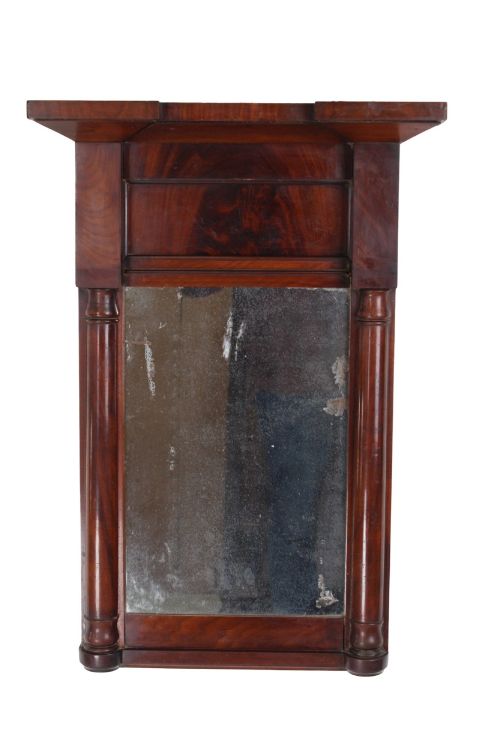
When you search for a small mahogany mirror, you encounter centuries of domestic reflection designed for dressing tables, piers, and walls. These pieces include George III swing mirrors with boxwood inlay, Regency pier glasses, and Victorian bedroom plates.
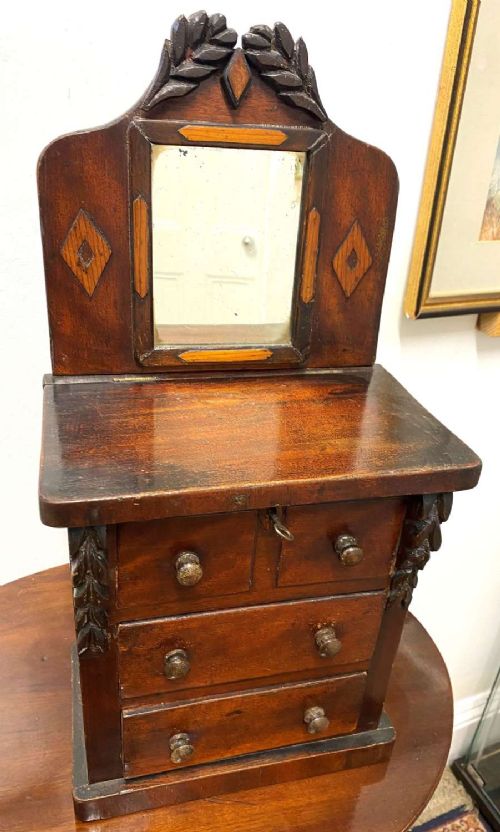
The domestic forms split between upright toilet mirrors mounted on small drawer boxes and wall-hanging frames. Dressing versions pivot on brass screw pins, while pier and wall variants hang flat or follow shaped frets.
Georgian and Regency examples show high frequency in the record, alongside Victorian and Edwardian variations. The timber grounds range from plain solid boards to rich flame veneers.
How they were made
Cabinet makers constructed the frames from solid mahogany or applied fine veneers such as flame mahogany over secondary woods. Timber selection dictated the depth of figure visible across the moulding.
Glass plates sat within rebated frames behind wooden backs, often held by small pins or paper seals. Decorative highlights frequently relied on boxwood inlay, satinwood stringing, and gilded gesso details.
Brass fittings including swing arms, candle sconces, and hanging rings were cast and turned by hand to support the pivoting mirror boxes.
Small Mahogany Mirror Retail Price Guide 2026
Typical asking prices for small mahogany mirror among the pieces listed under this phrase on Sellingantiques today, from the lower quarter to the upper quarter. They describe what is for sale here now, not the wider market.
Listings feature mahogany, glass, brass, satinwood, leather, and boxwood inlay across wall, dressing, and cheval forms.
What varies in quality
The distinction between ordinary and exceptional pieces lies in the crispness of the fretwork, the choice of timber figure, and the preservation of original surfaces. Fret-cut crests on Georgian examples show the hand of a skilled pier-cutter through sharp interior corners and clean profiles.
Original mirror plates carry age through foxing and oxidation, whereas later replacements look flat and uniform. Secondary woods on the interior drawer boxes of toilet mirrors reveal the period more clearly than the polished exterior.
Gillows
The Small Mahogany Mirror Glossary
- Pier mirror
- A tall, narrow glass designed to hang on the wall space between windows. It often reflects additional light into darker corners of a period room.
- Toilet mirror
- A smaller swing glass mounted on a miniature bureau or drawer base, historically placed on a dressing table. It permits adjustment of the viewing angle via side thumbscrews.
- Fret mirror
- A wall glass featuring fret-cut wooden borders, often associated with the mid-eighteenth century. The silhouette relies on jigsaw work through thin mahogany boards.
- Flame veneer
- A sliced section of mahogany taken from the fork of the tree where the grain twists. This creates a flickering, feathery pattern across the surface of the frame.
- Foxing
- Small dark spots and fading that develop within the silvering of antique glass over decades. This chemical ageing softens the reflection.
Small Mahogany Mirror: Frequently Asked Questions
How do I date a small mahogany mirror?
Dating relies on construction details such as hand-cut dovetails on the drawer boxes, edge mouldings, and the shape of the mirror plate bevels. Earlier Georgian examples display lighter scantlings and fretwork, while Victorian pieces use heavier frames and machine-cut elements.
Secondary woods visible inside drawer compartments also help anchor the period. Oak and pine appear on eighteenth-century work, whereas later pieces introduce different framing timbers.
Are the mirror plates original?
Many surviving pieces retain their original glass, which shows characteristic distortion, light foxing, and minor surface pitting. Because mirrors broke easily, replacement glass appears frequently in the record.
Examining the backboards and the way the glass sits in the rebate helps determine if the plate is a later insertion. Original plates usually show uneven thickness across the surface.
How were dressing mirrors used?
Toilet and dressing mirrors sat atop chests or dedicated tables during the morning toilet. Users adjusted the side pins to tilt the glass for shaving or styling hair.
The small drawers beneath held cosmetics, pins, and trinkets, keeping the dressing surface orderly.
Where should I hang a pier mirror?
Pier glasses suit narrow wall spaces, hallways, or the area above a sideboard. Their vertical proportions draw the eye upward and amplify available light.
Secure mounting is essential, utilising the original brass rings or adding appropriate wall fixings to bear the weight safely.