


Small Gilt Console
A small gilt console brings instant light and presence to a narrow hallway or drawing room.
Small Gilt Console
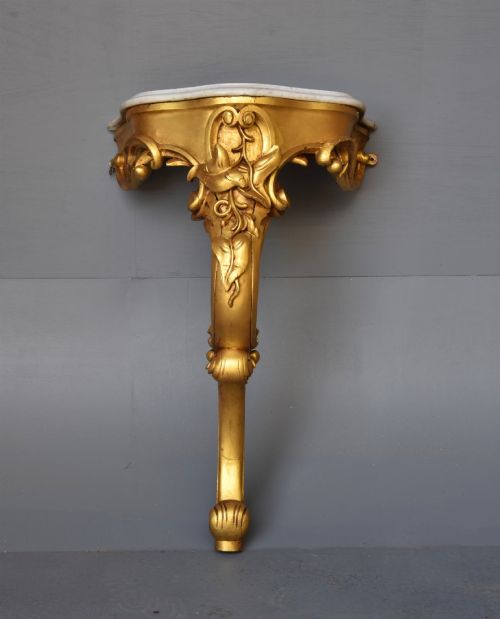
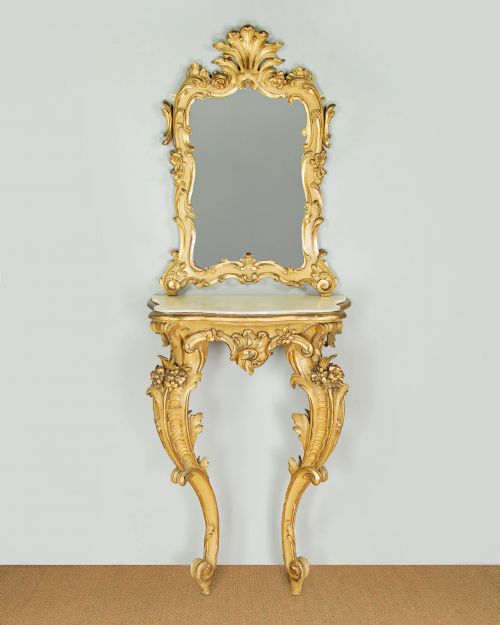
A small gilt console is a wall-mounted or standing table designed for restricted spaces, combining a reflective or gilded frame with a compact surface. These pieces range from eighteenth-century Italian silver gilt examples to nineteenth-century giltwood and marble configurations.
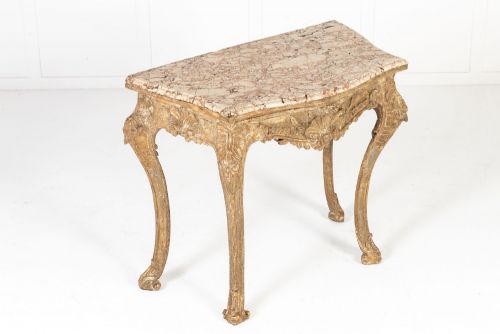
The versions most frequently met on this page span the nineteenth and early twentieth centuries, drawing heavily on Rococo Revival, Louis XV Revival, and Italian Rococo styles. Console tables and wall consoles dominate the selections, often paired with matching mirrors or topped with marble.
Makers and craftsmen of these periods utilised forms such as console tables, side tables, and occasional tables to maximise decorative impact in compact domestic interiors. The survival of walnut, mahogany, and gesso elements alongside marble tops shows the enduring appeal of these compact focal points.
How they were made
Giltwood and gesso form the decorative structure of these consoles, often carved from wood before receiving a thin layer of gold leaf or metallic application. Craftsmen shaped mahogany, walnut, and other timbers to create the curved lines typical of Rococo and French Revival designs.
Marble slabs provide durable, heavy tops for many of these console tables, contrasting with the ornate, gilded frames underneath. Ormolu, brass, and glass elements appear across the periods to add metallic sheen and reflective depth to the construction.
Several tables feature hidden depths, incorporating tiny shelves underneath mirrors designed specifically for calling cards.
What varies in quality
The crispness of the carved detail in the gesso and giltwood distinguishes finer examples from simpler production. Hand-carved depth and fluid lines in Rococo Revival pieces demand greater skill than moulded composition ornament.
The integration of materials determines the overall cohesion of the piece, particularly where marble tops meet carved wooden frames. Heavier proportions and more complex marquetry or Boulle work elevate certain centre tables and consoles above standard decorative items.
The Small Gilt Console Glossary
- Giltwood
- Wood that has been coated with gold leaf or a metallic substitute. This finish provides a bright, reflective surface that catches interior light.
- Gesso
- A plaster-like mixture applied to wood surfaces and carved before gilding. It allows for intricate, raised ornamentation on frames and tables.
- Ormolu
- Gilt bronze mounted onto furniture or decorative objects. It adds metallic highlights and substantial weight to French and Revival pieces.
- Boulle
- A form of marquetry using brass and tortoiseshell inlaid into wood. Named after a famous French cabinetmaker, it creates striking contrast on table surfaces.
- Rococo Revival
- A nineteenth-century design movement mimicking the curved, asymmetric ornamentation of the eighteenth century. It relies heavily on C-scrolls, floral motifs, and gilt finishes.
Small Gilt Console: Frequently Asked Questions
Where should I put a small gilt console?
These tables suit hallways, landings, or reception rooms where floor space is limited. Their compact footprints allow them to sit flat against walls beneath mirrors or artwork.
Because many feature marble tops, they also serve well as decorative ledges for small lamps, ceramics, or visiting card trays.
How do I spot an eighteenth-century console?
Eighteenth-century examples often display deeper hand-carved gesso work and authentic wear patterns beneath the gold leaf. The timber construction underneath shows traditional joinery methods distinct from later mass production.
Italian and French origins from this era frequently incorporate specific regional carving traits and genuine marble slabs shaped to fit the wall.
What is the difference between a console and a side table?
A console table is traditionally designed to be placed against a wall, sometimes requiring wall support or brackets for stability. Side tables are free-standing items with four independent legs intended to sit anywhere in a room.
On this page, both forms appear frequently, with consoles favoured for narrow entryways and side tables used for general display.
How do I care for giltwood?
Giltwood requires gentle dusting with a soft, dry cloth to protect the delicate metallic leaf. Avoid moisture and chemical cleaning agents, which can lift the gesso and gold surface.
Keeping the table away from direct heat sources prevents the underlying timber from expanding and cracking the gesso layer.