

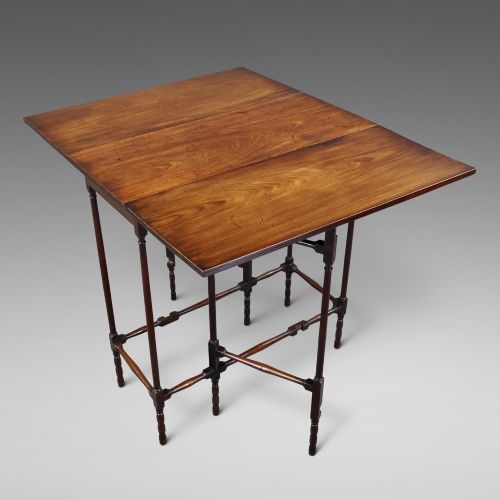
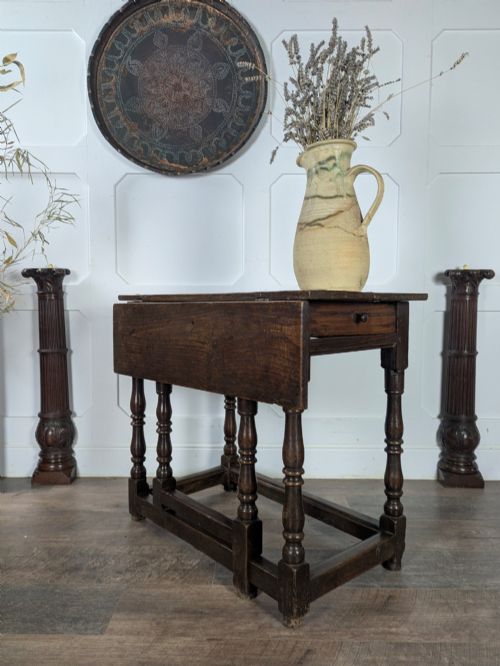
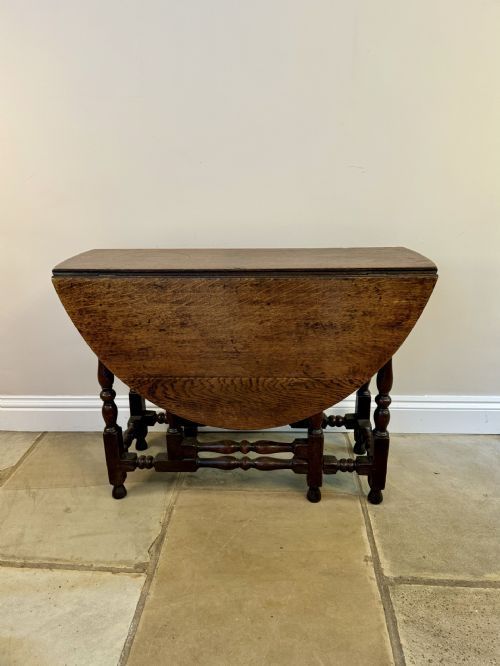


Small Georgian Gateleg Table
A small georgian gateleg table brings folding timber into tight rooms, offering drop leaves and swing legs built for flexible daily use.
Small Georgian Gateleg Table
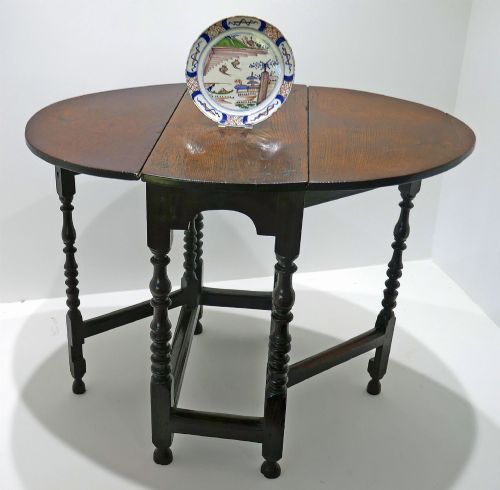
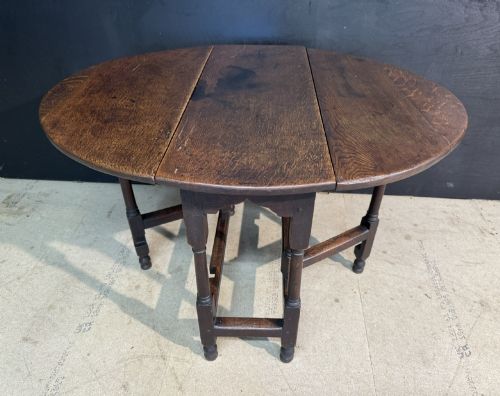
A small georgian gateleg table is a space-saving drop leaf table designed with swinging legs that support hinged flaps on either side. When you search for this phrase, you find compact folding furniture originating primarily from the eighteenth century, alongside later revival pieces.
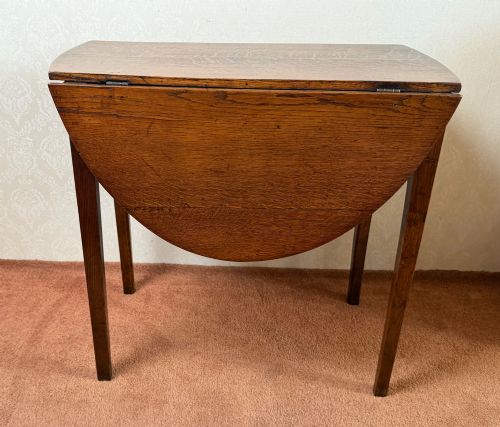
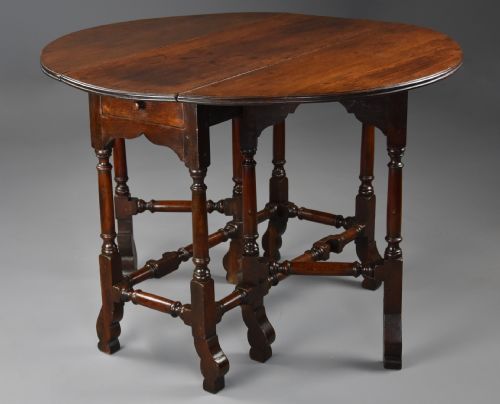
The most common examples on this page are constructed from oak or mahogany, often taking the form of spider leg tables or oval drop leaf tables. These pieces function as occasional tables, side tables, or small dining surfaces suited to period interiors.
How they were made
Cabinetmakers built these folding tables using solid timbers like oak, red walnut, and mahogany, matched with iron or brass hinges to secure the drop leaves. Turning lathes shaped the slender spider legs and gate supports that carry the weight of the extended flaps.
Joinery relied on traditional pegging and mortise and tenon methods to withstand the repeated motion of folding and unfolding the leaves. Timbers were selected for figured grain patterns and finished to develop a natural patina over decades of use.
Small Georgian Gateleg Table Retail Price Guide 2026
Typical asking prices for small georgian gateleg table among the pieces listed under this phrase on Sellingantiques today, from the lower quarter to the upper quarter. They describe what is for sale here now, not the wider market.
Listings span multiple eras from the eighteenth century through the Edwardian period, utilising oak, mahogany, elm, and red walnut.
What varies in quality
The caliber of a small georgian gateleg table rests on the selection of figured timber and the crispness of the turned leg details. Tables featuring dense hardwoods like red walnut or well-figured mahogany demonstrate superior material choice compared to plainer utility items.
Structural integrity depends on how tightly the gate mechanism aligns when open and whether the original hinges remain intact. Finer examples maintain slender proportions and balanced framing without excessive bulk in the undercarriage.
The Small Georgian Gateleg Table Glossary
- Gateleg table
- A table with hinged flaps supported by legs that swing outward like a gate. This design allows the surface area to expand or contract as needed.
- Drop leaf table
- A table featuring a fixed central section and one or two hinged flaps that drop down when unsupported. It provides flexible sizing for smaller rooms.
- Spider leg table
- A table characterised by extremely slender, delicate turned legs connected by fine stretchers. This lighter framing is typical of eighteenth-century mahogany examples.
- Patina
- The deep surface gloss and mellowed tone developed by wood over years of handling and polish. It indicates age and consistent upkeep.
- Timbers
- The cut wood used in construction, selected here for distinct grain figures such as oak or mahogany.
Small Georgian Gateleg Table: Frequently Asked Questions
How do I use a gateleg table daily?
Keep both leaves dropped against the wall as a side table or console when floor space is tight. Raise one or both leaves and swing out the gate legs whenever you need a dining or writing surface.
Avoid placing extremely heavy objects directly over the hinged leaf joints where support relies entirely on the swinging leg.
Are spider leg tables sturdy enough for dining?
Spider leg tables use very slender turned supports that suit light dining, tea service, or occasional use rather than heavy family meals. Their delicate framing prioritises minimal visual weight over robust load-bearing capacity.
Position the swinging legs carefully into their stops to ensure the extended flaps remain level during use.
How can I tell eighteenth-century oak from later oak?
Eighteenth-century oak tables display hand-cut joinery marks, peg construction, and deep surface patination acquired through centuries of polishing. The timber density and subtle tool traces reveal the manual methods of early period cabinetmakers.
Later revival pieces from the twentieth century often present uniform machine finishes and tighter, less varied grain patterns.
What is the difference between a drop leaf and a gateleg?
A drop leaf table simply has hinged flaps that may be supported by various bracket mechanisms, pull-out wooden arms, or swinging legs. A gateleg table specifically designates the subset where the support leg pivots outward on a hinged frame resembling a gate.
All gateleg tables are drop leaf tables, but not all drop leaf tables use a swinging gate mechanism.