








Small Gate Leg Table
A small gate leg table offers folding leaves and sturdy swing legs, providing generous surface space that tucks away neatly in compact rooms.
Small Gate Leg Table
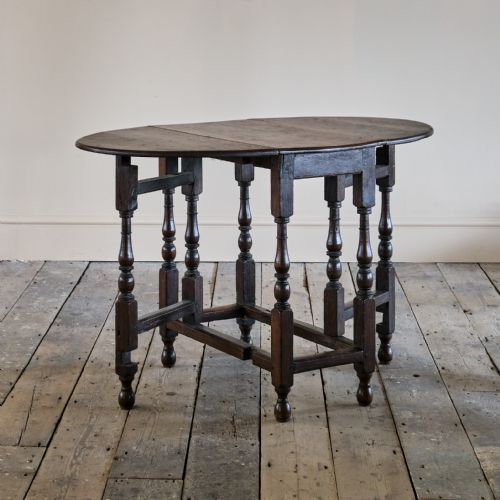
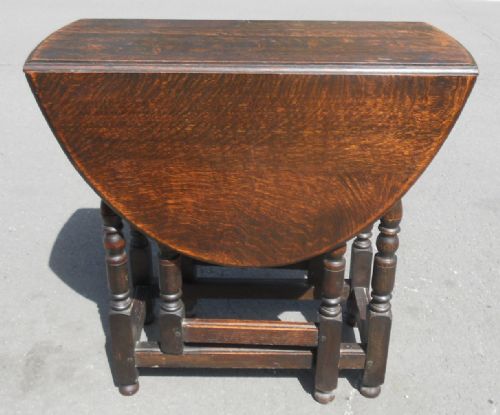
A small gate leg table is a versatile drop-leaf piece designed to save space while offering extended surface area when needed. Buyers seeking a small gate leg table will find examples ranging from seventeenth-century oak designs to Edwardian and later mahogany variations.
The pieces appearing on this page span several centuries, including seventeenth-century, eighteenth-century, Victorian, Edwardian, and twentieth-century items. Forms vary from compact occasional and coffee tables to larger dining tables and smaller spider-leg designs.
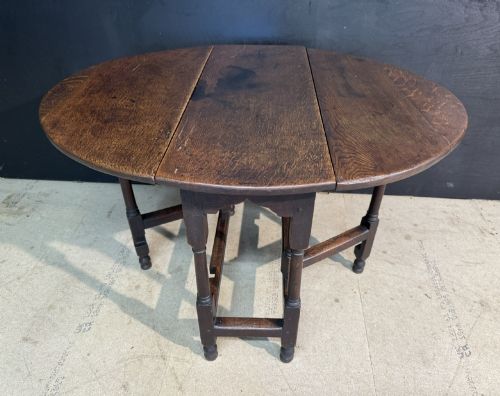
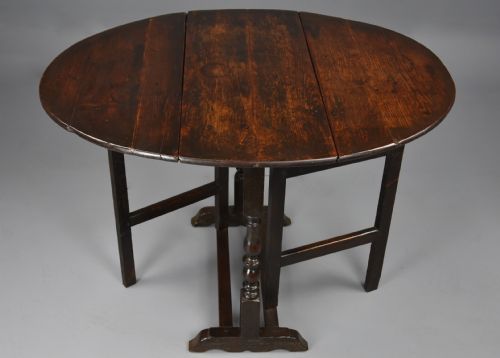
The most common iterations on this page are oak and mahogany tables featuring drop leaves supported by pivoting swing legs. These historical items function well as side tables, supper tables, or everyday dining surfaces in modern interiors.
How they were made
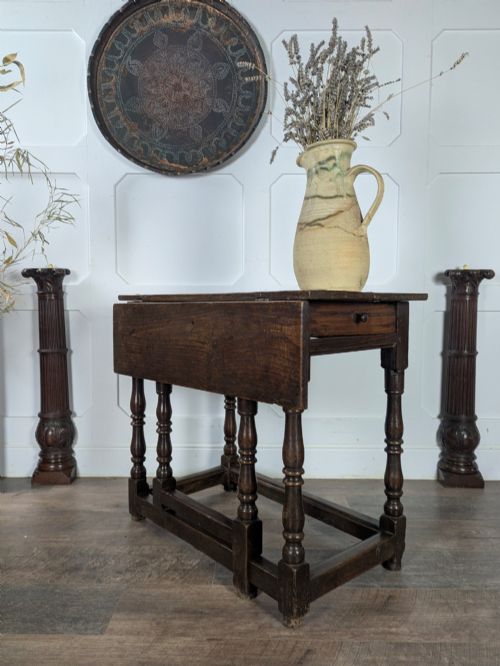
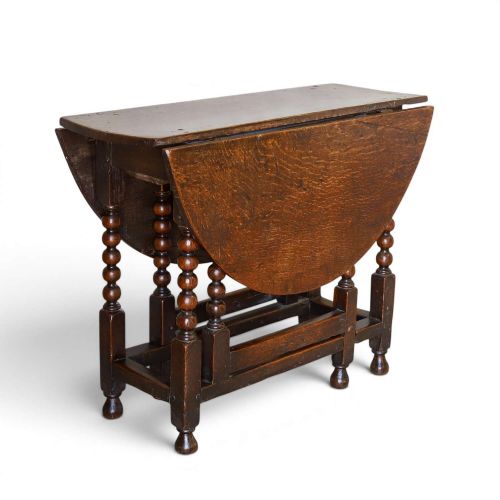
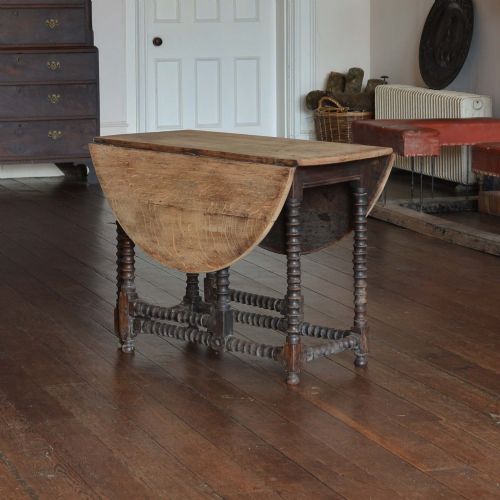
Carpenters constructed these tables primarily using solid oak or mahogany, frequently incorporating turned supports such as bobbin, barley twist, or baluster posts. Brass and iron fixings appear on hinges and occasional mounts to secure the folding mechanisms.
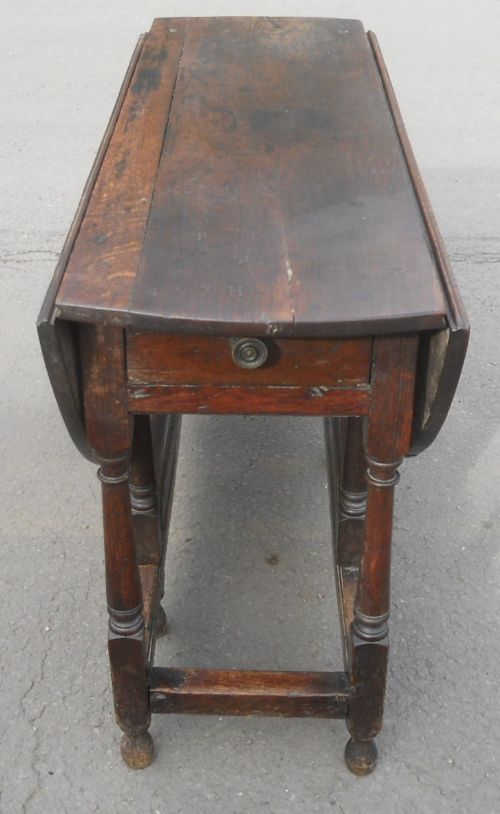
The characteristic drop-leaf design relies on hinged flaps supported by movable legs that swing out like a gate to bear the weight. Joinery techniques from earlier periods use pegged joints and sturdy framing to support the extending leaves.
Small Gate Leg Table Retail Price Guide 2026
Typical asking prices for small gate leg table among the pieces listed under this phrase on Sellingantiques today, from the lower quarter to the upper quarter. They describe what is for sale here now, not the wider market.
Listings feature items spanning from the seventeenth century through the Edwardian period and into the twentieth century, constructed in oak, walnut, and mahogany.
What varies in quality
Quality in these tables rests upon the selection of timber, the integrity of the structural joints, and the survival of original surface finishes. Tables with substantial solid oak or rich mahogany show superior craftsmanship compared to later utilitarian iterations.
The precision of the turning on legs, the smoothness of the gate-leg action, and the balance of the drop leaves distinguish finer pieces. Original patina and minimal structural alterations also separate superior examples from heavily restored ones.
The Small Gate Leg Table Glossary
- Gateleg table
- A table with hinged leaves supported by one or more legs that swing outward on a hinge like a gate. This construction allows the surface area to expand or contract easily.
- Bobbin turned
- A style of leg shaping where timber is turned on a lathe to resemble a series of spool-like or bobbin shapes. It is frequently seen on seventeenth-century English oak furniture.
- Drop leaf
- A hinged section of a table top that folds down when not in use. It allows the overall footprint of the furniture to shrink significantly.
- Spider leg
- A term describing exceptionally slender, delicate turned legs used on lightweight occasional and Pembroke tables. They provide stability while maintaining a visually minimal profile.
- Patina
- The surface sheen and coloration developed through age, use, and waxing over many decades. Collectors value surfaces that retain this historical depth.
Small Gate Leg Table: Frequently Asked Questions
How do I use a small gate leg table?
These tables function well as compact side or coffee tables when the leaves are dropped against the sides.
By swinging the supporting legs outward and raising the leaves, the table converts into a surface suitable for dining or working.
What is the difference between oak and mahogany versions?
Oak examples tend to originate from the seventeenth and eighteenth centuries, displaying heavier timbers and turned structural posts.
Mahogany versions often date from the Georgian, Victorian, and Edwardian eras, presenting a smoother reddish grain and lighter framing.
How can I tell the period of a table?
Examination of the timber species, turning style on the legs, and construction joints helps determine the manufacturing era.
Earlier pieces display joined oak with bobbin or baluster turnings, whereas later nineteenth and twentieth-century pieces often feature mahogany and slender spider legs.
Are these tables suitable for small rooms?
The folding leaf design makes these tables well suited for compact spaces because their footprint reduces significantly when closed.
They expand only when extra surface area is required, allowing flexible use in restricted layouts.