

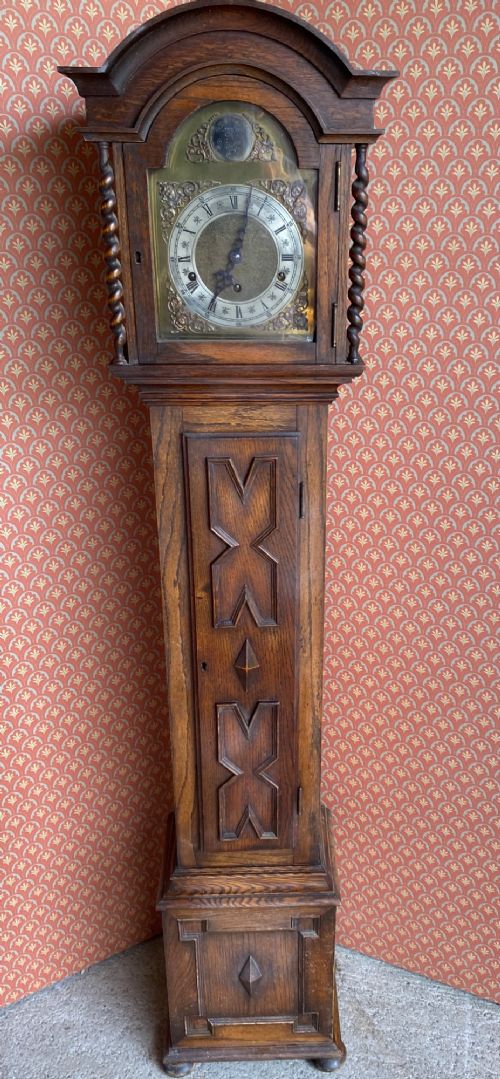
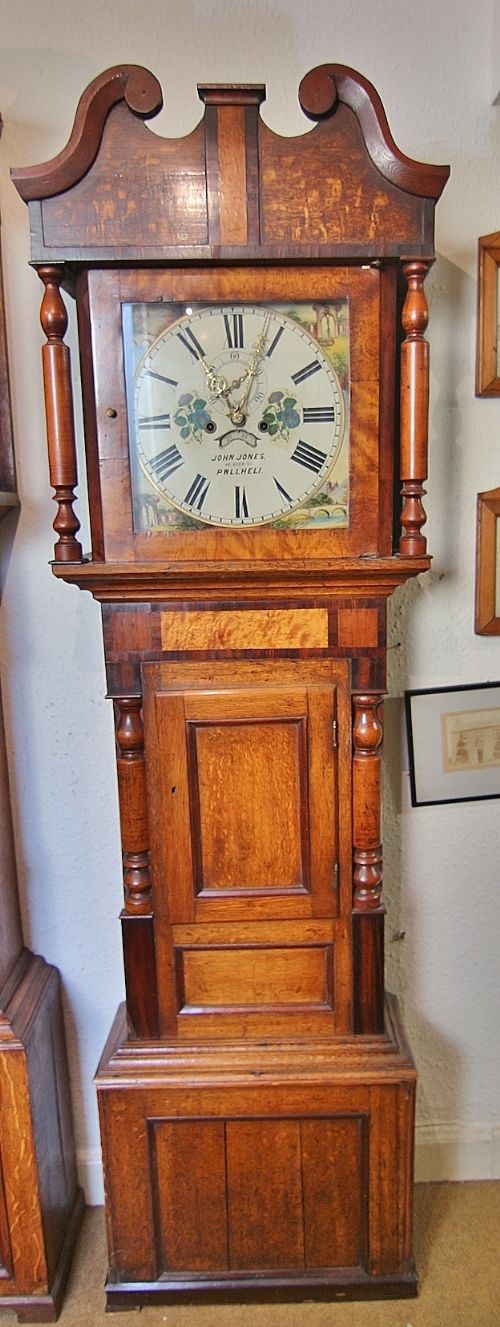
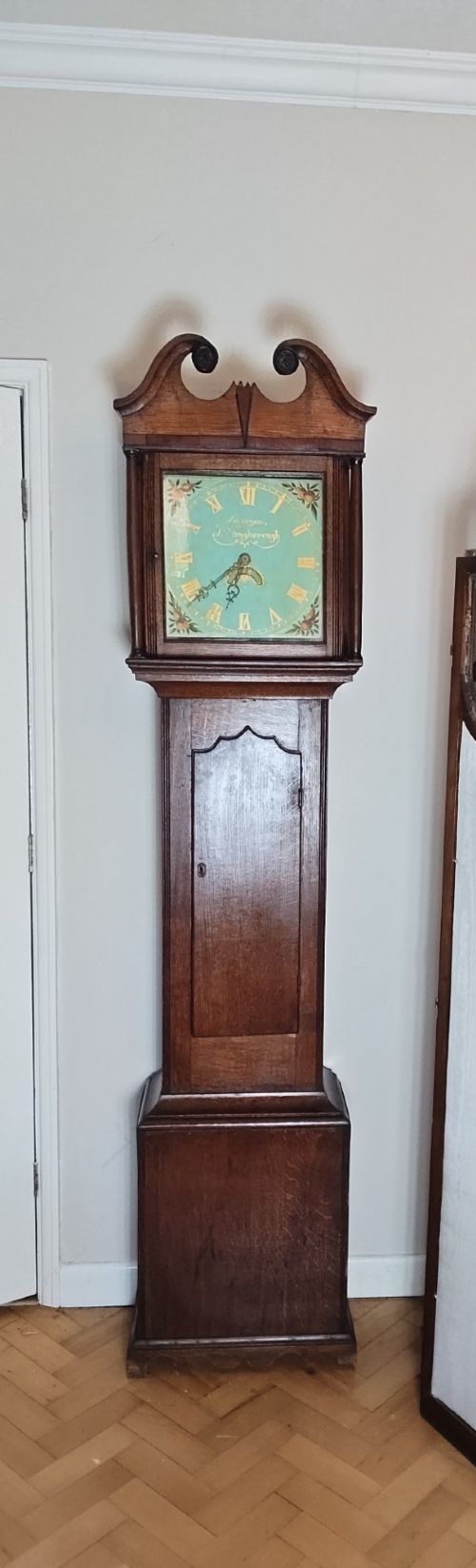
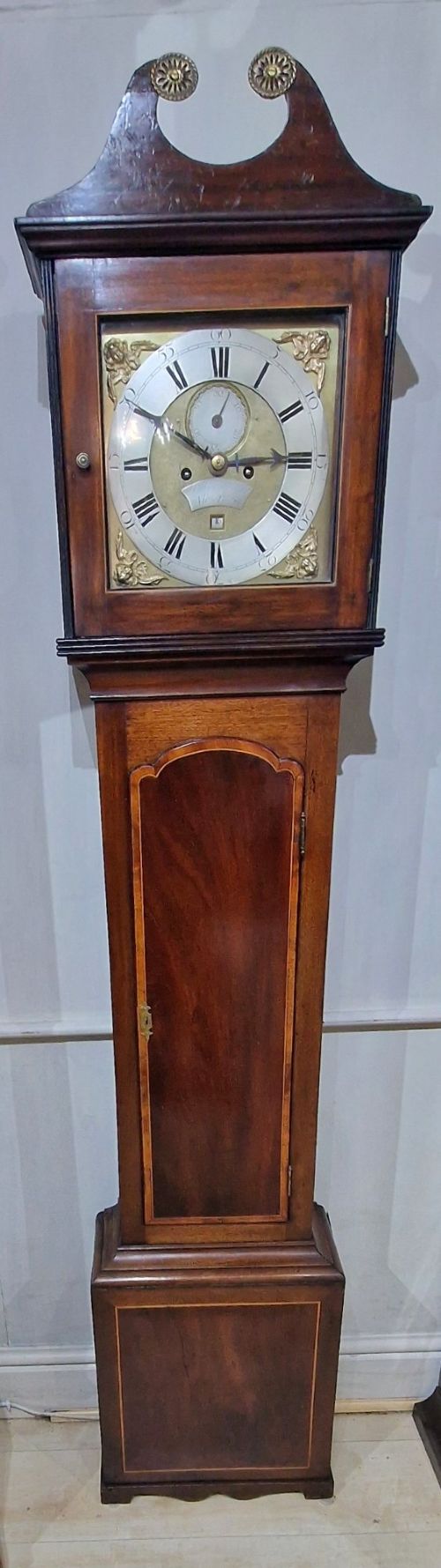

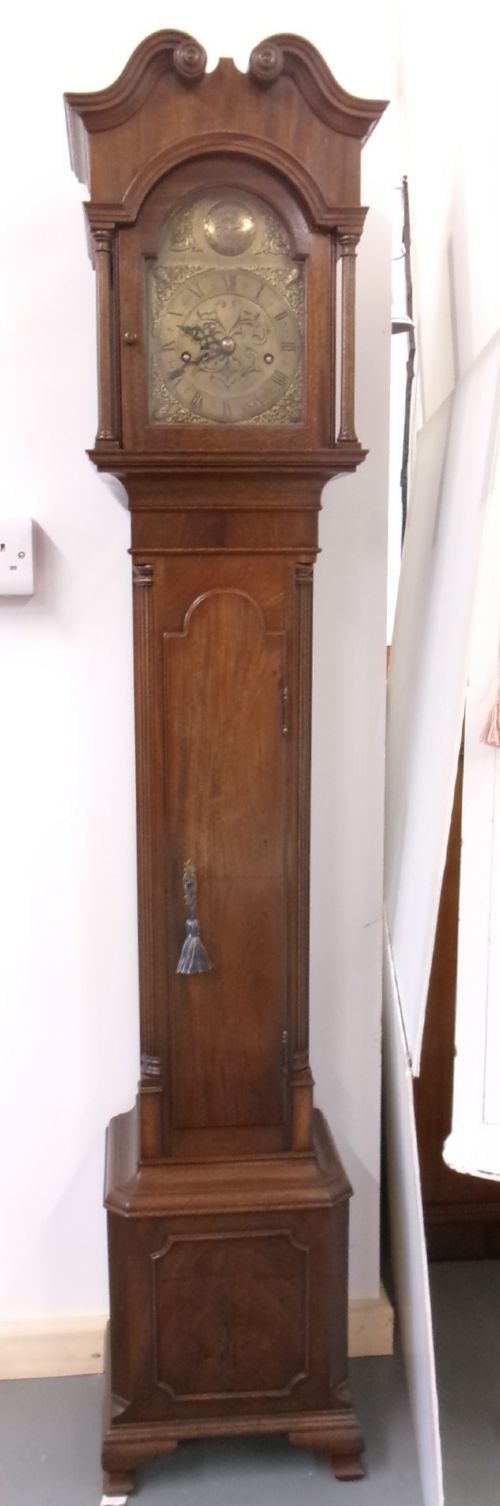


Small Floor Clock
A small floor clock brings the architectural presence of a full-sized timepiece into rooms with modest proportions.
Small Floor Clock
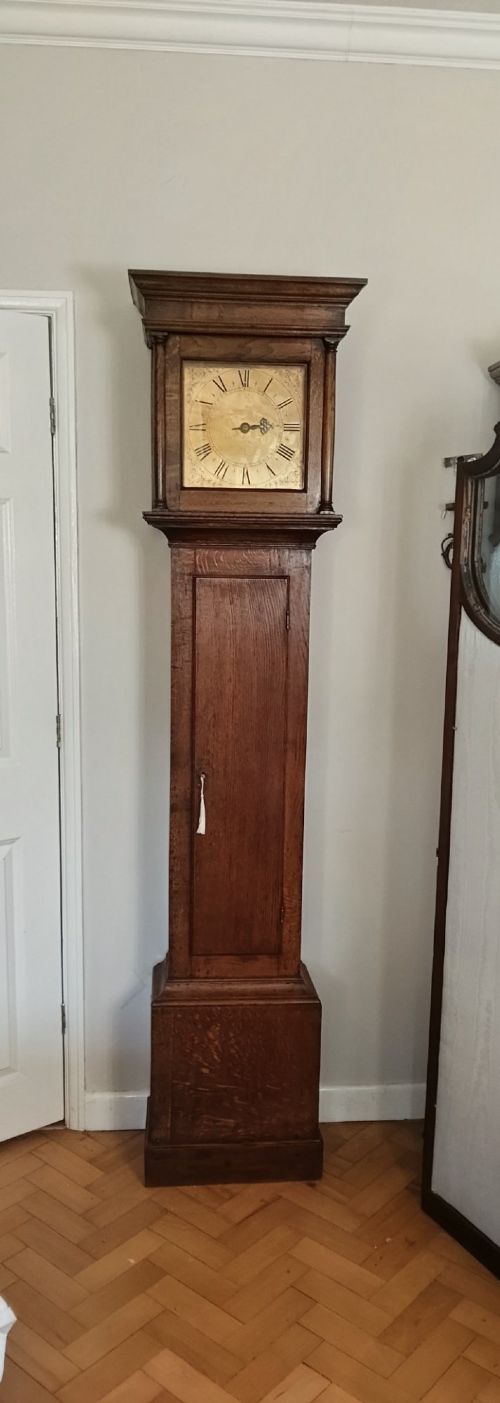
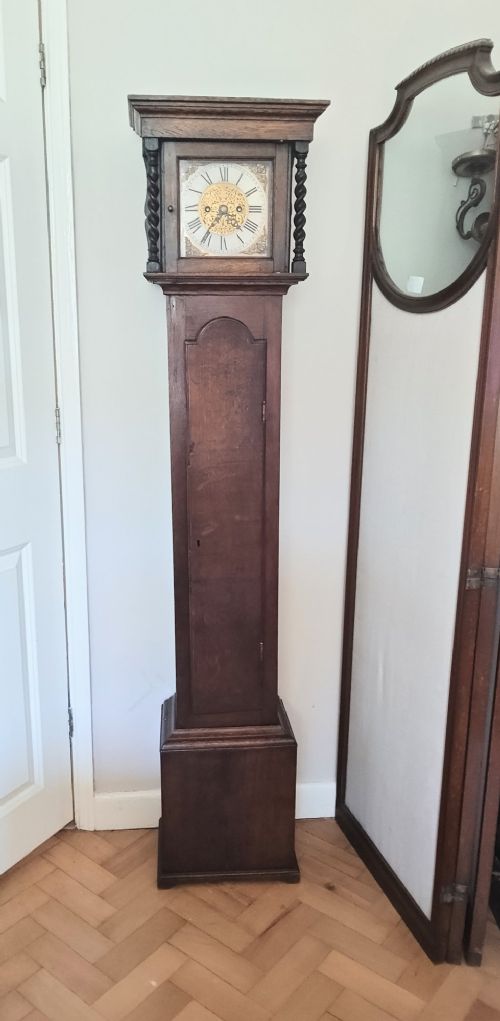
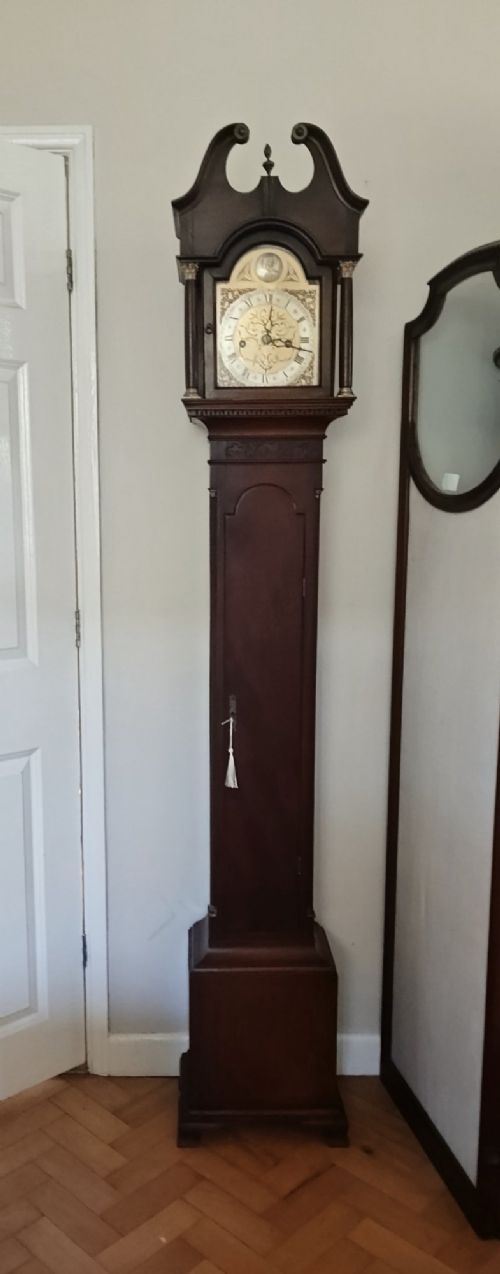
A small floor clock, often described in listings as a grandmother, granddaughter, or miniature longcase clock, provides the traditional mechanical movement of a tall case timekeeper in a reduced height. These pieces occupy less vertical wall and floor space than standard eight-day clocks while retaining the weighted gravity movements and swinging pendulums.
The versions most frequently encountered on this page date from the Georgian period up through the Edwardian era and the 1920s. Oak and mahogany dominate the timber choices for these smaller floor-standing cases, alongside occasional examples in walnut or painted pine.
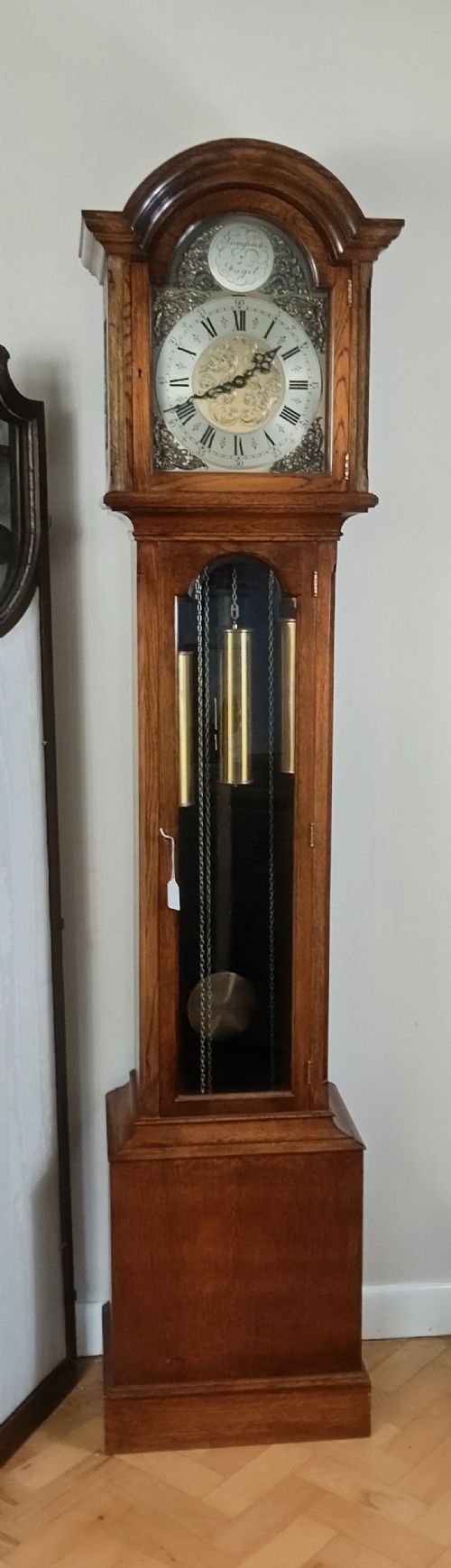
Makers adapted the proportions of standard longcases to fit lower ceilings and tighter hallways without sacrificing mechanical complexity. Buyers find everything from simple single-train timepieces to quarter-chiming musical models housed in slim pine, oak, or mahogany cases.
How they were made
Cabinetmakers constructed the tall cases using solid timbers like oak and mahogany, often applying veneers such as walnut or marquetry decoration to the surface. Glass doors protect the dial face, while brass components form the visible chapter rings, spandrels, and movement plates inside.
Clockmakers fitted weight-driven or spring-driven movements into the wooden hoods, connecting them to long pendulums housed within the trunk. Dial faces feature engraved brass, painted iron, or silvered brass chapters, demonstrating meticulous hand-finishing across both movement and case.
Small Floor Clock Retail Price Guide 2026
Typical asking prices for small floor clock among the pieces listed under this phrase on Sellingantiques today, from the lower quarter to the upper quarter. They describe what is for sale here now, not the wider market.
The selection includes regional English makers from Kent, Bedfordshire, and Yorkshire alongside London retailers.
What varies in quality
Quality rests in the harmony of the case proportions and the crispness of the timber carving or inlay work. Finer examples maintain original movement components and dial signatures that correspond cleanly to the period of the housing.
The sophistication of the internal movement dictates much of the standing, ranging from basic time-only actions to complex triple-weight chiming or musical cylinders. Untouched patination on the timber and clear, legible dialwork separate standard production from exceptional examples.
Nathaniel Pyne·Harrods·Dent of London·John Welsh Luton·Smith Chester·Hampston Prince Cattles of York·Frederick Rowe of Great Marlow
The Small Floor Clock Glossary
- Longcase clock
- A tall pendulum clock enclosed in a wooden case that stands directly on the floor. These timepieces are frequently referred to colloquially as grandfather clocks.
- Grandmother clock
- A smaller version of the longcase clock, typically standing shorter than a standard grandfather clock. They gained popularity during the Edwardian period and the early twentieth century.
- Granddaughter clock
- An even more diminutive form of floor clock, smaller still than a grandmother clock. They share the mechanical properties of larger longcases in a highly compact case.
- Regulator clock
- A precision timekeeper designed for high accuracy, often featuring a finely adjusted pendulum and a simplified dial layout for easy reading. These were used to set other household clocks.
- Dial
- The face of the clock where the hours and minutes are displayed. On these floor clocks, dials are constructed from brass, painted iron, or silvered metal.
- Quarter chiming
- A movement mechanism that strikes the bells or gongs every fifteen minutes to mark the progression of the hour. These systems add mechanical complexity to smaller floor clock movements.
Small Floor Clock: Frequently Asked Questions
How tall is a small floor clock?
These clocks are built in reduced proportions specifically to fit rooms with lower ceilings than those required by standard tall clocks. They typically measure several inches shorter than a traditional grandfather clock while maintaining a similar floor footprint.
Exact heights vary depending on whether the piece is classed as a grandmother, granddaughter, or miniature longcase clock. Buyers should check individual dimensions to ensure the case fits their intended ceiling height.
Where should I place a small floor clock?
Floor clocks require a stable, level surface to ensure the pendulum swings evenly and the movement keeps accurate time. Hallways, landings, and living rooms make traditional settings for these smaller vertical timepieces.
Keep the case away from direct sunlight and sources of heat to protect the antique wood and veneer from drying out or warping. Securing the tall case to the wall with a discreet bracket provides extra stability.
How can I tell the period of a floor clock?
Dating relies on examining the construction methods of the wooden case, the style of the dial, and the signature of the maker if one is present. Georgian pieces often feature square brass dials and solid oak or mahogany bodies, while Edwardian and later revivals display different moulding profiles and chiming mechanisms.
Matching the materials and decorative details like inlay or carving to known historical periods helps narrow down the decade of manufacture. Consulting maker signatures recorded on the dial face provides another reliable guide.