



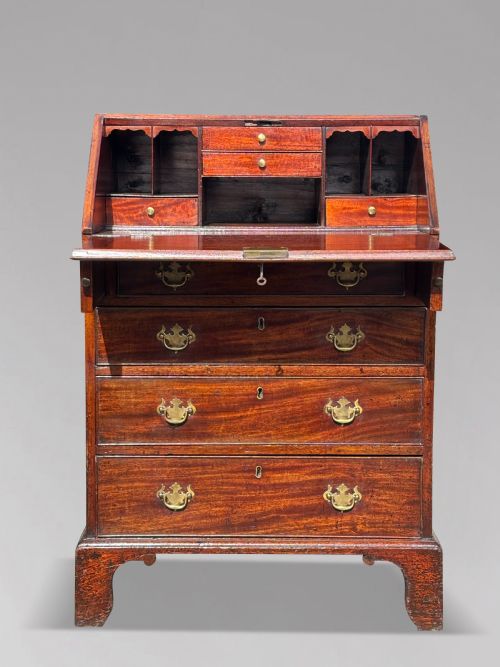


Small Drop Front Desk
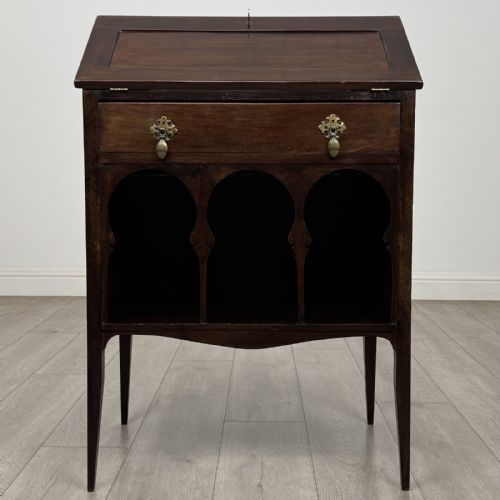
A small drop front desk offers a compact writing surface that conceals fitted interior compartments behind a folding flap.
Small Drop Front Desk
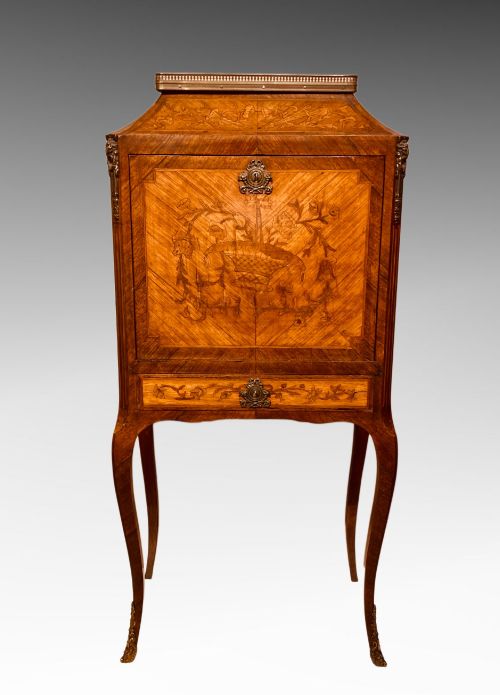
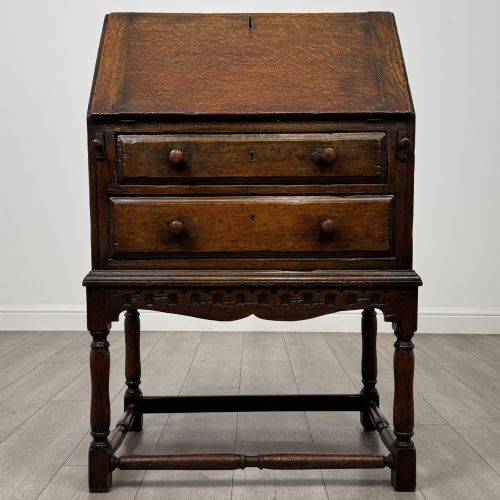
A small drop front desk combines a concealed writing surface with drawer storage, appearing across the 18th century, 19th century, and Edwardian periods. These compact writing pieces take forms such as bureaux, escritoires, and secretaire cabinets.
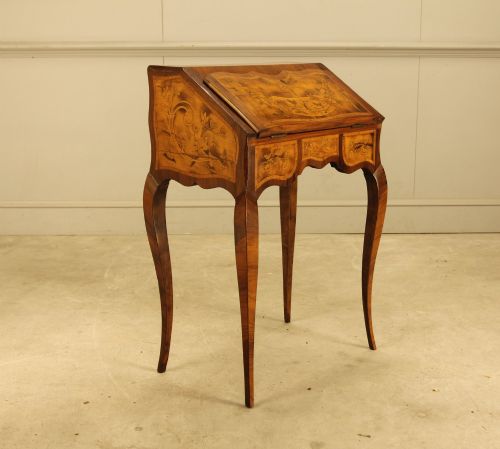
The most frequent examples on this page are mahogany and oak bureaux from the Georgian and Edwardian eras, alongside walnut and marquetry pieces styled after earlier centuries. Their diminished proportions make them suited to modest spaces while retaining the full utility of a larger writing desk.
Materials and construction
Cabinetmakers constructed these desks primarily in solid hardwoods such as mahogany, oak, and walnut, frequently applying fine veneers like burr walnut, kingwood, and amboyna to the exterior surfaces. Marquetry inlays and brass hardware provide decorative detail across several styles.
Internal compartments incorporate small drawers and pigeonholes designed to hold correspondence, whilst the fall front mechanism relies on structural hinges and wooden supports to bear the weight of the writing surface.
Small Drop Front Desk Retail Price Guide 2026
Typical asking prices for small drop front desk among the pieces listed under this phrase on Sellingantiques today, from the lower quarter to the upper quarter. They describe what is for sale here now, not the wider market.
One listed piece is specifically noted as a child's mahogany bureau made with small proportions.
Distinctions in quality
The refinement of the interior pigeonholes and drawers distinguishes finer examples, where secondary timbers and dovetail joints show careful hand-working. Simpler pieces rely on straightforward exterior form rather than complex internal arrangement.
The choice of surface veneer introduces considerable variation, with figured timbers like burr walnut and intricate marquetry marking out pieces intended for formal rooms against plainer solid oak or mahogany furniture.
Gillows
The Small Drop Front Desk Glossary
- Bureau
- A sloping lidded desk enclosing a fitted interior of small drawers and pigeonholes. This form serves as the primary type found within these listings.
- Escritoire
- A writing cabinet featuring a fall front or drop front panel. The term appears alongside French examples decorated with marquetry.
- Secretaire
- A piece of furniture containing a writing drawer or drop front compartment. It often forms part of a larger bookcase or tall cabinet.
- Marquetry
- Decorative veneer work formed by fitted pieces of various woods. It ornaments several 19th century and revival pieces on this page.
- Fitted interior
- The arrangement of small drawers, slots, and central compartments revealed when the drop front is opened. These spaces held letters and documents.
Small Drop Front Desk: Frequently Asked Questions
What is a small drop front desk?
A small drop front desk is a compact writing cabinet featuring a hinged flap that pulls down to form a writing surface. These pieces typically conceal a fitted interior of small drawers and pigeonholes.
Examples on this page span the 18th, 19th, and early 20th centuries, utilising timbers such as mahogany, oak, and walnut.
How were these desks used historically?
These desks served as private writing stations for correspondence and personal accounts. The drop front provided a stable horizontal surface for writing when opened.
When closed, the flap secured private papers out of sight, while the lower drawers held larger documents or household items.
Where should I place one in my home?
Their compact proportions allow these desks to fit into alcoves, smaller reception rooms, or home offices. They function well as occasional writing surfaces or display areas.
Sufficient clearance must be left in front of the piece for the drop front flap to open fully.
How do I identify the period of a desk?
Period identification relies upon timber selection, construction methods, and stylistic details such as brass handles and bracket feet. Georgian pieces often display straight-grained mahogany or figured walnut.
Revival pieces from the 19th and 20th centuries imitate earlier styles like Queen Anne or George II using period-specific secondary woods.