






Small Display Etagere
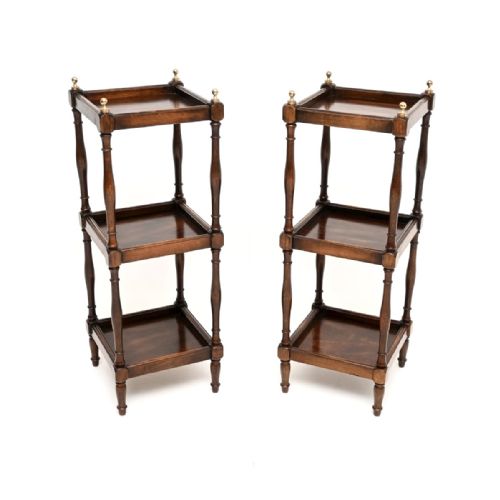
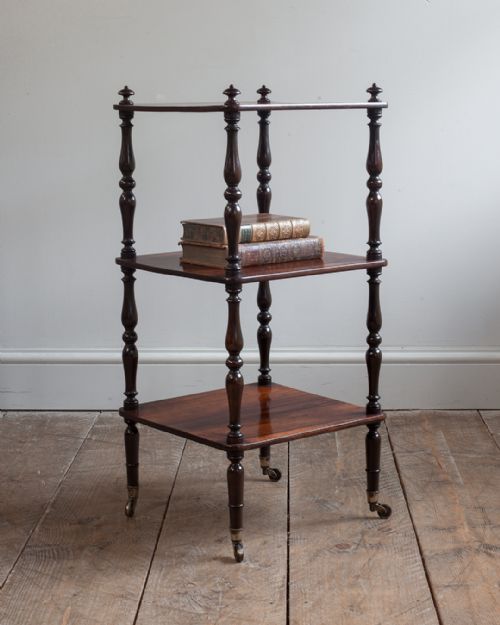
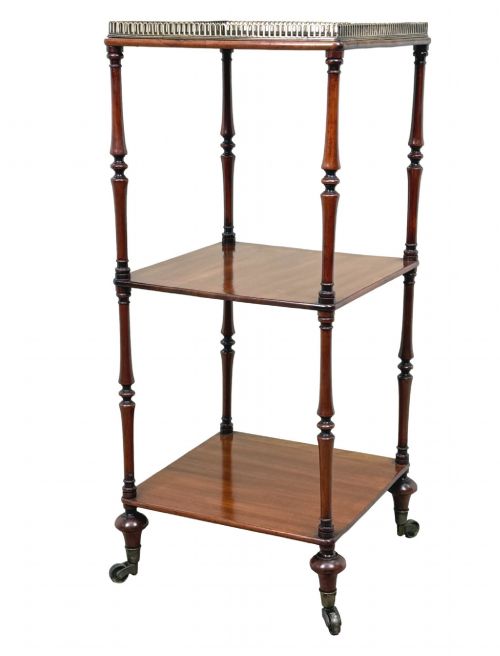
A small display etagere is a tiered shelving unit designed for tabletop or floor, prized for showing off collections without dominating a room.
Small Display Etagere
A small display etagere takes various forms across the inventory, appearing primarily as tiered whatnot tables, wall hanging shelves, and compact freestanding units. These pieces span periods from the Regency era through the Victorian period and into the early twentieth century, reflecting shifting domestic tastes for open storage.
Most examples found here utilise dense timbers like mahogany, rosewood, and walnut, frequently accented with brass supports or fine fruitwood inlay. The primary function remains the vertical presentation of small decorative objects, books, or cabinet porcelain within domestic spaces.
Materials and construction
Cabinetmakers constructed these shelves using hard cabinet woods such as mahogany, rosewood, and walnut, often selecting figured veneers for top surfaces. Brass columns, gallery rails, and ormolu mounts frequently provide structural support and decorative contrast between the timber tiers.
Joinery methods range from traditional hand-cut joints on nineteenth-century pieces to lighter assembly on later twentieth-century items. Surface finishes rely on traditional polish or wax applied directly to the timber to reveal the grain.
Small Display Etagere Retail Price Guide 2026
Typical asking prices for small display etagere among the pieces listed under this phrase on Sellingantiques today, from the lower quarter to the upper quarter. They describe what is for sale here now, not the wider market.
Portable bookshelves from the nineteenth century prove that travellers insisted on bedside reading long before the paperback.
Distinctions in quality
Quality in a small display etagere rests on the choice of timber and the precision of decorative details like fruitwood inlay and ormolu mounts. Finer pieces demonstrate careful selection of figured veneers and solid brass components rather than plated base metals.
The sophistication of the turning on vertical supports and the crispness of any hand-carved elements separate standard production items from workshop pieces. Structural integrity across multiple tiers determines whether a piece maintains its alignment under weight.
The Small Display Etagere Glossary
- Étagère
- A piece of furniture consisting of a set of open shelves for displaying small objects. The term originates from nineteenth-century French cabinet making.
- Whatnot
- A nineteenth-century term for a multi-tiered open shelving unit used for ornaments or books. It functions as a direct synonym for the etagere in many British inventories.
- Ormolu
- Gilded bronze or brass mounts applied to furniture for decoration. It appears frequently on French-influenced pieces from the nineteenth century.
- Satin birch
- A light-coloured timber with a silky lustre used for decorative veneers in Victorian furniture. It offers a pale contrast to darker woods like mahogany.
- Tier
- An individual level or shelf within a stacked furniture unit. Multiple tiers define the vertical character of these shelving pieces.
Small Display Etagere: Frequently Asked Questions
What is a small display etagere used for?
These tiered units were originally designed to hold books, ornaments, and small decorative collections in principal rooms. Today, they serve the same practical purpose of vertical display while taking up minimal floor or wall space.
Their compact proportions make them suitable for corners or narrow wall spaces where standard bookcases would prove too bulky.
How do I date a wooden etagere?
Dating relies on identifying the primary timber, construction methods, and stylistic cues present in the turned supports or gallery rails. Mahogany and rosewood predominate in nineteenth-century examples, while later decades introduce different woods and simpler joints.
Matching the overall proportions and decorative vocabulary to known design periods helps narrow down the decade of manufacture.
Where should I place an etagere?
Freestanding floor models suit corners or empty wall spaces where they can be viewed from multiple angles. Wall-hanging versions require secure fixing to support the weight of the timber and displayed objects.
Keeping them away from direct heat sources prevents the timber and veneer from drying out or splitting over time.
Are etageres and whatnots the same thing?
Both terms describe multi-tiered open shelving furniture, though 'whatnot' is more commonly encountered in nineteenth-century British records. The underlying function of vertical display remains identical across both designations. Nomenclature often depends on whether the piece leans towards French decorative styles or domestic British utility.