
Small Brass Crystal Chandelier
A small brass crystal chandelier brings concentrated light and sparkle to compact spaces through polished metal frames and hanging glass prisms.
Small Brass Crystal Chandelier
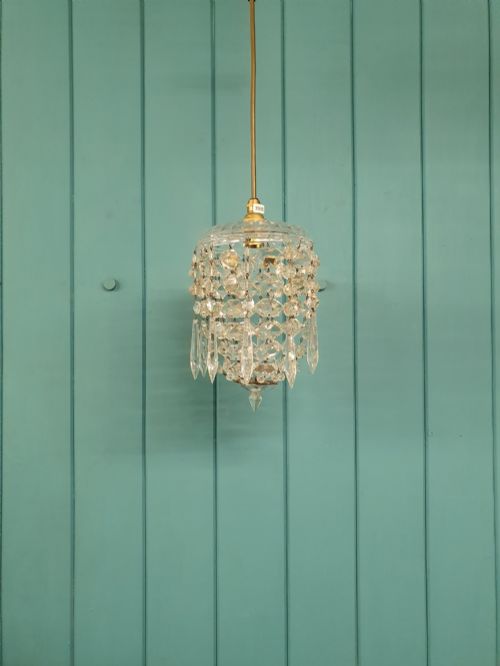
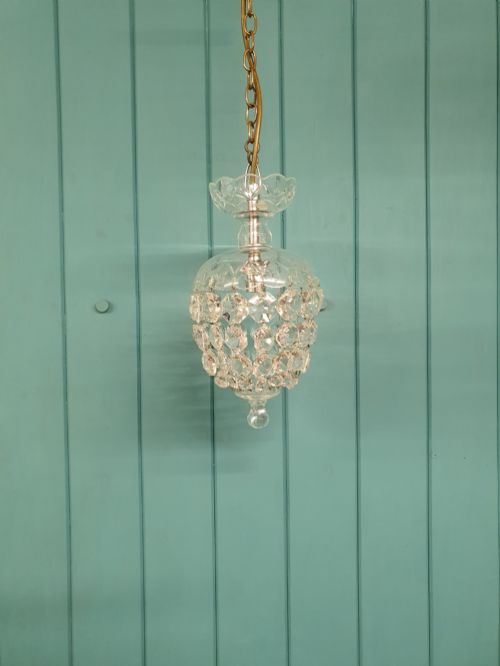
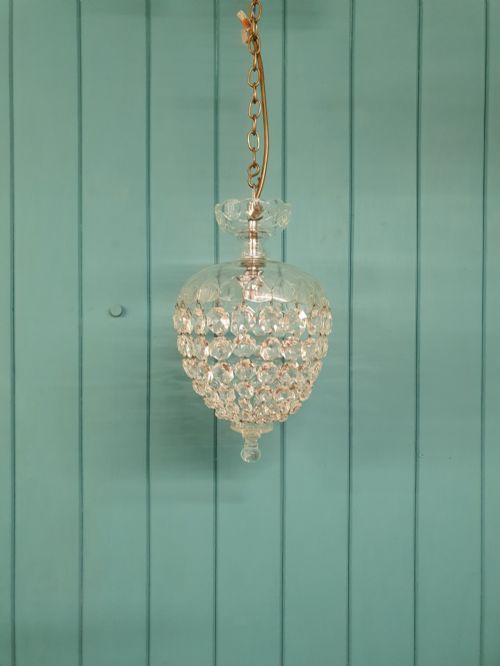
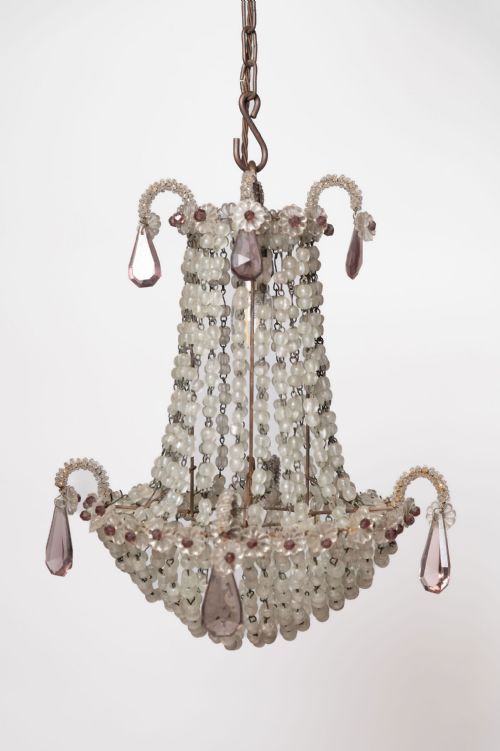
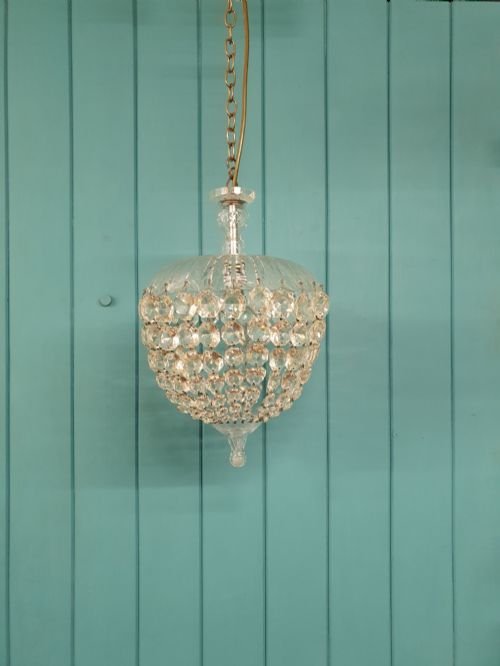
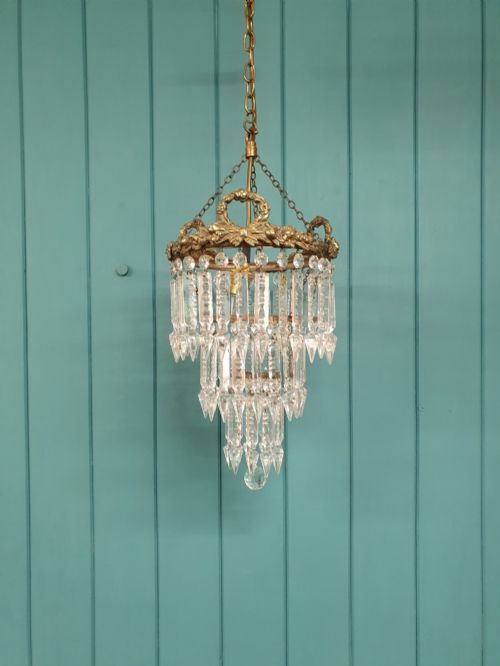
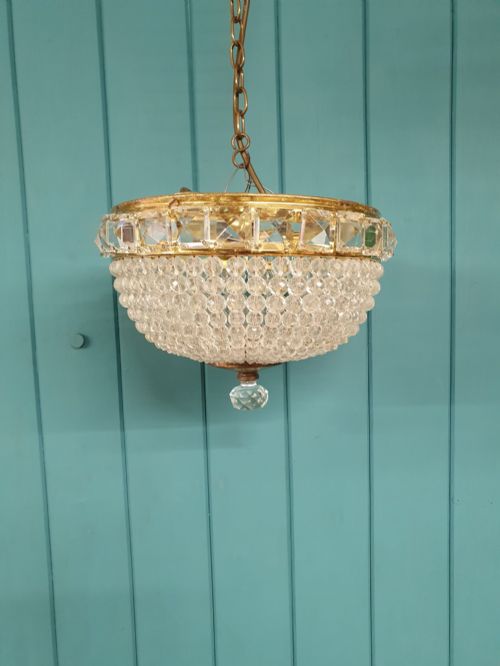
A small brass crystal chandelier combines metal frames with glass drops to illuminate smaller rooms or hallways. When searching for a small brass crystal chandelier, buyers encounter pieces originating from the Edwardian period through to the 1930s, alongside items from the late nineteenth century.
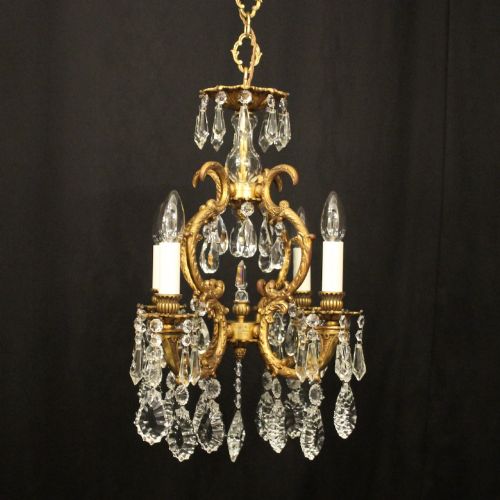
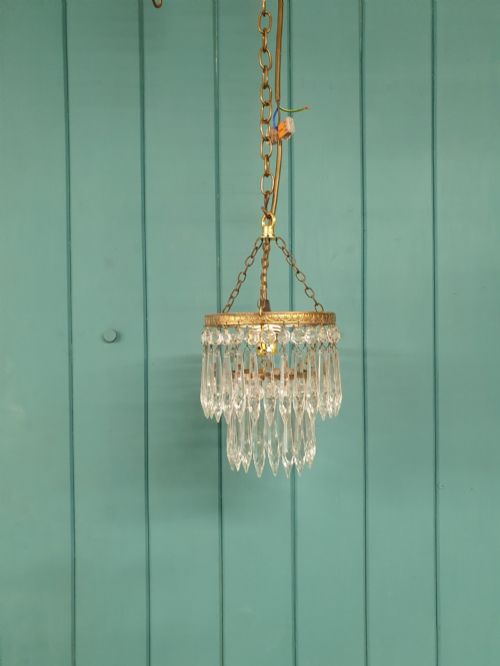
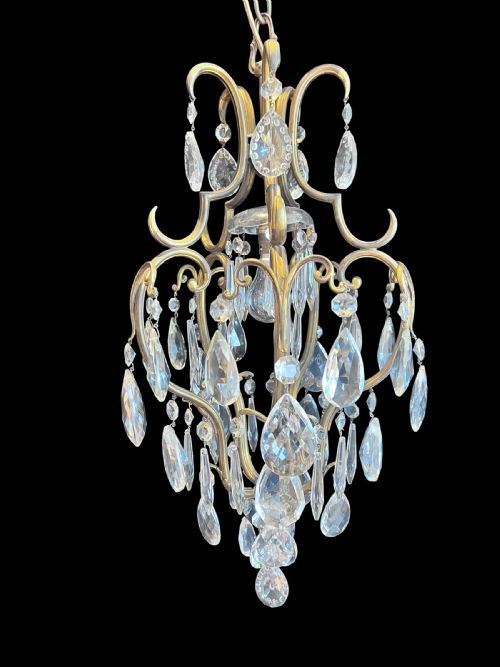
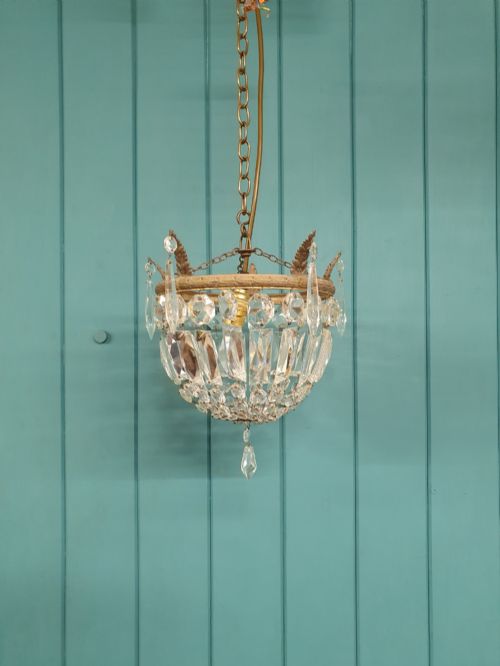
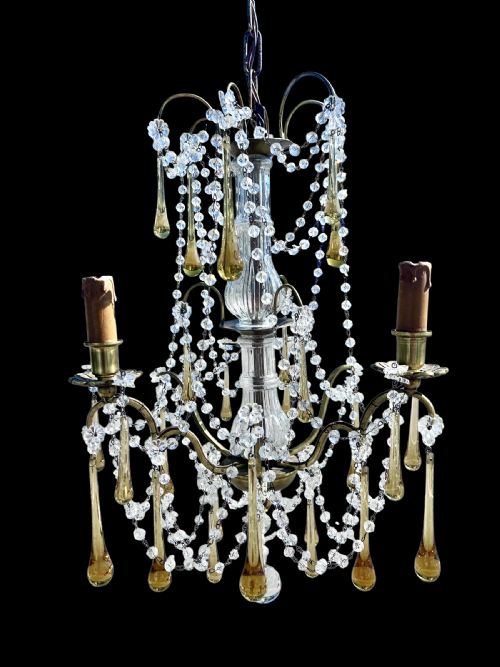
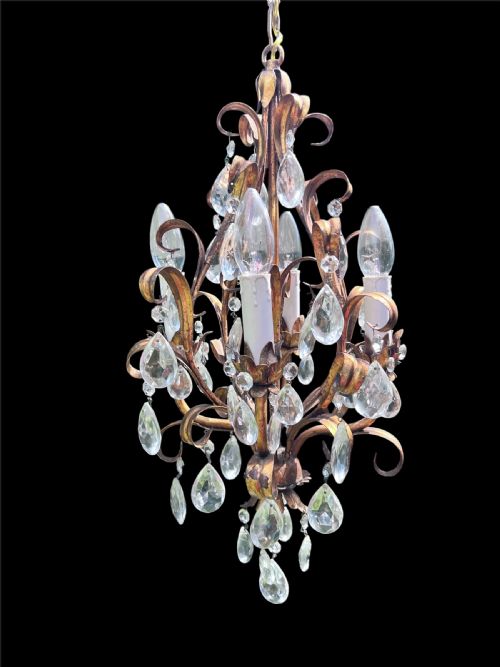
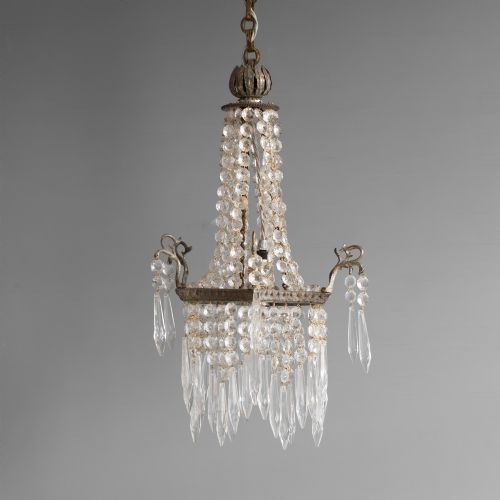
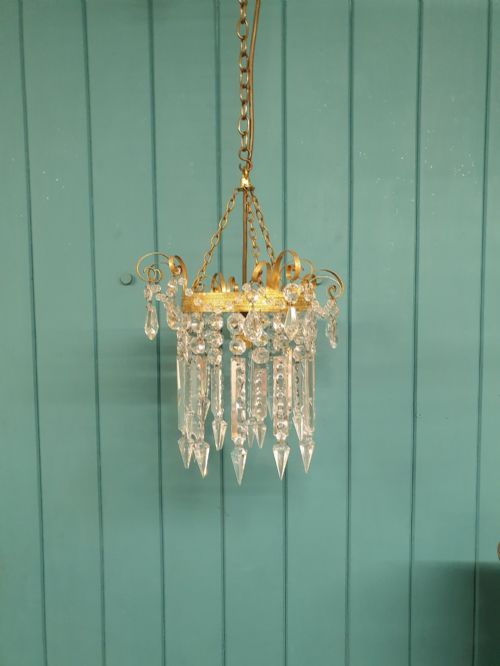
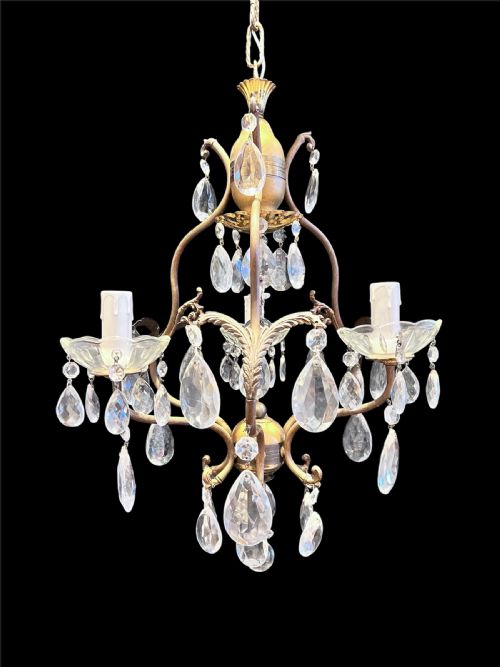
The physical forms on this page include dome top designs, bag chandeliers, spike configurations, and birdcage structures. Italian and French regional influences frequently shape the decorative vocabulary of these hanging lights, ranging from single light fixtures to multi-bulb arrangements.
Most examples span early twentieth century production dates, employing compact proportions suited to lower ceilings. These ceiling lights balance structural brass components with suspended glass elements to catch and refract light.
What varies in quality
Quality differences emerge in the weight of the brass casting and the precision of the glass cutting. Heavier gilt brass frames and sharply faceted cut glass crystals denote superior craftsmanship compared to lighter stamped metal and plain pressed glass.
The integrity of the hanging arrangement and the uniformity of the crystal drops also distinguish finer examples. Cohesive grouping of prisms and robust structural assembly separate standard utilitarian light fittings from more refined decorative pieces.
Some Edwardian spike chandeliers require hundreds of tiny hand-threaded brass pins to secure every single glass prism in place.
The Small Brass Crystal Chandelier Glossary
- Bag chandelier
- A lighting fixture featuring a flattened or tapered lower profile composed of dense rows of hanging crystal beads. This form resembles a small pouch or bag suspended from a brass frame.
- Spike chandelier
- A design characterised by outward-pointing crystal drops or glass spikes arranged in tiers around a central axis. These elements create a starburst silhouette when illuminated.
- Prism
- A cut glass pendant designed to refract light into spectral colours. Prisms hang from the brass armature using small metal connections.
- Birdcage chandelier
- A metal framework shaped like an avian enclosure enclosing internal lights and surrounded by cascading crystal strands. French workshops frequently utilised this structural silhouette.
- Gilt bronze
- Metalwork treated with a gold-coloured surface application or mercury gilding to impart a rich metallic lustre. This material resists tarnishing while providing a decorative golden sheen.
Small Brass Crystal Chandelier: Frequently Asked Questions
Where should I hang a small chandelier?
These compact light fittings suit smaller rooms, hallways, and cloakspaces where standard multi-arm fixtures overwhelm the architecture. Their restricted drop allows placement above circulation spaces or intimate seating areas.
Ensure adequate ceiling clearance so the lowest crystal drops remain safely above head height. Low ceilings benefit particularly from dome top or flush-fitting bag configurations.
How do I clean the crystal drops?
Maintenance involves gentle cleaning of individual glass prisms using a mild soapy solution and a soft cloth. Support each drop carefully to avoid straining the connecting brass pins.
Leaving crystals attached while wiping prevents displacement of the delicate wire loops. Thorough drying restores maximum sparkle to the cut glass facets.
Are these lights wired for modern electricity?
Many surviving examples have undergone conversion to electricity during their lifespan to accommodate standard domestic bulbs. Original candle sockets occasionally remain on decorative pieces intended for ambient effect.
Consulting a qualified electrician ensures safe installation and compatibility with current household wiring standards. Rewiring preserves fragile internal channels within the brass frame.
How do I date an Edwardian chandelier?
Dating relies on stylistic markers, construction methods, and material combinations recorded across early twentieth century pieces. Edwardian examples often feature specific spike or dome top configurations alongside distinct cut glass patterns.
Comparing the brass casting style and crystal density against established period pieces helps narrow the decade of manufacture. Hallmarks or stamps rarely appear on domestic lighting fixtures of this scale.