





Small Black Cabinet
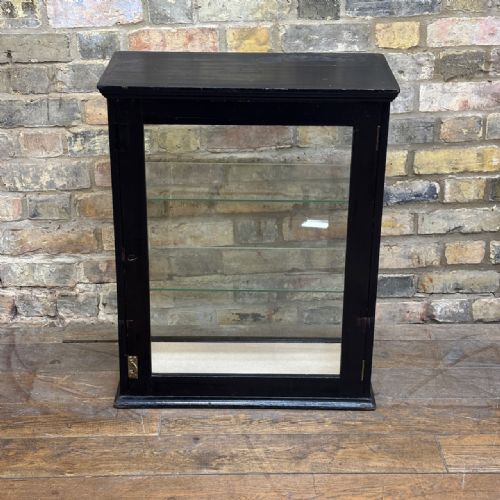
A small black cabinet brings dark tone and compact presence to a room, offering functional display or concealed storage without dominating the floor space.
Small Black Cabinet
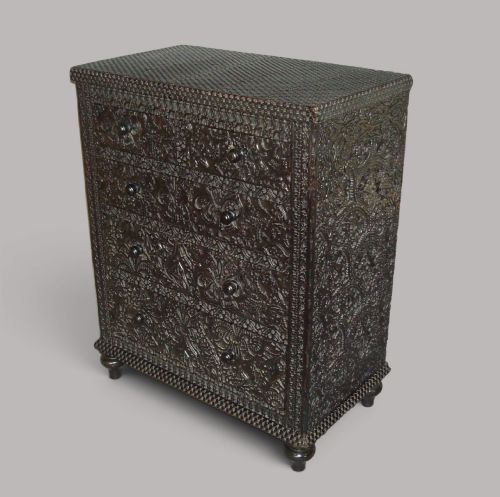
When you search for a small black cabinet, you enter a diverse field of compact furniture spanning from the eighteenth century through to the art deco era. These pieces range from tabletop kodansu and countertop display cases to side cupboards and diminutive chests, each offering distinct storage utility in a restrained footprint.
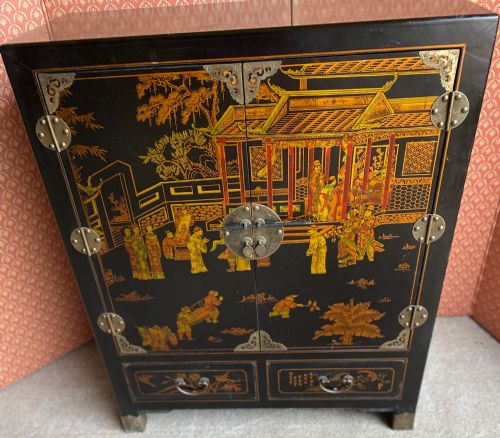
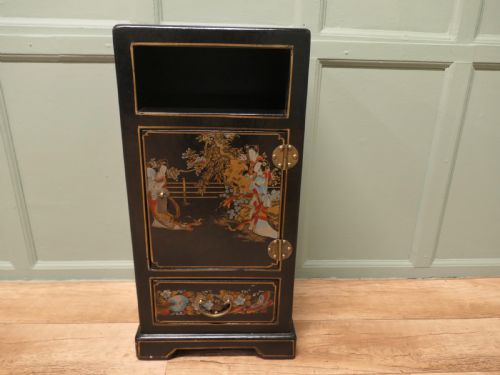
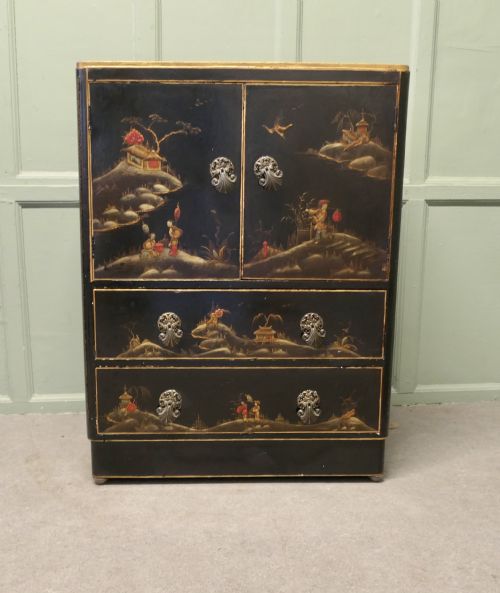
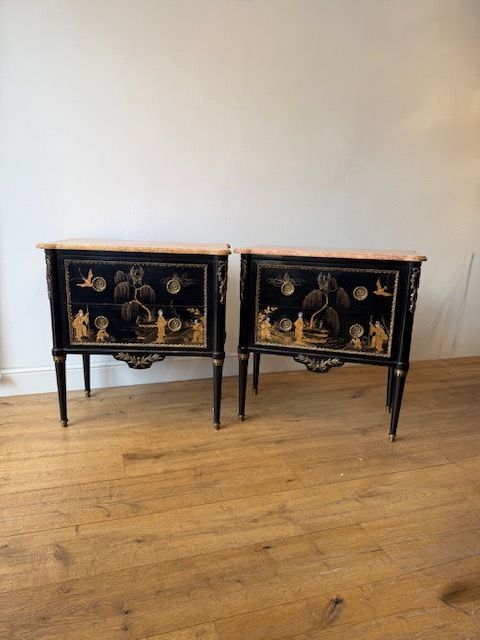
The versions you are most likely to encounter on this page lean heavily into ebonised wood and dark lacquer finishes. Many adopt decorative idioms such as Chinoiserie or Japanese Meiji and Taisho aesthetics, bringing contrasting gilt motifs and painted scenes to the dark ground.
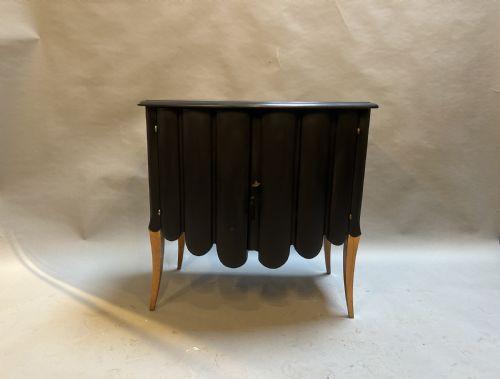
Other examples reflect European traditions, including Victorian walnut music cabinets, French art deco forms, and simple ebonised bookcases from the late nineteenth century. Their shared characteristic is scale: each piece is designed to hold small collections, books, or precious items while anchoring a corner or surface.
How they were made
Makers achieved the characteristic dark surfaces of these cabinets through ebonising timber or applying successive layers of black lacquer. Ebonising involved treating woods like walnut or other hardwoods with chemical solutions to achieve a deep, uniform black tone.
Lacquer work required patient building of resin layers, often polished to a smooth finish that could receive gold leaf or painted details. Brass mounts, handles, and glass panels were then integrated to frame doors and secure contents.
Small Black Cabinet Retail Price Guide 2026
Typical asking prices for small black cabinet among the pieces listed under this phrase on Sellingantiques today, from the lower quarter to the upper quarter. They describe what is for sale here now, not the wider market.
Some miniature Japanese vases listed alongside these cabinets are small enough to sit comfortably in the palm of your hand.
What varies in quality
Quality in these cabinets rests upon the depth of the finish and the integrity of the underlying construction. Superior examples display finely polished ebonised surfaces or meticulously detailed lacquer work that remains stable across the joints.
The refinement of brass hardware and the precision of inlaid elements further separate standard utility pieces from finer decorative works. Structural joinery within drawers and cabinet interiors reveals the care taken by the maker during construction.
The Small Black Cabinet Glossary
- Ebonised Wood
- Timber treated to resemble ebony through staining or chemical dyeing. This technique provided a sophisticated dark finish for Victorian and Edwardian furniture.
- Kodansu
- Traditional Japanese small portable chest with multiple internal drawers. These tabletop cabinets were typically finished in black lacquer.
- Meiji Period
- Era of Japanese history spanning from 1868 to 1912. Pieces from this time often display meticulous craftsmanship in lacquer and metalwork.
Small Black Cabinet: Frequently Asked Questions
Where should I place a small black cabinet?
These compact pieces adapt easily to various rooms, fitting neatly onto sideboards, tabletops, or directly onto the floor in hallways and drawing rooms.
Their dark surfaces provide a strong visual anchor against lighter walls or within alcoves where space is limited.
How do I clean an ebonised surface?
Dust gently with a soft, dry cloth to prevent accumulation without disturbing the polished finish.
Avoid chemical polishes or excessive moisture, which can dull the dark stain or damage old lacquer layers.
What can I store inside a table cabinet?
Table cabinets and kodansu suit the safe keeping of letters, small collections, jewellery, or writing implements.
Glass-fronted display variants allow you to exhibit small ceramics or curiosities while keeping them protected from dust.
How can I tell an older lacquer piece apart?
Examine the depth of the finish and the wear patterns around handles and edges, which show natural ageing over decades.
Construction methods inside the drawers and the style of the hardware often point to specific periods like the Meiji era or the early twentieth century.