

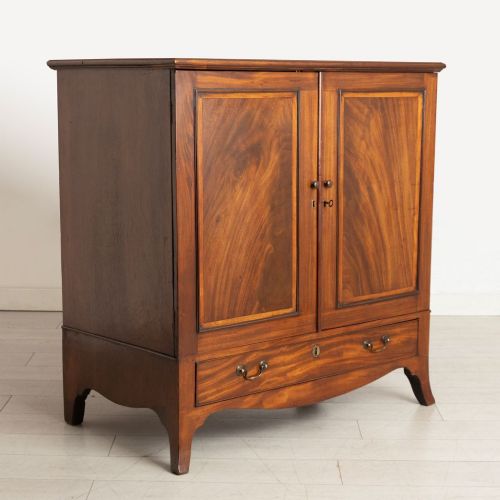
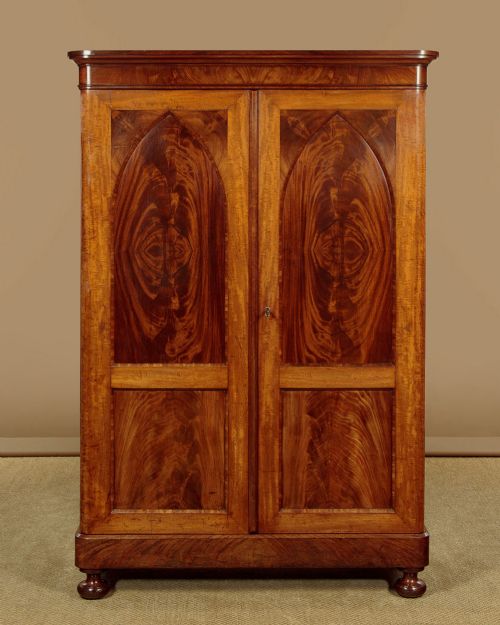
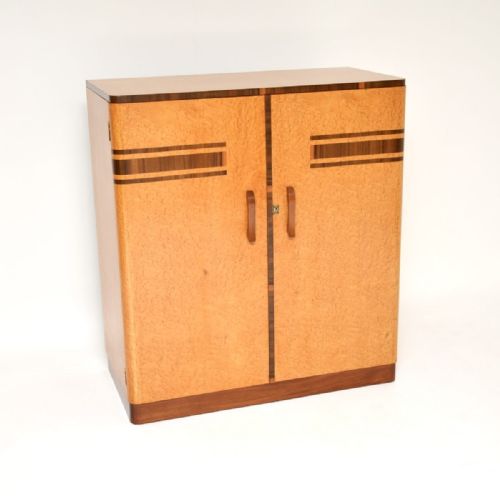
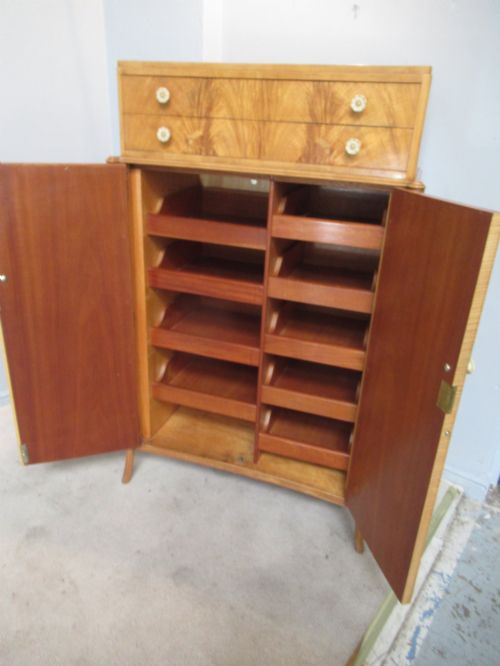
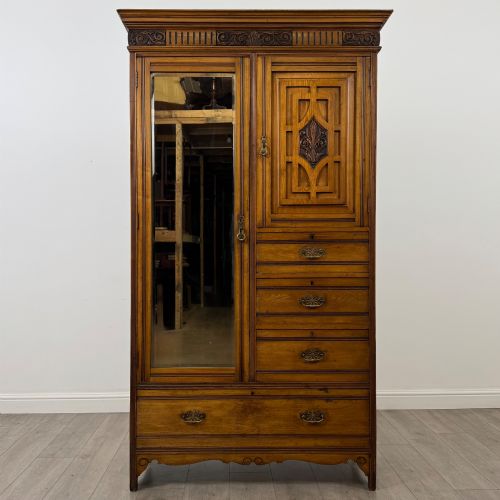


Small Bedroom Wardrobe
A small bedroom wardrobe offers essential clothes storage with compact proportions, making it ideal for rooms where floor space is at a premium.
Small Bedroom Wardrobe
When you search for a small bedroom wardrobe, you are looking at compact storage pieces designed for domestic spaces, often taking the form of wardrobes, tallboys, compactums, or linen presses. These items originate from a range of eras, including the Georgian, Victorian, and Edwardian periods, as well as the 1920s and 1930s.
The selection includes specialised variations such as hall robes and dwarf housekeepers cupboards, which provide fitted interiors tailored for smaller footprints. Each piece reflects the domestic requirements of its specific period while maintaining the reduced scale necessary for restricted bedroom layouts.
How they were made
Cabinet makers utilised solid timbers such as mahogany, oak, and walnut for the primary structural elements of these wardrobes and tallboys. These dense woods provided the durability required for daily domestic use and supported internal fittings like hanging rails and linen slides.
Decorative surfaces frequently incorporate veneers, specifically burr walnut and flame mahogany, applied to create striking grain patterns across the doors and drawer fronts. Cabinet makers also employed banding techniques to frame these figured timbers, enhancing the visual depth of the exterior.
Hardware components such as brass handles and locks were integrated into the construction to secure fitted interiors and drawers. These metal elements were chosen to complement the tone of the surrounding wood, whether working with pale mahogany and maple or darker Victorian ash.
Small Bedroom Wardrobe Retail Price Guide 2026
Typical asking prices for small bedroom wardrobe among the pieces listed under this phrase on Sellingantiques today, from the lower quarter to the upper quarter. They describe what is for sale here now, not the wider market.
Some dwarf housekeepers managed to keep their linens exceptionally tidy without ever bumping their shins in the dark.
What varies in quality
The selection of timber and the application of veneer set the foundation for the visual standard of each piece. Cabinets utilising highly figured burr walnut or flame mahogany display greater decorative ambition than those built from plain timbers.
Internal configuration and joinery refinement distinguish different grades of manufacture. Pieces featuring sophisticated fitted interiors, such as specialised linen presses and compactums with organised drawers, demonstrate a higher degree of functional design.
The harmony of proportion and the preservation of original surface finishes dictate the overall integrity of the piece. Wardrobes that retain their original brass hardware and clean lines maintain a truer representation of their period of origin.
The Small Bedroom Wardrobe Glossary
- Tallboy
- A tall chest of drawers standing on a matching base cabinet or a small wardrobe combining hanging space with lower drawers. This form maximises vertical storage capacity while occupying minimal floor space.
- Compactum
- A multi-functional wardrobe featuring a combination of hanging space, shelves, and internal drawers within a single carcass. It provides comprehensive storage tailored for smaller rooms.
- Linen Press
- A piece of furniture comprising upper cupboard doors enclosing sliding trays or shelves above a chest of base drawers. Originally designed for storing household linens, these often appear in reduced dimensions.
- Veneer
- A thin slice of decorative wood applied to a secondary timber base to create patterned exterior surfaces. Burr walnut and flame mahogany veneers are common examples found on Art Deco and period cabinets.
- Banding
- A narrow strip of contrasting timber inlaid around the edges of drawer fronts or door panels. This decorative technique creates a defined border that enhances the appearance of the primary wood.
Small Bedroom Wardrobe: Frequently Asked Questions
What is a small bedroom wardrobe?
A small bedroom wardrobe is a compact storage furniture piece designed to hold garments and accessories while occupying minimal floor space in domestic rooms.
These pieces encompass various forms including tallboys, compactums, and hall robes, originating from periods spanning the Georgian era to the Art Deco 1930s.
How were linen presses used?
Linen presses were traditionally utilised for storing household textiles, blankets, and folded garments on internal sliding shelves or trays located behind the upper doors.
The lower section typically contains drawers for additional storage, making them versatile cupboards for bedroom organisation.
How do I identify Art Deco wardrobes?
Art Deco wardrobes are characterised by geometric lines, symmetrical door panels, and the use of striking decorative veneers like burr walnut and birds eye maple.
They frequently date from the 1920s and 1930s, displaying streamlined silhouettes distinct from earlier Victorian or Georgian proportions.
Where did hall robes go?
Hall robes were originally placed in entrance hallways or reception rooms to provide temporary storage for outdoor garments, hats, and walking sticks.
Today, their exceptionally shallow depths and compact widths make them suitable for small bedrooms or narrow dressing areas.