

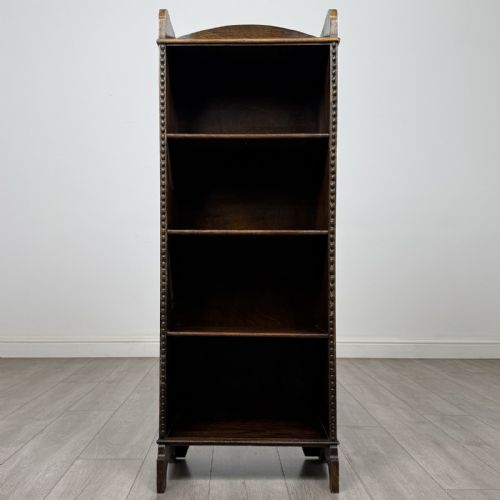
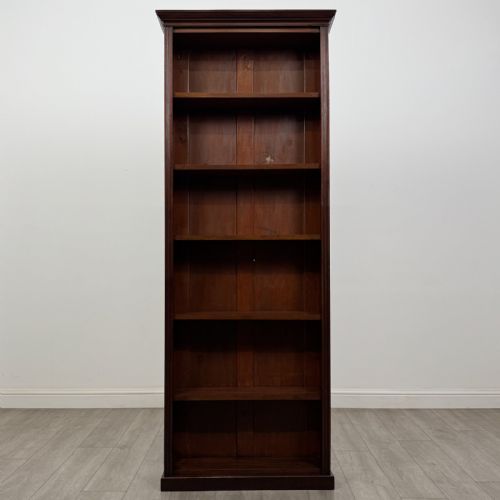
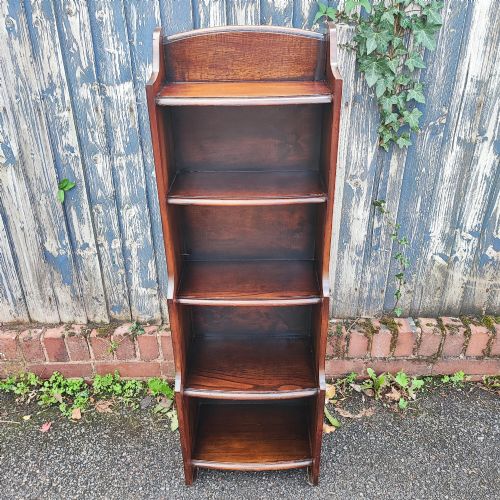
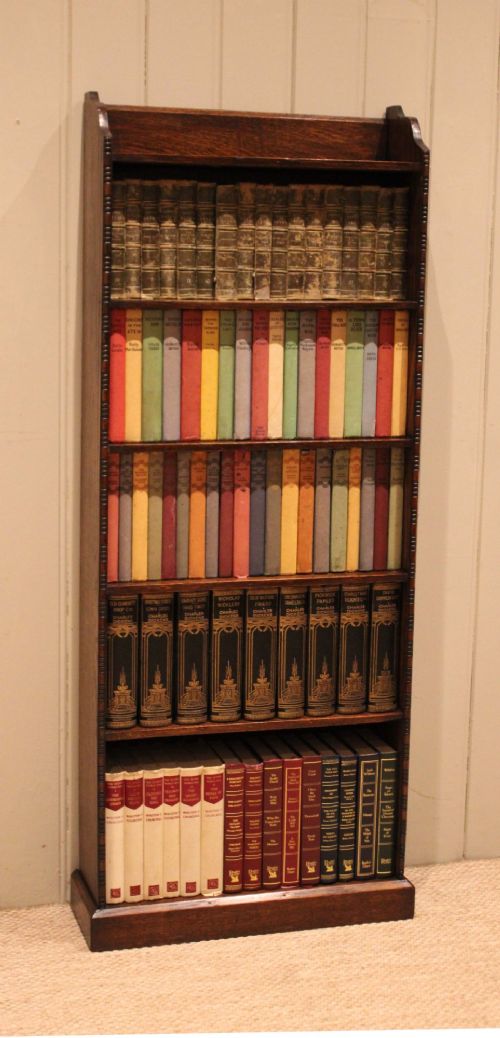
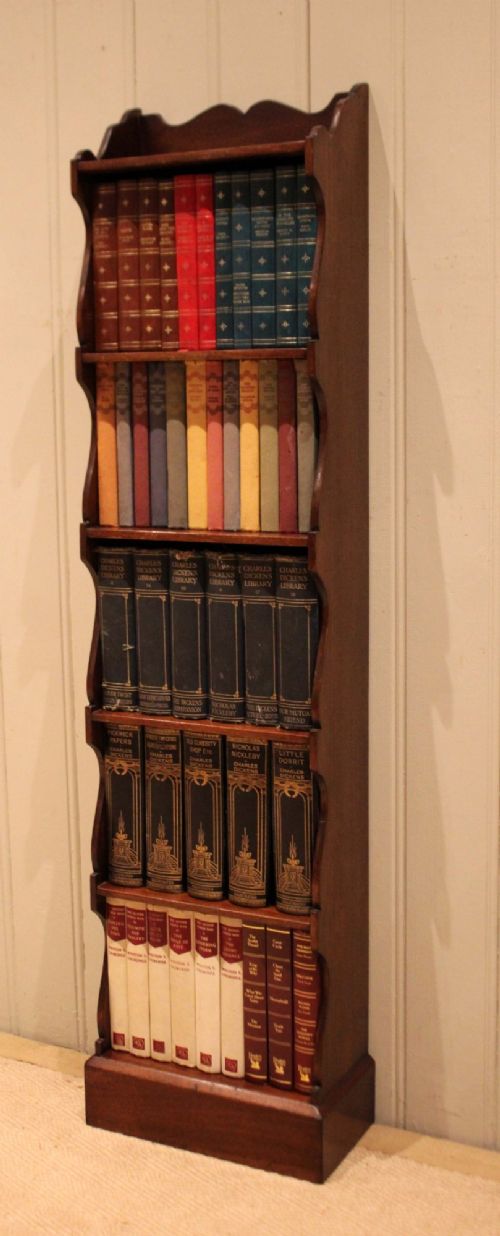
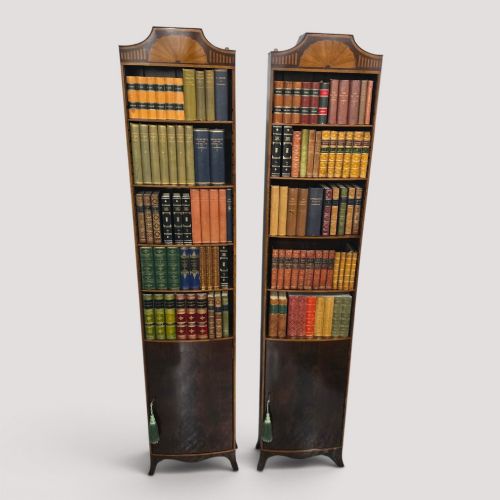
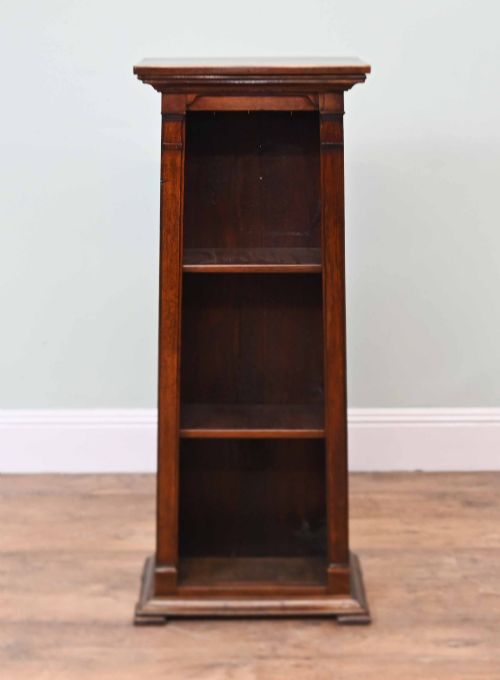
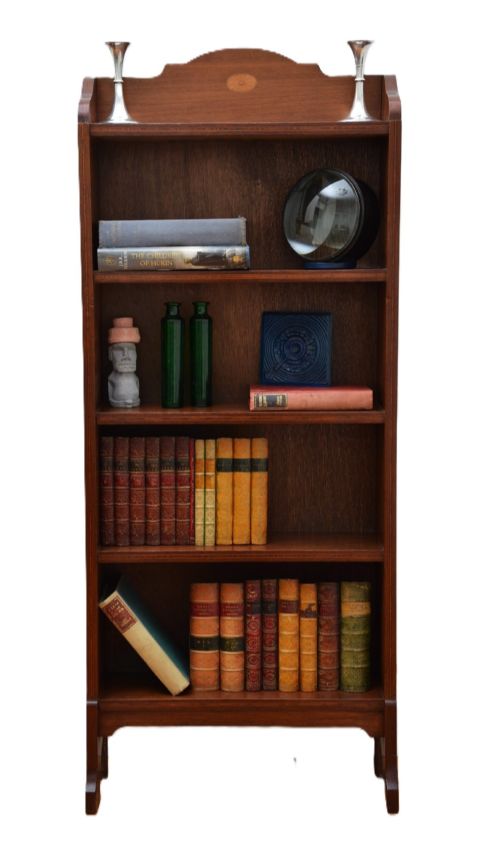
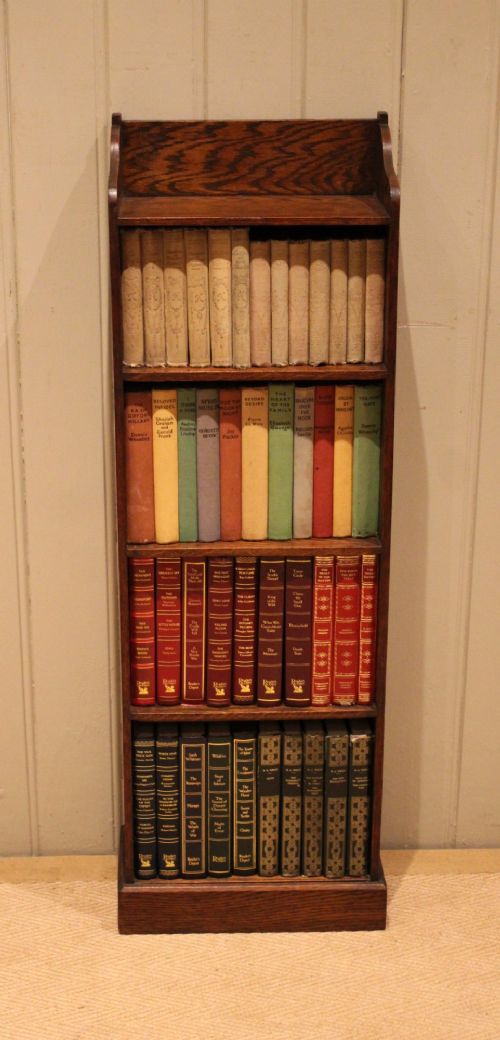
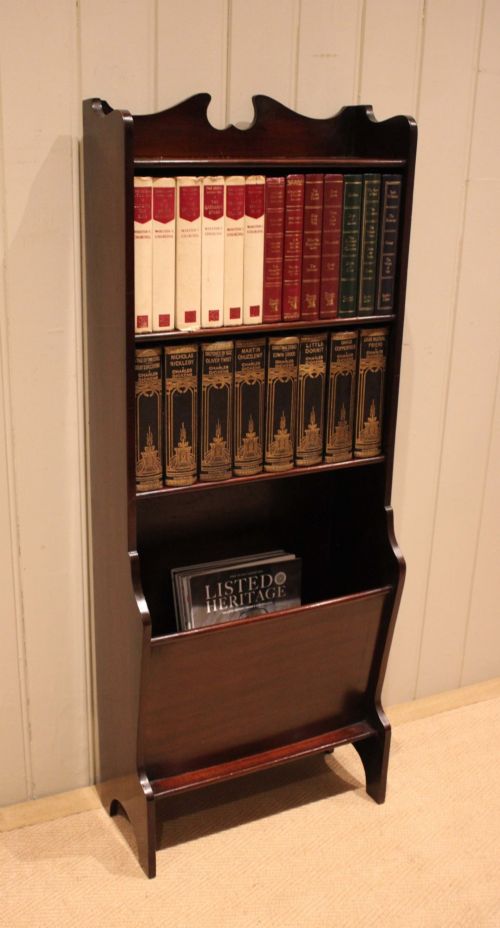


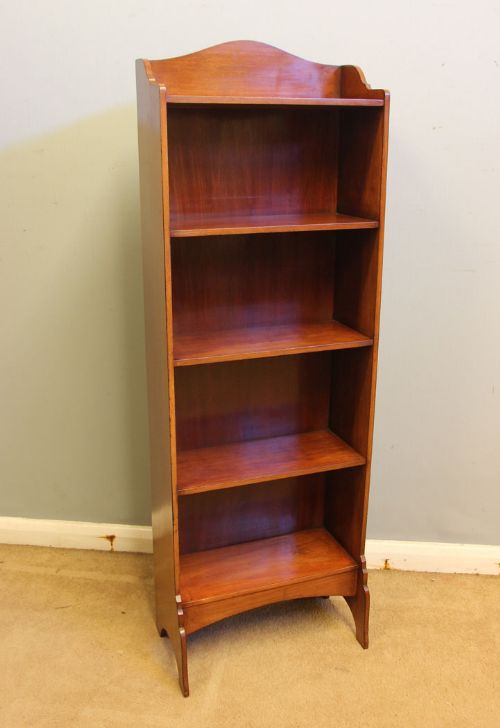


Slim Standing Bookcase
A slim standing bookcase offers compact vertical storage for tight corners, combining practical book placement with period character.
Slim Standing Bookcase
A slim standing bookcase provides upright shelving designed to fit restricted floor spaces while holding a substantial volume of books. These items range from open-backed designs to pieces featuring magazine racks or enclosed lower cabinets.
The versions most likely to be met on this page span the Victorian era, the Edwardian period, and the 1920s. Common forms include waterfall configurations, revolving models, and tall, neat proportions tailored for domestic studies and sitting rooms.
How they were made
Construction relies heavily on traditional timber selection, utilising solid pine, stained pine, oak, mahogany, walnut, and burr walnut. Workshops frequently incorporated wood inlay and brass details to enhance the visual appeal of the shelves.
Joinery methods reflect the prevailing styles of each era, ranging from the plain utility of Edwardian open-back frames to the decorative flourishes of Queen Anne revival pieces and Art Nouveau revolving mechanisms.
Slim Standing Bookcase Retail Price Guide 2026
Typical asking prices for slim standing bookcase among the pieces listed under this phrase on Sellingantiques today, from the lower quarter to the upper quarter. They describe what is for sale here now, not the wider market.
Listings feature items from the 19th Century, Victorian, Edwardian, and 1920 periods, constructed in mahogany, oak, walnut, and pine.
What varies in quality
Quality differences emerge through the choice of timber and the sophistication of decorative elements such as wood inlay or pierced galleries. Pieces constructed from burr walnut or figured mahogany represent a more refined standard than plain stained pine.
The integrity of the structural proportions also distinguishes finer examples, where careful attention to the cornice, shelf spacing, and overall stability separates standard utilitarian shelving from more ambitious cabinetmaking.
The Slim Standing Bookcase Glossary
- Waterfall bookcase
- A stepped open bookcase where each shelf is shallower than the one below it. This tiered design creates a cascading profile popular in Edwardian interiors.
- Revolving bookcase
- A freestanding unit mounted on a rotating spindle or base. It allows easy access to books from any seated angle in a room.
- Open bookcase
- A piece of furniture featuring exposed shelves without doors. This format prioritises immediate visibility and accessibility for daily reading material.
- Wood inlay
- Decorative patterns created by fitting contrasting strips of wood into the primary surface. It adds visual texture to the panels and friezes of period furniture.
Slim Standing Bookcase: Frequently Asked Questions
Where should I place a slim standing bookcase?
These pieces excel in narrow alcoves, beside fireplaces, or in hallways where standard furniture proves too bulky. Their limited footprint allows them to utilise awkward vertical spaces without dominating the room.
Ensure the floor is reasonably level so the upright frame remains stable against the wall. Avoid placing them in direct sunlight to protect vulnerable timber finishes like mahogany and walnut.
How do I identify an Edwardian bookcase?
Edwardian items frequently display lighter timber tones, restrained decorative carving, and practical open-back construction. They often incorporate transitional elements from earlier Victorian traditions.
Look for honest joinery and lighter woods such as oak and pine. The proportions are typically designed for smaller urban homes of the early twentieth century.
Are revolving bookcases sturdy enough for heavy books?
Revolving bookcases are engineered with central pivot mechanisms designed to support standard collections of novels and reference volumes. The revolving base distributes weight evenly when balanced properly.
Avoid loading the top tiers disproportionately, as this places unnecessary stress on the internal rotation hardware. Distribute heavier volumes on the lower shelves to maintain a low centre of gravity.
What is the difference between pine and mahogany bookcases?
Pine bookcases offer a lighter, softer aesthetic that suits country house or rustic interiors, often found with stained or painted finishes. Mahogany provides a dense, heavy structure with deep reddish-brown tones suited to formal settings.
Mahogany typically takes a finer polish and allows for sharper carved details. Pine offers a more direct, utilitarian charm with visible grain patterns.